
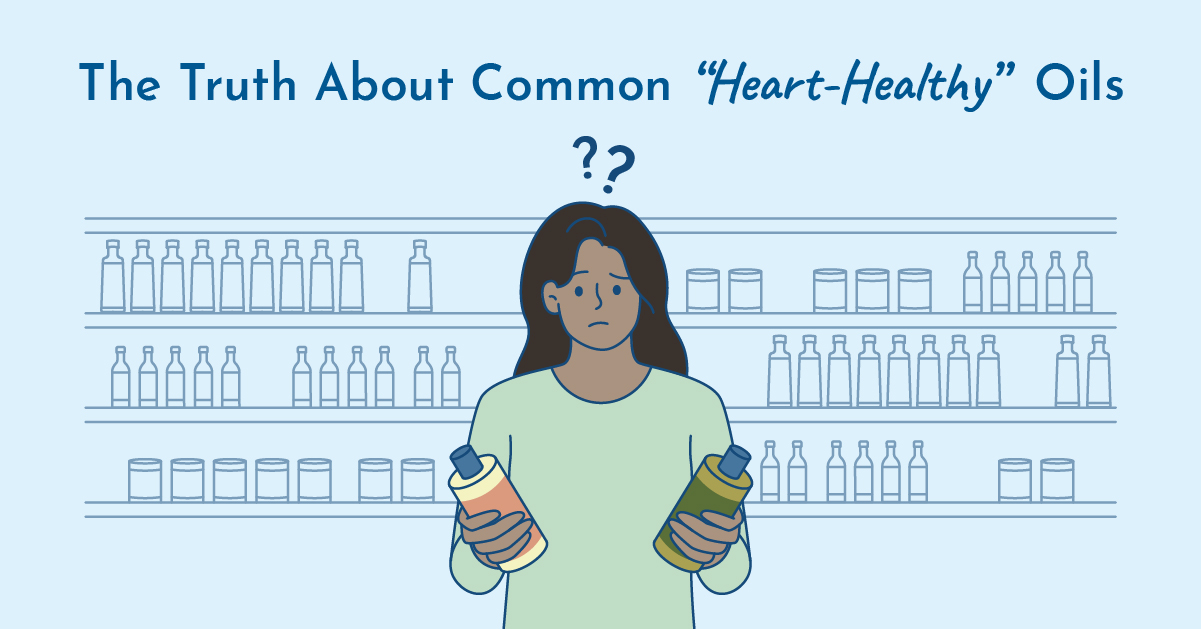
This is an important — and often confusing — topic that may have a bigger impact on your thyroid, energy, hormones, and overall well-being than you realize.
For decades, we’ve been told that certain oils are “heart healthy.”
Yet, with so much conflicting information online, it’s hard to know what’s truly good for you.

Many of us have trusted the idea that these vegetable and seed oils are protecting our hearts and improving our health — but the research tells a more complicated story.
Going all the way back to the 1960s, the “heart healthy” movement began when studies showed that polyunsaturated fats (PUFAs) could lower cholesterol.
But lowering cholesterol doesn’t always tell the whole story.
Despite widespread use of these oils, overall rates of cardiovascular problems have not improved as expected.
In fact, per FDA data, the average person now consumes over 50 pounds of polyunsaturated oils per year — more than triple the amount in 1970.
So, if decades of following this advice haven’t produced the promised benefits, it’s fair to ask:
Is It Time to Rethink What “Heart Healthy” Really Means?
Let’s look at one of the most eye-opening studies on this topic.
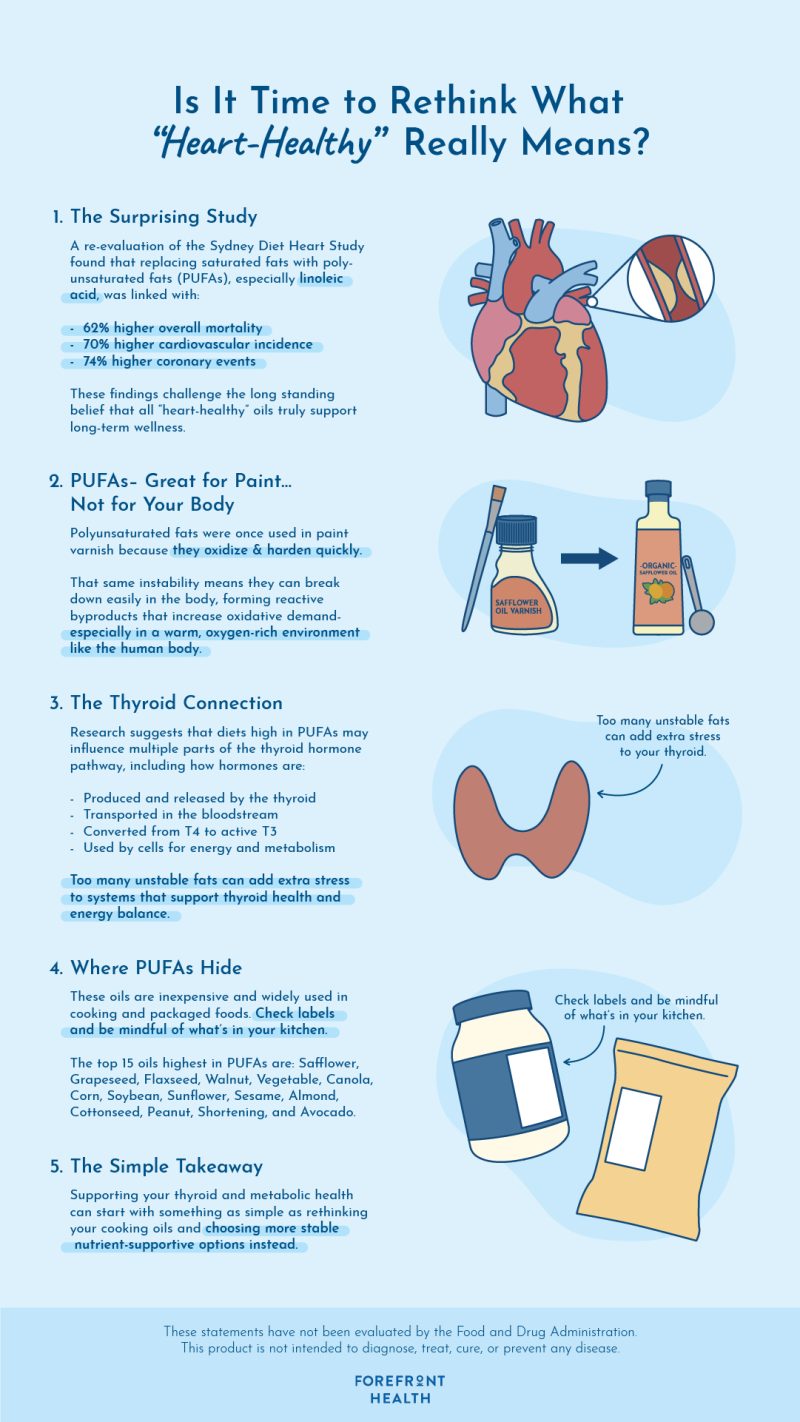
A re-evaluation of data from the Sydney Diet Heart Study — later published in BMJ Open — examined what happened when participants replaced saturated fats with polyunsaturated fats (PUFAs), particularly linoleic acid.
According to the researchers, the group consuming more PUFAs showed higher rates of mortality and heart-related events compared to those who did not make that substitution.
An updated meta-analysis also found no clear evidence of cardiovascular benefit from linoleic acid.
To put this into perspective, the study reported:
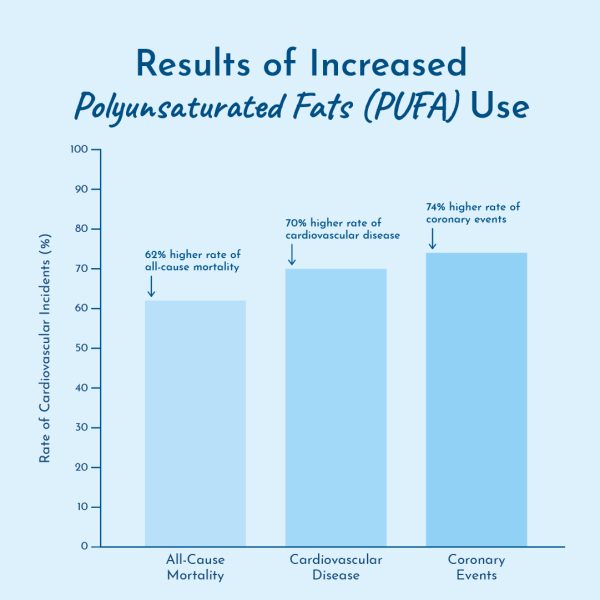
- 62% higher all-cause mortality
- 70% higher incidence of cardiovascular disease
- 74% higher incidence of coronary events
Those numbers raise important questions about the long-standing assumption that all “heart-healthy” oils truly support long-term wellness.
That may not paint the best picture for polyunsaturated fats — but interestingly, these oils can paint a picture, so to speak…
PUFAs – Great for Paint… But Not Your Thyroid
It might surprise you to learn that polyunsaturated fats were once used almost exclusively for paint varnish.
They’re great for that purpose because they oxidize and harden quickly, allowing liquid paint to dry into a smooth, durable finish.
But what makes them ideal for paint is exactly what makes them less ideal for your body.

Somewhere along the line, we forgot that these same fats are highly unstable when exposed to oxygen and heat.
That instability means they can break down easily, creating reactive byproducts that place extra demand on your body’s natural antioxidant systems.
And since the human body is warm (around 98.6°F / 37 °C) and full of oxygen… it’s an environment where these unstable fats can oxidize more readily — a process that doesn’t exactly support long-term metabolic balance or overall well-being.
But that’s only part of the story…
Emerging research suggests that polyunsaturated fats (PUFAs) may influence several steps of your thyroid hormone pathway — from how these hormones are produced to how effectively they’re used by your cells.
For example, some studies indicate that diets high in PUFAs may:
- Affect how the thyroid gland releases hormones.
- Influence how thyroid hormones move through the bloodstream.
- Make it harder for the body to efficiently convert T4 into the active T3 form.
- Impact how well hormones interact with cell receptors.
- Affect how your cells respond to and use available thyroid hormones.
In other words, excess PUFAs may place additional stress on the systems that help your thyroid — and your metabolism — work at their best.
(NOTE: Want to learn three simple ways to support your thyroid hormone pathway? Download our 3 Food Triple-Thyroid Boosting Protocol and discover how to start each day feeling calm, clear, and full of energy.)

Understanding the “why” behind PUFAs is one thing — seeing where they hide in your kitchen is another.
Here are 15 common oils to rethink if you’re supporting your thyroid.
15 Cooking Oils to Avoid if You’re Supporting Your Thyroid
One of the simplest ways to support healthy thyroid function is to be mindful of the types of oils you use — and how often you use them.
Unfortunately, that can be tricky.
These oils are inexpensive and widely available, so they’ve become staples in most kitchens and restaurants.
You’ll also find them in countless packaged and processed foods, where low cost and long shelf life make them a manufacturer’s favorite.
That’s why it’s so important to read ingredient labels — so you know exactly what you’re putting in your body.
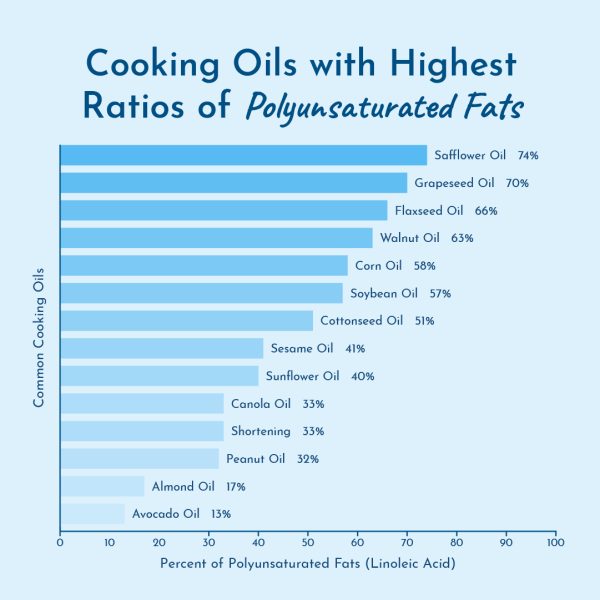
Below are 15 common cooking oils that contain the highest ratios of polyunsaturated fats (PUFAs) compared to saturated fats.
Here they are ranked in order, starting with those that are highest in PUFA content:
- Safflower Oil
- Grapeseed Oil
- Flaxseed Oil
- Walnut Oil
- Vegetable Oil
- Canola Oil
- Corn Oil
- Soybean Oil
- Sunflower Oil
- Sesame Oil
- Almond Oil
- Cottonseed Oil
- Peanut Oil
- Shortening
- Avocado Oil
Why Doing the Opposite Might Finally Make Sense
How much longer can we keep repeating the same advice and expect a different outcome?
For decades, we’ve been told what to eat and what to avoid — yet energy levels, hormone balance, and overall wellness continue to decline.
At some point, we have to pause and ask: Is it time to take a closer look at what the research really shows?

Sometimes, the only way to see better results is to make better choices — even if they go against popular belief.
If you’ve been relying on high-PUFA oils, consider swapping them for fats that are more stable and supportive of thyroid and metabolic health.
You can learn more about one thyroid-supportive fat I recommend — and how to use it daily — in our 3 Food Triple-Thyroid Boosting Protocol.

KEY IDEA
For decades, vegetable and seed oils have been promoted as “heart healthy,” but new research tells a more complex story. This article explores how polyunsaturated fats (PUFAs), though common in modern diets, are unstable when exposed to heat and oxygen — making them less ideal for long-term metabolic and thyroid support. You’ll discover how excess PUFAs may influence the body’s natural thyroid hormone activity and why being mindful of the oils you use can make a meaningful difference in energy, balance, and overall wellness. We also share 15 high-PUFA oils to rethink and offer simple, practical swaps for everyday cooking.