
Want an easy way to look and feel years younger?
Who doesn’t?
And while nothing stops the clock completely… there are ways to support how your body ages over time.
But here’s the part most people never hear…
It may have far less to do with your skin, your diet, or even your exercise routine than you’ve been led to believe.
In fact, one of the most overlooked factors influencing how you look and feel over time is something much deeper…
Your thyroid hormone.
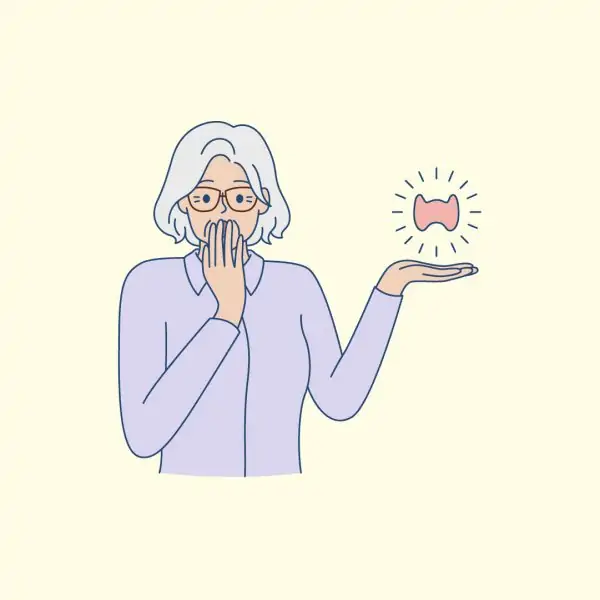
This is where the connection between thyroid and aging really begins — and why so many people feel older than they should.
Now, most people think of thyroid hormone as something that just “controls metabolism.”
And yes — that’s part of the story.
But it’s a very small part.
Because thyroid hormone doesn’t just influence how fast your body burns calories…
It plays an important role in how your body maintains energy, balances hormones, and adapts to stress — all of which influence how you look and feel over time.
And when this system isn’t working properly…
That’s when things start to change.
Not overnight.
But slowly… subtly… and then all at once.
The Hidden Hormone Pattern Behind Thyroid and Aging
Here’s the problem…
Most advice about “aging” focuses on surface-level fixes.
Creams. Diets. Exercise routines.
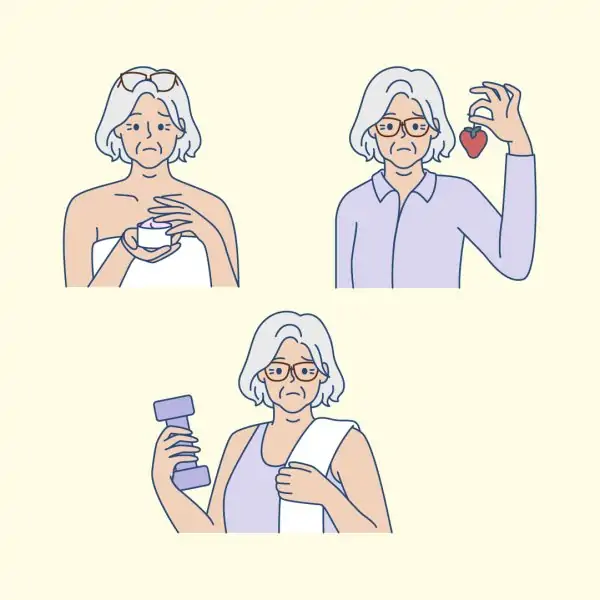
But very few people are talking about what’s happening beneath the surface — at the hormone level.
Because when it comes to how your body feels and functions over time, three stress-related hormones tend to show up again and again:
- Cortisol
- Estrogen
- Serotonin
Now, these hormones aren’t “bad.”
You need them.
But when they’re out of balance…
That’s when problems begin.
And the crazy thing is…
Low thyroid function is often associated with higher levels of these hormones — which can influence how you look and feel over time.
And this is one of the clearest ways thyroid and aging are connected — through how your body handles stress and recovery.
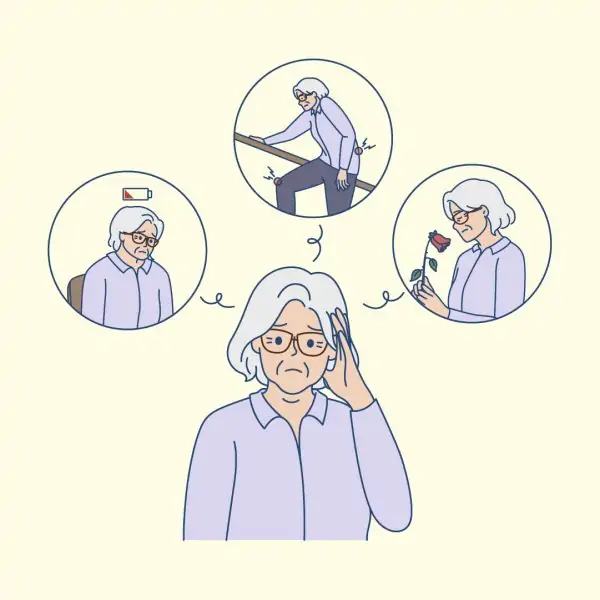
So if you’ve ever felt like…
- Your energy isn’t what it used to be
- Your body doesn’t recover the way it used to
- Or you just don’t feel like yourself anymore
There’s a reason for that.
And no — it’s not just “getting older.”
The Thyroid Feedback Loop That Keeps You Stuck
Here’s where things get interesting… and honestly, a little frustrating.
Because once these hormones become imbalanced, they don’t just exist in isolation.
They start feeding into each other.
Take cortisol, for example.
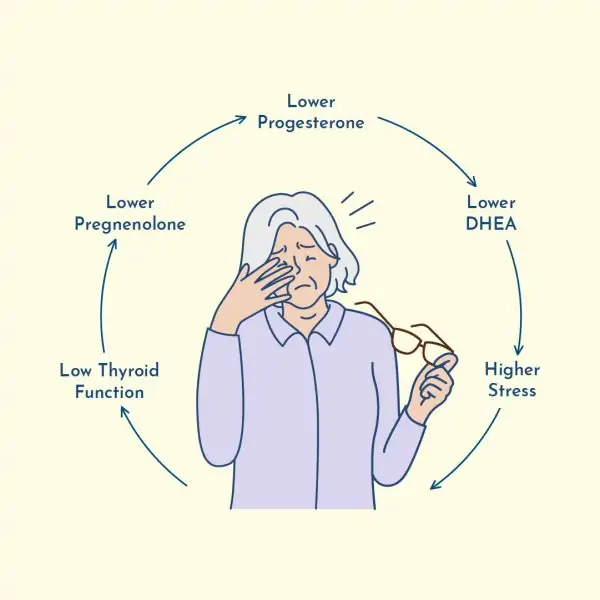
When thyroid function is low, your body often leans more heavily on cortisol — your primary stress hormone — to keep you going.
But cortisol doesn’t just “help”…
It can also influence thyroid activity.
So now you’ve got a loop:
- Lower thyroid function → more reliance on cortisol
- More cortisol → further stress on thyroid function
And around and around it goes.
This is what we call a feedback cycle.
And it’s one of the main reasons people feel stuck.
It’s also why issues related to thyroid and aging often don’t improve with surface-level fixes alone.
You can be doing everything “right”…
But if this cycle isn’t addressed, your body stays under constant stress.
Over time, this shows up as:
- Reduced cellular energy
- Increased strain on tissues
- Slower recovery and resilience
In other words…
Your body starts working harder just to maintain the same baseline.
The Missing Link Between Thyroid Function and Aging: “Youth-Supportive” Hormones
Now here’s what almost no one talks about…
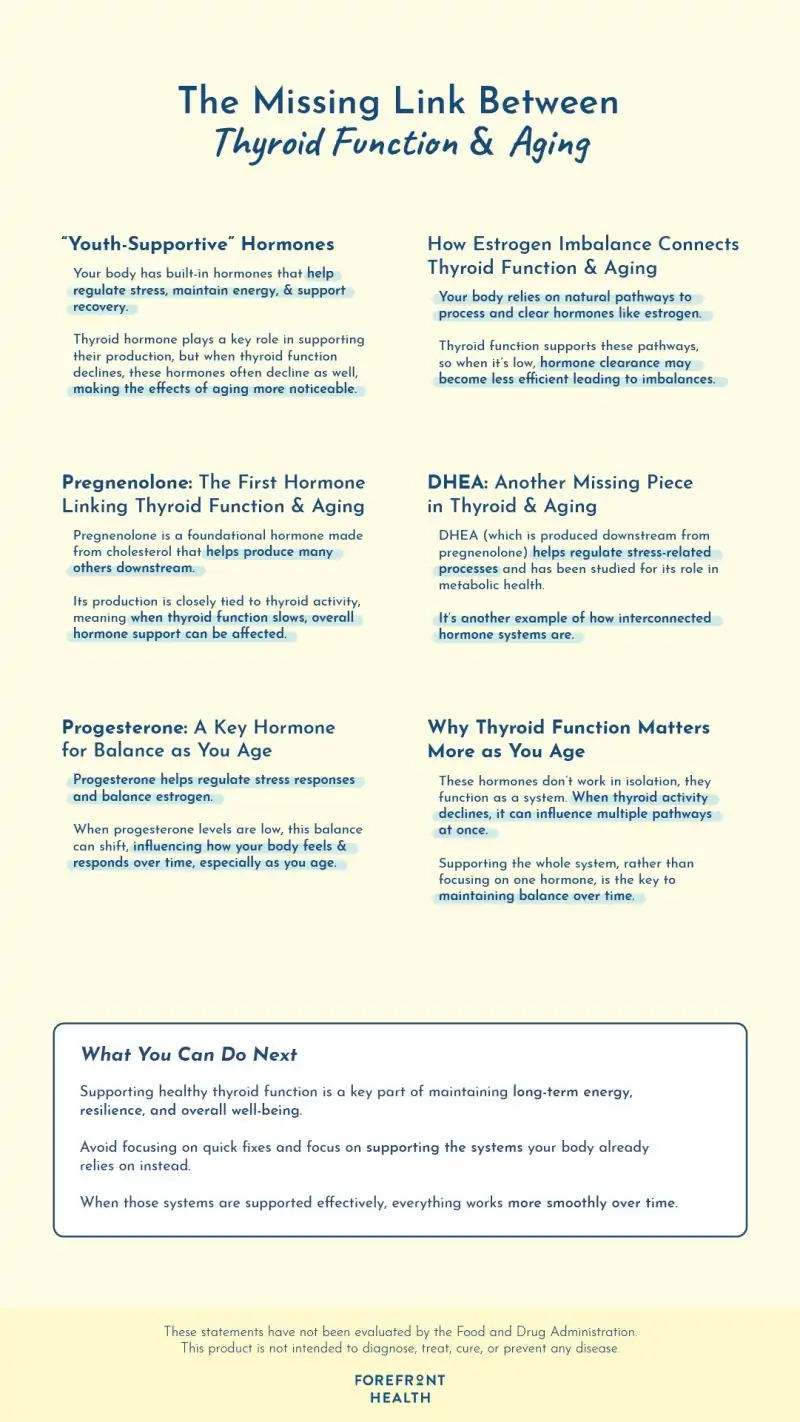
Your body has its own built-in system for buffering stress and maintaining resilience.
We like to think of these as your “youth-supportive” hormones.
These are the hormones that help you:
- Handle stress more easily
- Maintain steady energy
- Recover faster
And here’s the key…
Thyroid hormone plays a major role in supporting their production.
But over time — especially when thyroid function is low — these hormones tend to decline.
Which makes you more vulnerable to stress…
And everything that comes with it.
When this happens alongside reduced thyroid function, the effects of aging can feel more noticeable.
So the goal isn’t just to “fight stress”…
It’s to support the system that helps your body handle it in the first place.
Pregnenolone: The First Hormone Linking Thyroid Function and Aging
Let’s start with one of the most important foundational hormones:
Pregnenolone.
Think of pregnenolone as the starting point…
It’s made from cholesterol and helps your body produce many other hormones downstream.
But here’s the catch…
Its production is closely tied to thyroid activity.
So when thyroid function is sluggish…
Pregnenolone production can be affected too.
And when that happens, your body has a harder time regulating stress effectively.
In other words…
Less support at the top means less support everywhere else.
This is another example of how thyroid function and aging are closely tied at the hormonal level.
Progesterone: A Key Hormone for Balance as You Age
Next up is progesterone.
This is one of the most important hormones for maintaining balance in the body.
Why?
Because it helps regulate how your body responds to stress signals.
It also plays a key role in balancing estrogen.
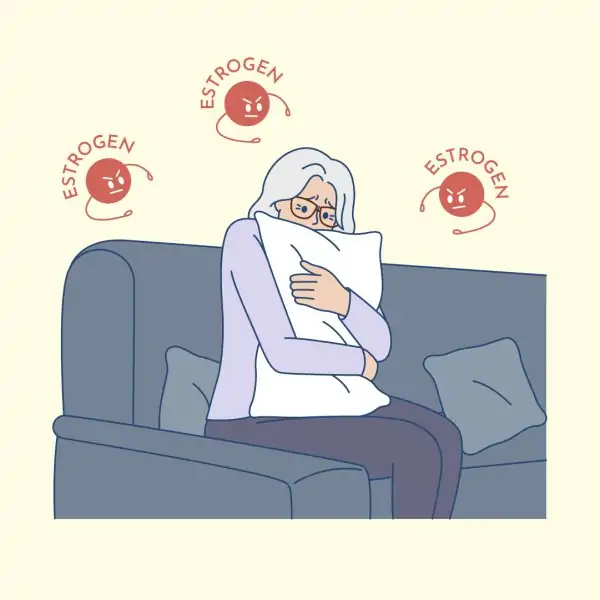
And if you’ve spent any time looking into thyroid health, you’ve probably heard the term “estrogen dominance.”
Here’s what most people don’t realize…
Even after menopause, the body can still produce estrogen — especially through aromatase enzymes in fat tissue.
And without enough progesterone to keep things in check…
That balance can shift.
Which can further influence how your body feels and functions over time.
And it adds another layer to the connection between thyroid and aging that most people never consider.
How Estrogen Imbalance Connects Thyroid Function and Aging
Now let’s zoom out for a second.
Because this is where the bigger picture starts to come together.
Your body has natural pathways designed to process and clear excess hormones — including estrogen.
One of these pathways is called glucuronidation.
Don’t worry about the name…
All you need to know is this:
It’s how your body takes hormones and makes them easier to eliminate.
And thyroid function plays a role in supporting this process.
So when thyroid activity is low…
This system can become less efficient.
Which means hormones like estrogen may not be cleared as effectively.
And over time, that can contribute to imbalance.
DHEA: Another Missing Piece in Thyroid and Aging
Finally, there’s DHEA.
This is another hormone that’s produced downstream from pregnenolone.
And it plays a different — but equally important — role.
DHEA helps regulate enzymes involved in cortisol activity.
In plain English… it helps your body manage stress from another angle.
Not just by influencing signals…
But by supporting how those signals are processed.
And here’s what makes it even more interesting…
DHEA has also been studied for its relationship to:
- Metabolic health
- Body composition
- Insulin sensitivity
Which gives you a glimpse into how interconnected this entire system really is.
Because when it comes to thyroid and aging, it’s never just one hormone — it’s the entire system working together.
Why Thyroid Function Matters More as You Age
At this point, you might be thinking… “Okay, this is interesting — but what do I actually do with it?”
Fair question.
Here’s the big takeaway:
These hormones don’t work in isolation.
They work as a system.
And when one part of that system is off… it affects everything else.
That’s why focusing on just one thing — like diet, or one supplement, or one hormone — often doesn’t fully move the needle.
Because the real issue isn’t just one piece…
It’s how all the pieces are working together.
What You Can Do Next
So where does this leave you?
It starts with understanding this:
Supporting healthy thyroid function can be an important part of maintaining long-term energy, resilience, and how you look and feel over time.
Not by chasing quick fixes…
But by supporting the systems your body already relies on.
This is the foundation of a more effective approach to both thyroid support and healthy aging.
Because when those systems are supported properly…
Everything else runs more smoothly.
The Big Picture: Thyroid Function, Hormones, and Aging
Thyroid hormone plays a central role in hormone balance.
And that balance influences how your body adapts to stress over time.
When that system is working well… your body is better equipped to maintain energy, recover from stress, and function the way it’s supposed to.
And when it’s not…
You feel it.
That’s why this matters.
Because supporting how your body uses thyroid hormone isn’t just about “thyroid health”…
It’s about how your body functions as a whole.
And over time…
That can influence how you look and feel as you age.
KEY IDEA
Feeling older than you should isn’t always about age. This post reveals how the connection between thyroid and aging often comes down to hidden hormone patterns. When thyroid function is low, stress hormones like cortisol and estrogen can rise — creating cycles that drain energy, slow recovery, and make you feel off. But your body also produces “youth-supportive” hormones like pregnenolone, progesterone, and DHEA that help buffer stress — and thyroid function plays a key role in supporting them. Instead of chasing surface-level fixes, supporting your thyroid may help restore balance at a deeper level — so you can feel more like yourself again over time.