
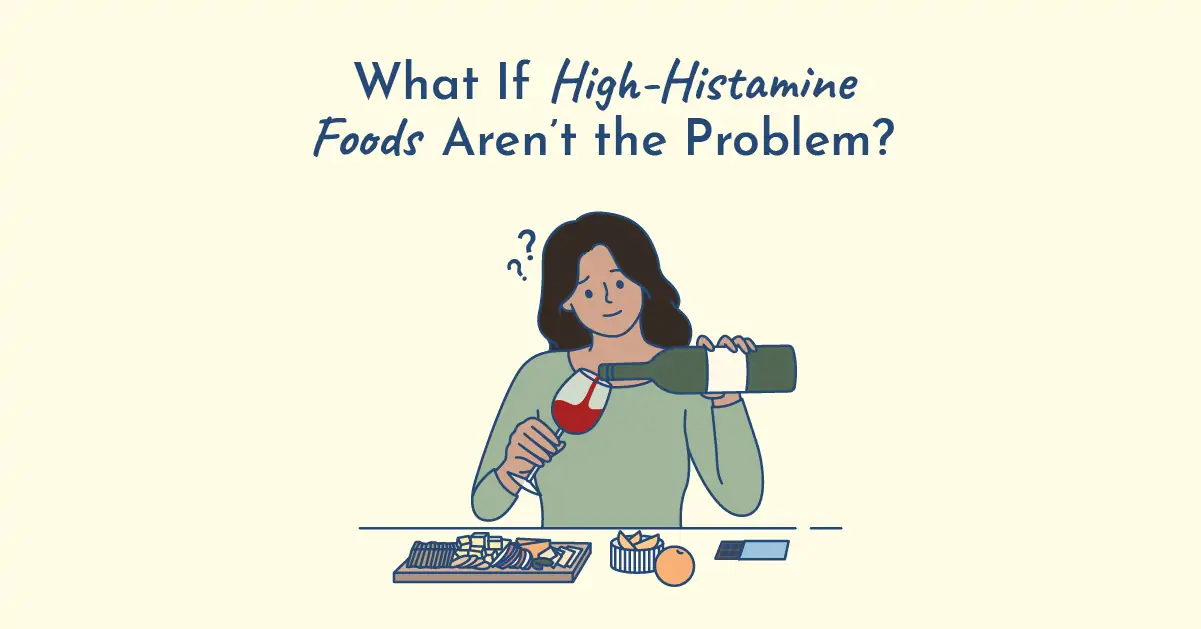
Have you ever considered that the foods you’re sensitive to might actually be part of the solution?
I know. I know.
What a crazy idea, right?
Actually, it’s not.
We’ve been watching this trend grow for more than two decades.
We all want to eat healthy.
Yet many people struggling with ongoing thyroid symptoms are led to believe they need to avoid every food they suspect they’re sensitive to.
In many cases, that’s not the whole story.
The real problem may not be the food itself. In some cases, the foods being avoided may even provide valuable nutritional support.
The real problem may involve the underlying imbalances that change the way your body responds to those foods.

A perfect example is the connection between histamine intolerance, thyroid function, and estrogen balance.
Let’s take a closer look.
Histamine Intolerance, Histamine Foods, and Thyroid Health
Like everything in your body, histamine plays an important role in maintaining normal health.
It serves several important functions, especially within the immune system.
Histamine is released by mast cells in response to an immune trigger.
This helps widen blood vessels and allows immune cells to move more easily into the affected area.
Here’s the problem…
Inflammation is part of that process.
When histamine is released in appropriate amounts, the body is usually able to maintain balance.
But when histamine production increases or histamine begins to accumulate faster than the body can clear it, symptoms can start to appear.
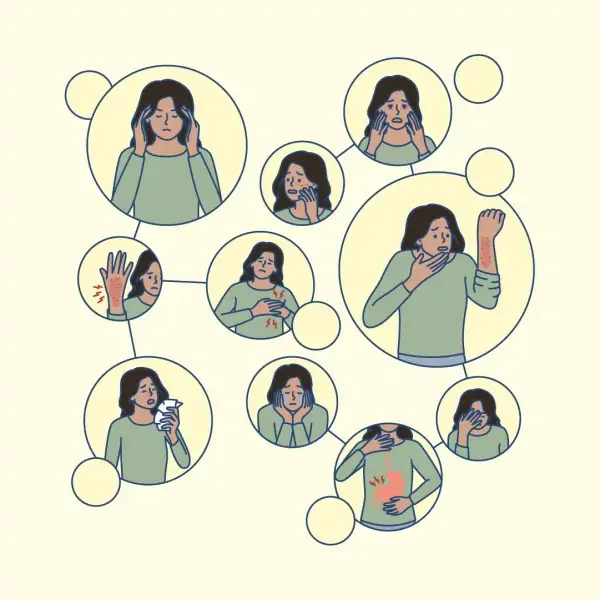
Common histamine intolerance symptoms associated with elevated histamine levels include:
- Headaches
- Digestive discomfort
- Red or itchy eyes
- Nasal congestion
- Runny nose
- Increased heart rate
- Skin irritation
- Itching
- Anxiety
- Hives
Histamine doesn’t come exclusively from your own body, either.
It can also come from food.
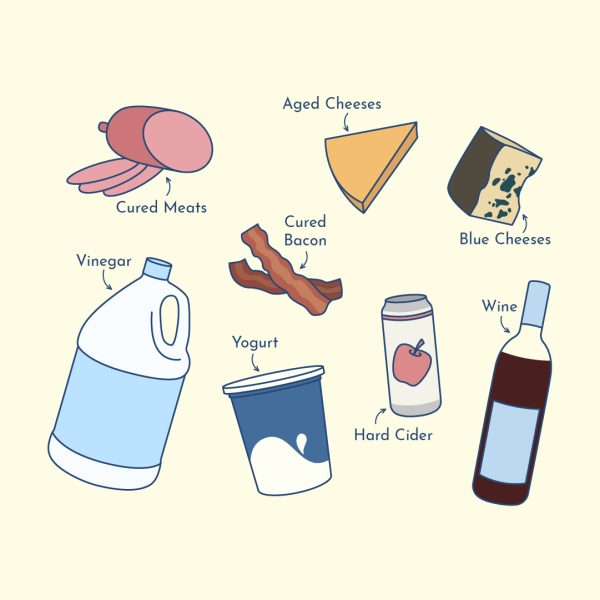
For example, aged and fermented foods are commonly considered high-histamine foods because they often contain higher amounts of histamine.
These include:
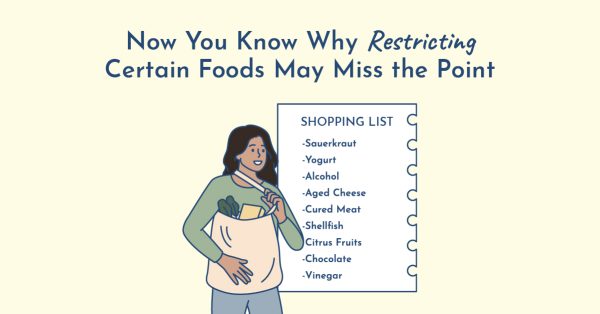
- Fermented foods such as sauerkraut, yogurt, kefir, and vinegar
- Fermented alcoholic beverages
- Aged cheeses
- Cured meats
Even foods commonly viewed as nutritious, including shellfish, citrus fruits, and chocolate, naturally contain histamine.
As a result, many people decide they should avoid these foods entirely.
But here’s the crazy thing…
The problem isn’t necessarily the histamine in the food.
The problem is often the accumulation of histamine within the body and the increased sensitivity that follows.
In other words, many people believe the foods are the problem when the problem may be the body’s response to them.
And this is where the connection to thyroid function becomes especially interesting.
Certain foods may contain histamine while also containing nutrients that support normal physiological function.
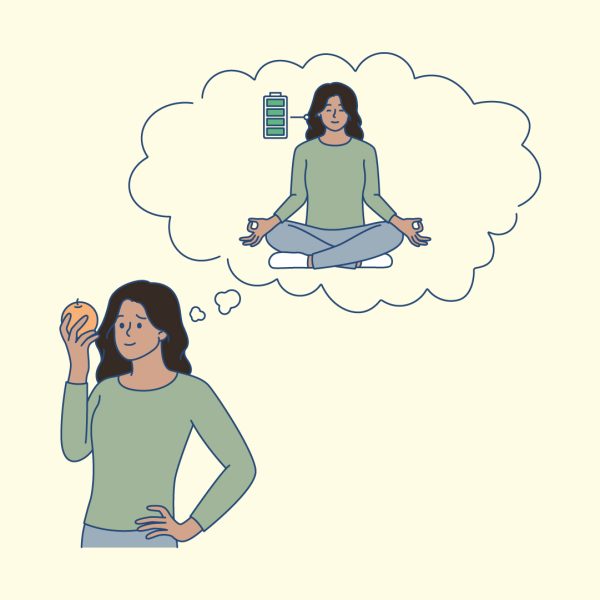
Oranges are a perfect example.
Many people with histamine sensitivity immediately remove citrus fruits from their diets because oranges contain histamine.
But oranges also contain nutrients that have been studied for their role in supporting healthy estrogen metabolism and liver function.
In other words, the same food someone is trying to avoid may also contain nutrients that support some of the very pathways involved in histamine regulation.
Sometimes the issue isn’t the food itself. Sometimes the issue is how the body responds to it.
Why is that important?
Because the relationship between thyroid function, estrogen, and histamine is often much more complicated than people realize.
The Connection Between Histamine Intolerance and Thyroid Function
Many people assume that histamine intolerance is caused exclusively by insufficient activity of the diamine oxidase, or DAO, enzyme.
DAO plays an important role in helping the body break down histamine.
Certainly, this may be one piece of the puzzle.
But there’s often much more going on beneath the surface.
Over the years, we’ve spent a great deal of time discussing the relationship between thyroid function and estrogen balance.
Research suggests that thyroid function may alter estrogen clearance, which can influence estrogen levels.
At the same time, research suggests that estrogen may influence histamine production and release.
Research also suggests that estrogen may influence the body’s ability to clear histamine.
But it doesn’t stop there.
Research also suggests that histamine may further increase estrogen activity.
In other words, these pathways appear to influence one another from multiple directions.
This interaction may create a self-perpetuating cycle in some cases.
Are you beginning to see the real problem?
This cycle has very little to do with the foods you’re eating.
Yet understanding and addressing the cycle itself may be one of the most important steps you can take.
Remember the orange we talked about earlier?
If a food contains nutrients that help support healthy liver function and healthy estrogen metabolism, should you automatically assume it needs to be avoided?
This is one reason we encourage people to focus on the bigger picture instead of simply eliminating more and more foods.
Using our 3 Food Triple-Thyroid-Boosting Daily Protocol alongside the approach outlined below can be a simple place to start.
You can download the protocol here.
Yes, it is entirely possible for certain foods to contain histamine while also supporting some of the underlying pathways involved in histamine regulation.
We see this all the time.
Here’s how we approach it.
How to Help Break the Estrogen-Histamine Cycle
Living with ongoing thyroid symptoms isn’t easy.
And dealing with congestion, skin irritation, headaches, digestive discomfort, and sensitivity to foods only makes things more frustrating.
The good news is that simply avoiding more foods isn’t the only option.
Instead of assuming that every high-histamine food should be eliminated or relying exclusively on a restrictive histamine intolerance diet, we prefer to take a broader approach.
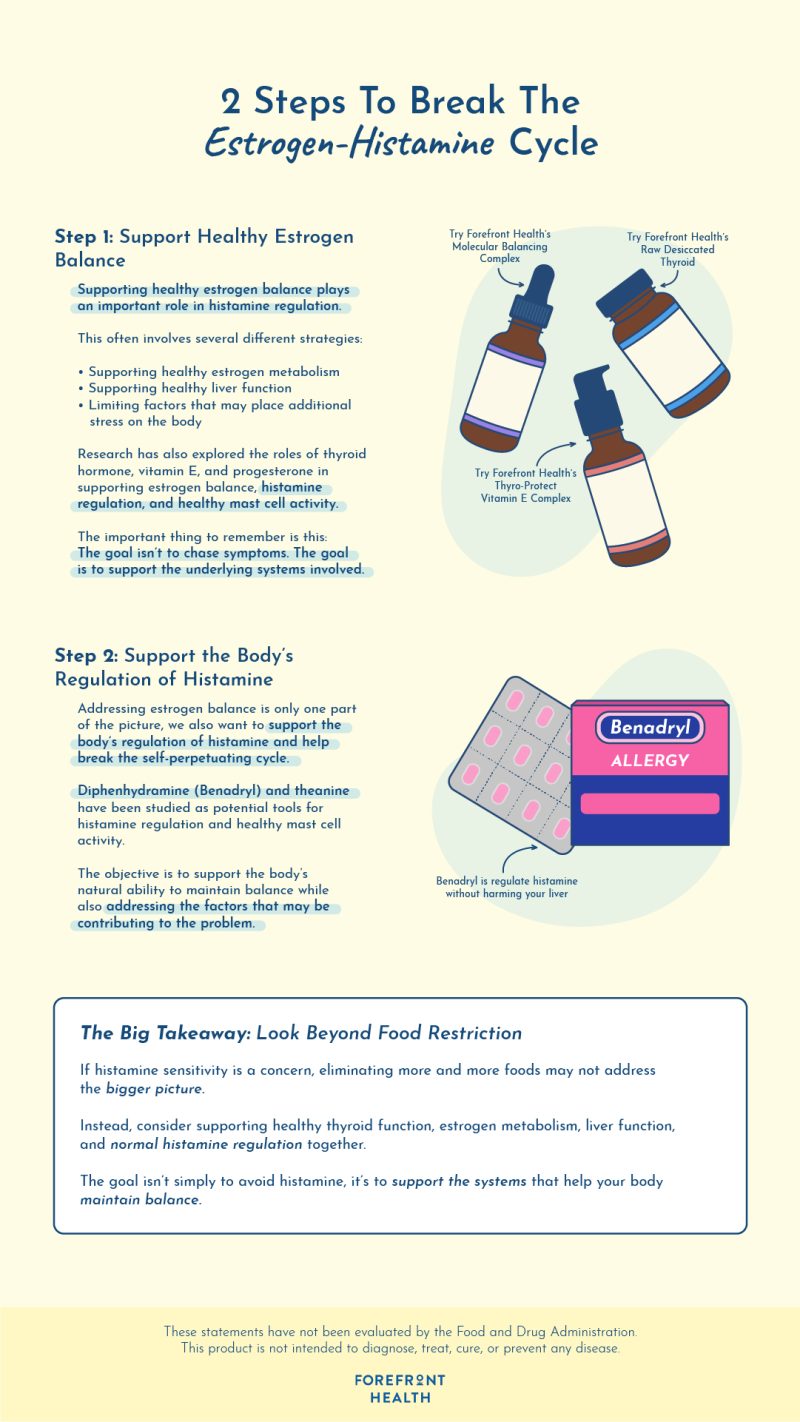
Step 1: Support Healthy Estrogen Balance
If estrogen is playing a role in histamine regulation, then supporting healthy estrogen balance becomes an important consideration.
This often involves several different strategies:
- Supporting healthy estrogen metabolism
- Supporting healthy liver function
- Limiting factors that may place additional stress on the body
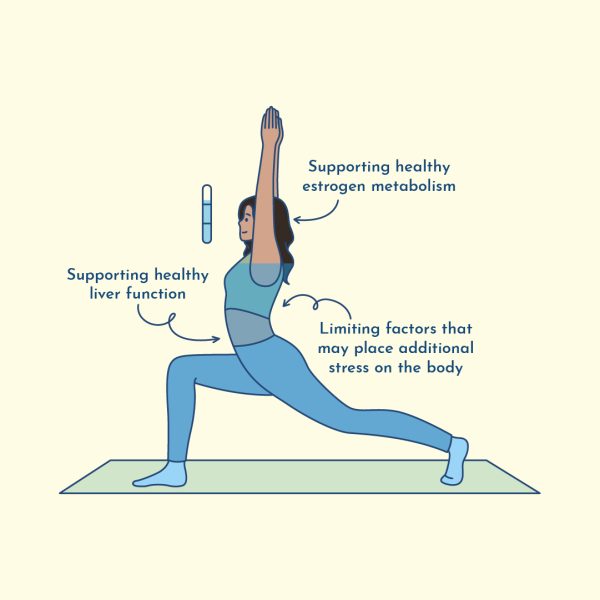
Improving liver health is particularly important because the liver plays a central role in hormone metabolism.
Research has explored the roles of thyroid hormone, vitamin E, and progesterone in supporting pathways related to estrogen balance and histamine regulation.
Research has also explored the relationship between progesterone and mast cell activity, which may help explain why maintaining balance across these systems is so important.
The important thing to remember is this:
The goal isn’t to chase symptoms.
The goal is to support the underlying systems involved.
Step 2: Support the Body’s Regulation of Histamine
Addressing estrogen balance is only one part of the picture.
Remember, these pathways appear to influence one another.
That’s why we also want to support the body’s regulation of histamine and help break the self-perpetuating cycle.
Diphenhydramine (Benadryl) and theanine have been studied for their effects on histamine regulation and are potential tools.
For example, theanine has been studied for its effects on mast cell activity and histamine release.
The objective isn’t simply to cover up symptoms.
The objective is to support the body’s natural ability to maintain balance while simultaneously addressing the factors that may be contributing to the problem.
So There You Have It…
If histamine sensitivity has become a concern for you, don’t immediately assume you need to reduce your food list to almost nothing.
The foods themselves may not be the problem.
In some cases, certain high-histamine foods may even provide nutrients that support the very pathways involved in histamine regulation.
In many cases, the body’s response to those foods deserves just as much attention.
Instead, use this 2-Step Approach to help break the estrogen-histamine cycle and support the underlying pathways involved.
The real opportunity may lie in supporting healthy thyroid function, healthy estrogen metabolism, healthy liver function, and the body’s regulation of histamine.
This is exactly why we developed our 3 Food Triple-Thyroid-Boosting Daily Protocol.
It’s a simple starting point designed to help support the foundational systems that influence thyroid health.
Sometimes the answer isn’t removing more foods.
Sometimes it’s understanding what’s really going on beneath the surface.
And that’s where the real progress often begins.
You can download the protocol here.
KEY IDEA:
What if the foods you’re avoiding are actually helping you? Many people struggling with histamine intolerance eliminate more and more foods from their diets, only to find themselves feeling increasingly frustrated. In this article, you’ll discover the surprising connection between histamine intolerance, thyroid function, estrogen balance, and histamine regulation. You’ll also learn why the body’s response to certain foods may deserve just as much attention as the foods themselves, and why some high-histamine foods may contain nutrients that support the very pathways involved in maintaining balance.