
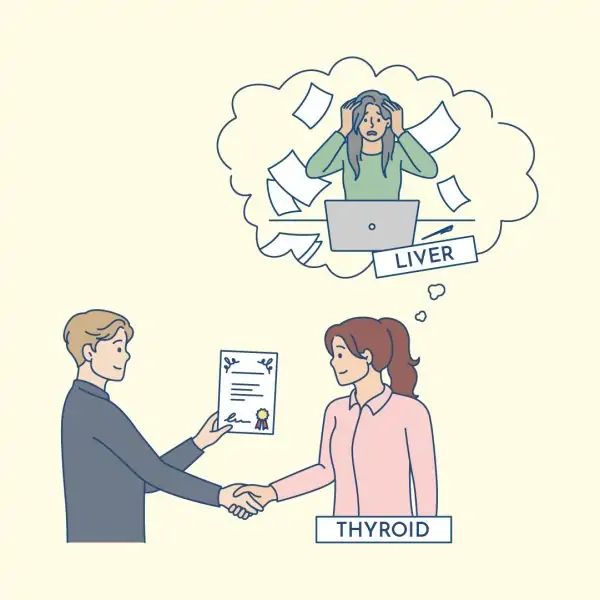
In 1962, James Watson and Francis Crick shared a Nobel Prize for a scientific discovery they couldn’t have made on their own.
They were credited with discovering the double-helix structure of DNA we all know today.
Had it not been for the work of Rosalind Franklin, their names might never have been remembered.
Her work provided the key to the famous discovery.
Yet she never received the credit she deserved.
Something similar happens when we talk about thyroid health.
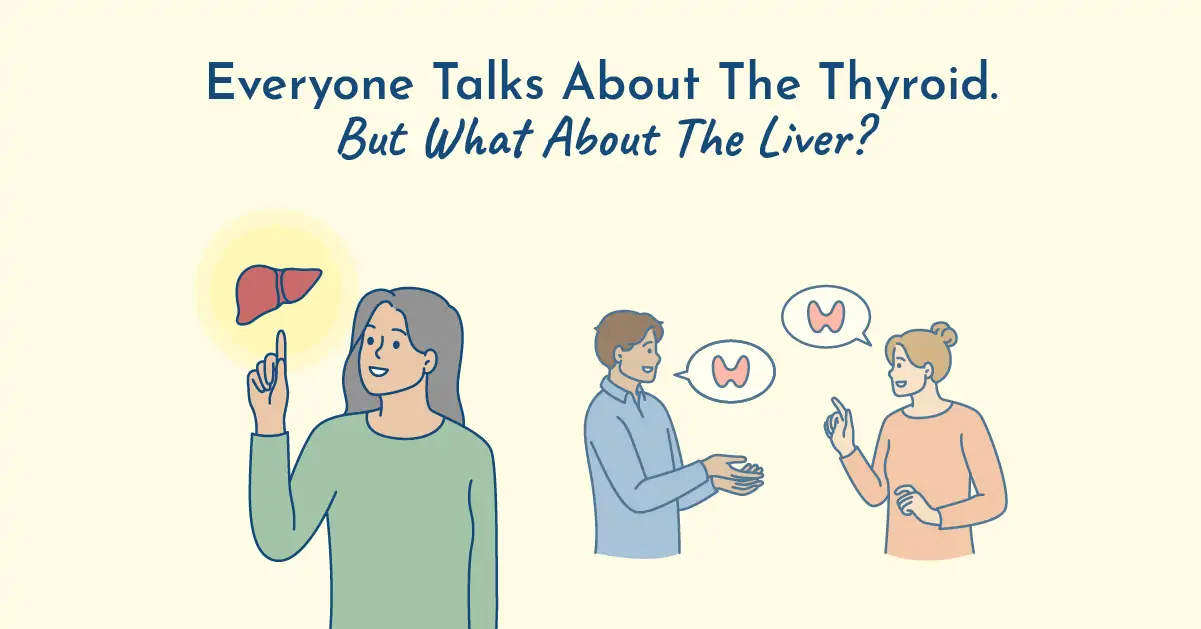
The thyroid gland gets nearly all the attention.
Meanwhile, the liver does much of the work the thyroid gland gets credit for.
If you’ve been supporting your thyroid and still wonder why you don’t feel like yourself, then this is for you.
Supporting that overlooked organ can be part of a more complete approach to thyroid health.
Your Thyroid’s Job Is Only the Beginning
When most people think about thyroid health, they picture a short path:
Thyroid gland → thyroid hormone → energy.
That leaves out most of the journey.
Your thyroid makes and releases the hormone. Then your body has to activate it, transport it through the bloodstream, receive it into cells, and put it to use.
We call that the Thyroid Hormone Pathway.
Why does this matter when you’re struggling to get through the day?
Because making thyroid hormone is the beginning of the process.
It doesn’t tell you everything about what happens next.
Your liver helps with several steps that shape how your body handles thyroid hormone and fuel.
Yet that part of the story rarely gets the attention it deserves.
4 Important Roles the Liver Plays in Thyroid Health
Your liver’s role in thyroid health is often minimized and misunderstood.
Here are four ways your liver supports the processes behind healthy thyroid function.
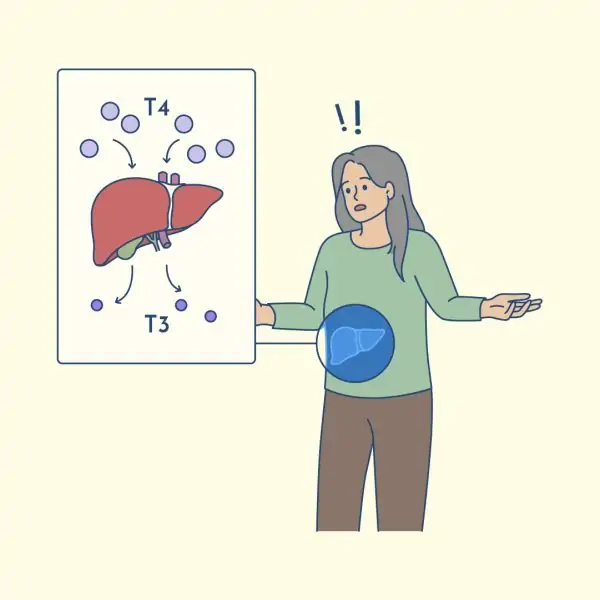
1. Activate: Your Liver Helps Turn T4 Thyroid Hormone Into Active T3
Your thyroid releases mostly T4. Your body converts that into T3, the active form that helps regulate how your cells produce energy.
The liver is one of the most important places where that conversion happens.
This happens through a process called deiodination where enzymes remove an iodine atom from T4, converting it into T3.
What happens when less T4 is converted into active T3?
Your cells receive less of a signal that helps regulate energy production. That can be part of why low energy remains in the picture, even when the thyroid gland is making thyroid hormone.
2. Fuel: Your Liver Provides the Fuel for Energy Production That Thyroid Hormone Helps Regulate
Thyroid hormone helps regulate how cells produce energy. Having fuel available is also important.
After a meal, your liver stores some carbohydrates as glycogen. Between meals, it breaks down that glycogen and releases glucose into your bloodstream as your body needs it.
That process helps keep a steady fuel available as your energy needs change throughout the day.
Think about making it through the morning, then feeling drained before lunch.
It’s easy to focus on the thyroid gland whenever your energy changes. The bigger picture also includes whether you’ve eaten enough to keep fuel available.
Your liver helps manage that fuel throughout the day.
3. Clear: Your Liver Helps Detoxify Hormones That Influence Thyroid Function
Your liver also helps process hormones after the body has used them.
One of its tools is glucuronidation. In this process, liver enzymes attach a compound called glucuronic acid to these hormones, helping your body eliminate them.
Why does hormone processing belong in a conversation about the thyroid?
Your liver helps process hormones, including estrogen and cortisol, that can influence the broader Thyroid Hormone Pathway.
4. Protect: Your Liver Supports the Health of Cells Where Thyroid Hormone Does Its Work
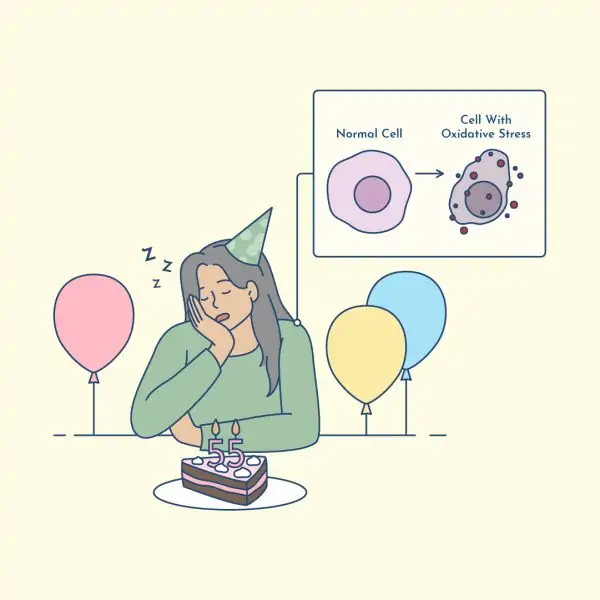
Your cells produce energy all day. That activity also creates oxidative stress, which your body manages through its antioxidant defenses.
One of those defenses is glutathione. Your body makes it from three amino acids, and the liver plays an important role in its production and use.
Oxidative stress can interfere with normal cellular energy production, one of the processes thyroid hormone helps regulate.
That’s another reason to care about what happens beyond the thyroid gland.
The liver supports antioxidant defenses that help maintain the health of the cells where thyroid hormone does its work.
Why Supporting Your Thyroid Gland May Not Be Enough
Here’s where the usual thyroid conversation falls short.
It often focuses on what the gland makes.
Sometimes it focuses on a nutrient the gland needs.
Then the conversation ends, even when you’re still trying to understand why you feel so drained.
We need to follow the process further.
Thyroid hormone has to be activated and delivered to cells. Those cells need fuel. Your body also has to process hormones and maintain the tissues that respond to them.
Your liver participates in all of those jobs.
If you’ve focused on the gland for years, you haven’t done anything wrong. Most explanations of thyroid health stop there.
That’s why a more complete approach to thyroid health looks beyond the thyroid gland and supports the liver working behind the scenes.
So how can you support its everyday work?
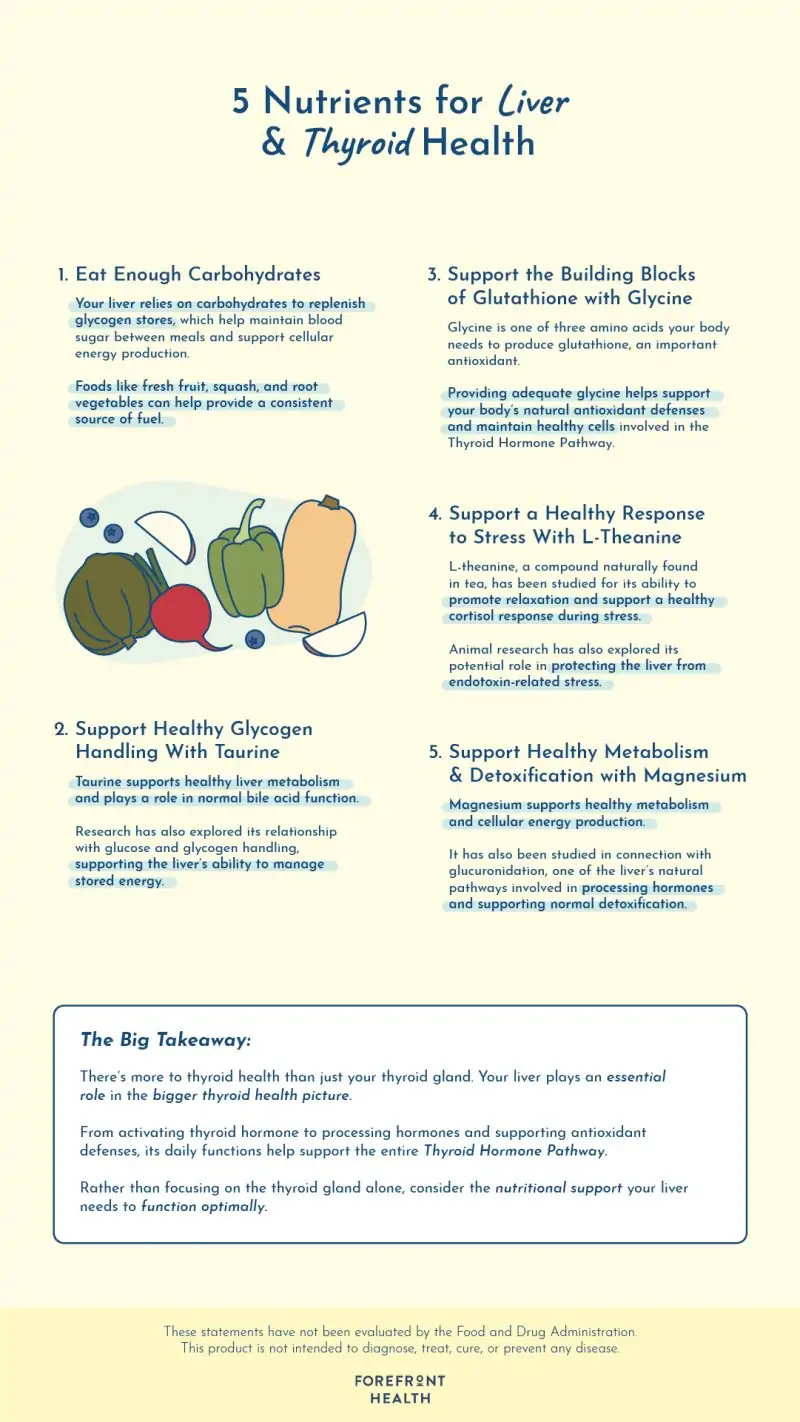
5 Nutrients for Liver and Thyroid Health
It’s not about liver detoxes or cleanses.
It’s about consistently providing the foods and nutrients for liver and thyroid health that support your body’s everyday work.
Here are five places to focus.
Together, these steps address the liver’s roles in fuel handling, antioxidant defenses, stress response, and hormone processing.
1. Eat Enough Carbohydrates
Your liver needs carbohydrates to replenish its glycogen stores.
That stored fuel helps your liver keep glucose available between meals, supporting the cellular energy production that thyroid hormone helps regulate.
If you’ve spent a long time cutting back on carbs in hopes of feeling better, it’s worth asking whether you’re giving your body enough to work with.

Fresh fruit, squash, and root vegetables are all great options.
The practical goal is to include carbohydrates consistently as part of meals that meet your needs.
2. Support Healthy Glycogen Handling With Taurine
Taurine is a compound found throughout your body. It’s involved in several normal functions, including the liver’s handling of bile acids.
Taurine supports healthy liver metabolism, and research has explored its relationship with glucose and glycogen handling.
That research connects taurine to the liver’s role in handling glucose and glycogen, the stored fuel it draws on between meals.
3. Support the Building Blocks of Glutathione with Glycine
Your body needs three amino acids to make glutathione, and glycine is often the limiting factor.
Providing glycine gives your body a building block it needs to support its natural antioxidant defenses.
This brings us back to the cells.
Those cells are an important part of your Thyroid Hormone Pathway, and antioxidant defenses help maintain their health, giving thyroid hormone a healthy place to do its work.
4. Support a Healthy Response to Stress With L-Theanine
L-theanine is a compound found in tea. Human studies have explored its ability to support relaxation and a healthy response to stress.
It has also been studied for its effect on cortisol during acute stress.
There’s another liver connection worth noting.
Endotoxin is a substance associated with certain bacteria in the gut. In animal studies, L-theanine has helped protect the liver from the damaging effects of endotoxin.
5. Support Healthy Metabolism and Detoxification with Magnesium
You may already know that magnesium supports a healthy metabolism and cellular energy production.
Its role in liver function gets less attention.
Magnesium has also been studied in connection with glucuronidation, one of the pathways your liver uses to process hormones, which we discussed earlier.
Your Liver Deserves More Credit (Just Like Rosalind Franklin)
Rosalind Franklin’s evidence was integral to the double-helix model of DNA.
Her work helped earn the Nobel Prize, and it belongs in the story.
Your liver belongs in the thyroid story, too.
It helps activate thyroid hormone. It stores and releases fuel between meals. It processes hormones and supports antioxidant defenses that help maintain the health of cells where thyroid hormone does its work.
So if your thyroid health plan begins and ends with the gland, take one step back and look at the liver, and the full Thyroid Hormone Pathway.
Start with a tangible question:
Are you giving your liver the nutrients it needs to support your thyroid health every day?
There’s more to your thyroid health than just your thyroid gland.
KEY IDEA
Your thyroid gets most of the attention. But making thyroid hormone is only the beginning. Your liver helps activate it, keeps fuel available between meals, processes other hormones, and supports the antioxidant defenses of the cells where thyroid hormone does its work. If you’ve focused on your thyroid yet still don’t feel like yourself, this overlooked connection deserves a closer look. Discover five nutrients that support your liver’s everyday work and a more complete approach to thyroid health.