
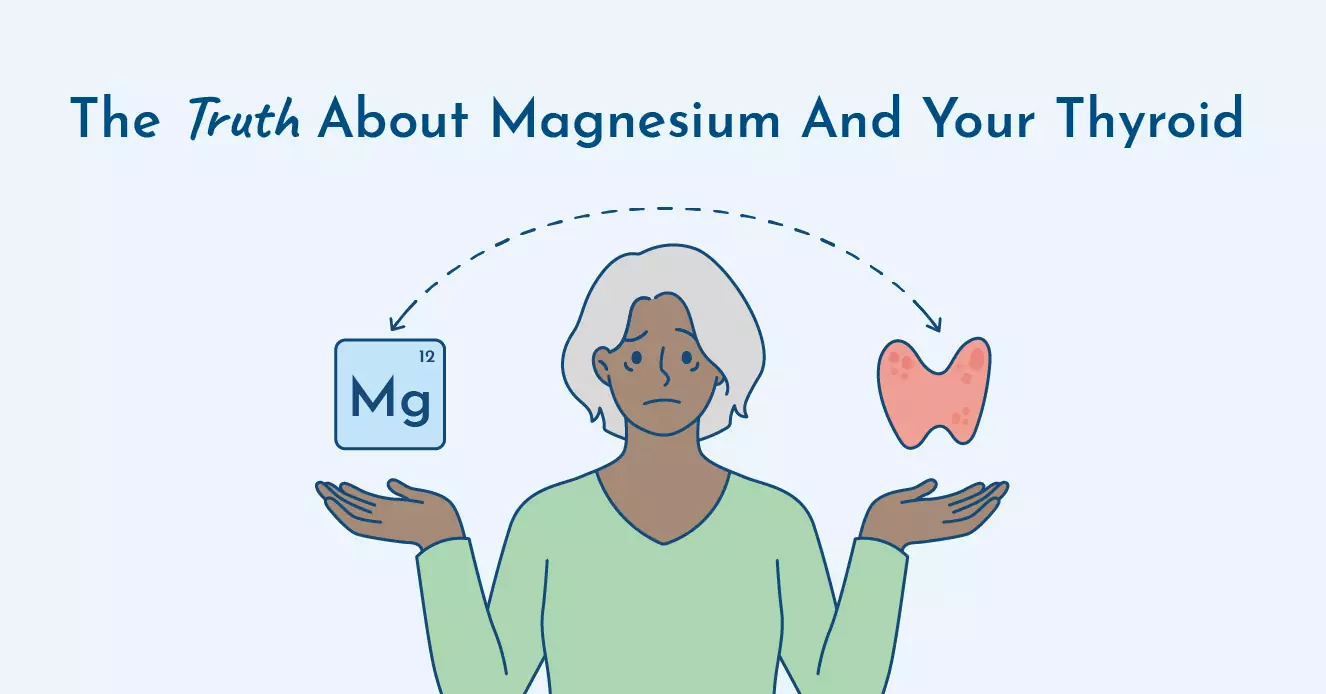
There’s an important piece of the magnesium and thyroid conversation that most people never hear.
It’s one of the main reasons magnesium supplements by themselves often don’t address the full picture.
Now, if you’re currently using a magnesium supplement, I’m not saying you should stop.
Especially considering it’s estimated that 60 to 80 percent of adults fall short in this essential mineral.
And if you’ve been told your thyroid is underactive — or you deal with ongoing thyroid-type symptoms — there’s a good chance your magnesium balance isn’t optimal either.
So yes… you may need more magnesium. We’ll cover that in a minute.
But sometimes we have to stop and zoom out.
And ask a better question:
“Is this really the right way to do this?”
The short answer?
Not usually.
Simply supplementing magnesium is often addressing a smaller part of a much bigger picture.
Imagine this…
You’re sitting in a small boat.
Suddenly you notice water pooling at your feet. The boat has sprung a leak.
So you grab a bucket and start bailing water.
Makes sense, right?
But the boat keeps filling faster than you can empty it.
So what do you do?
Option 1: Keep bailing harder.
Option 2: Find the leak and plug it first — then bail the water.
If you’re reading this, you probably picked Option 2.
It makes more sense to address what’s driving the imbalance first.
And when it comes to magnesium and thyroid-type symptoms…
Most people are just bailing water.
Magnesium for Low Thyroid: The Bigger Underlying Problem
Here’s the problem…
Low magnesium is common. But in people dealing with low thyroid function, it’s often not just about intake.
It’s about loss.
This is why so many people start searching for magnesium for low thyroid symptoms — but often miss what’s really driving the imbalance.
Research suggests thyroid function can influence how minerals — including magnesium — are regulated and balanced in the body.
In other words, your system may be burning through magnesium faster than you realize.
Now think about the symptoms often associated with low magnesium:
- Fatigue
- Irritability
- Sleep issues
- Anxiety or overwhelm
- Muscle cramps
- Poor blood sugar regulation
- Fluid retention
Sound familiar?
That overlap isn’t random.
The crazy thing is — ongoing stress can influence how quickly the body uses and excretes magnesium and other minerals.
And when thyroid output is sluggish, the body often compensates by leaning harder on the stress response.
More stress signaling.
More mineral demand.
More loss.
And that’s often the hidden reason magnesium for low thyroid doesn’t always deliver the results people expect.

We also talk a lot about estrogen dominance inside the Thyroid Hormone Pathway — meaning estrogen activity can rise when liver function slows and hormone clearance changes.
Hormonal shifts like these may play a role in how magnesium and other minerals are regulated and balanced in the body too.
There’s even published research observing relationships between estrogen levels and magnesium status in postmenopausal women.
This is where the iceberg sits beneath the surface.
It’s not just that you’re low in magnesium.
It’s that your system may not be holding onto it efficiently.
If you don’t address that… you’ll keep bailing water.
3 Ways to Support Magnesium Retention with Low Thyroid Function
So what do you do instead?
You support the system that governs mineral retention.
Here are three key areas we focus on clinically.
1. Support Healthy Thyroid Hormone Activity
Healthy thyroid hormone signaling influences cellular energy production — and cellular energy influences how minerals are utilized.
When thyroid hormone activity is sluggish, mineral handling can shift.
Supporting healthy thyroid function may influence how magnesium and other minerals are distributed and utilized at the cellular level.
This is why we always zoom out to the full Thyroid Hormone Pathway instead of isolating one nutrient.
Because nutrients don’t operate alone.
They operate inside systems.
2. Support Hormone Balance
Hormone balance may influence how magnesium and other minerals are regulated inside the body.
When estrogen activity rises relative to progesterone — what many refer to as estrogen dominance — fluid balance and mineral dynamics can shift.
We’ve seen time and time again that when hormone patterns stabilize, thyroid mineral balance often stabilizes alongside it.
This isn’t about chasing lab numbers.
It’s about restoring rhythm.

3. Don’t Neglect Salt and Electrolytes
Magnesium is not the only mineral that shifts when thyroid output is low.
Sodium balance often changes too.
And here’s something most people are never told…
When sodium intake is too low, the body can shift how it regulates fluids and minerals — which may indirectly influence magnesium balance.
Ensuring adequate sodium intake can support a more stable thyroid mineral balance, allowing magnesium from food to be utilized more effectively.
In other words — magnesium doesn’t live in isolation.
It lives in a network.
Why Oral Magnesium Alone May Fall Short
Now, let’s talk about the supplement itself.
Because this is where most advice falls apart.
Not all magnesium supplements absorb equally.
Oral absorption rates vary widely depending on the form used.
And digestion matters.
Some individuals with low thyroid function report digestive sluggishness — lower stomach acid, slower motility, less efficient breakdown of nutrients.
When digestion isn’t optimal, absorption can be inconsistent.
This is another reason magnesium for low thyroid symptoms may not feel effective for some people.
So you might be taking magnesium…
But not actually retaining much of it.
Again — you’re bailing water.
That doesn’t mean magnesium is useless.
It means it works best when the system around it is supported.
3 More Effective Ways to Get Magnesium for Low Thyroid Support
Once you’re addressing magnesium retention…
Then intake becomes far more effective.
Here’s where we start.
1. Magnesium-Rich Foods That Are Easy to Digest
First and foremost — we prefer real food.

Some common magnesium-rich foods include:
- Orange Juice
- Meats
- Chocolate
- Coffee
- Bone Broth
- Vegetable Broth
Now, while many magnesium-rich foods are widely accepted, a few of the most supportive options are often misunderstood in thyroid circles.
For example, foods like orange juice or even coffee are sometimes unnecessarily restricted — despite their role in supporting energy metabolism when used appropriately.
When digestion and metabolism are supported, these foods can contribute meaningful magnesium — along with supportive carbohydrates and amino acids that help regulate energy.
Food works inside systems.
Not in isolation.
2. Topical Magnesium (Magnesium Oil)
Topical magnesium is another option.
Instead of relying solely on digestion, magnesium chloride can be applied to the skin.
Some individuals prefer this route, especially if they struggle with digestive sensitivity.
It’s easy to use.
A few sprays once or twice daily.
No pills required.
It can be a useful tool inside a broader thyroid support strategy.
(Note: If you’re looking for a topical option that aligns with this system-based approach, we created a Topical Magnesium Oil specifically designed to integrate into your daily routine.)
3. Epsom Salt Baths
Epsom salt — magnesium sulfate — is another traditional option.
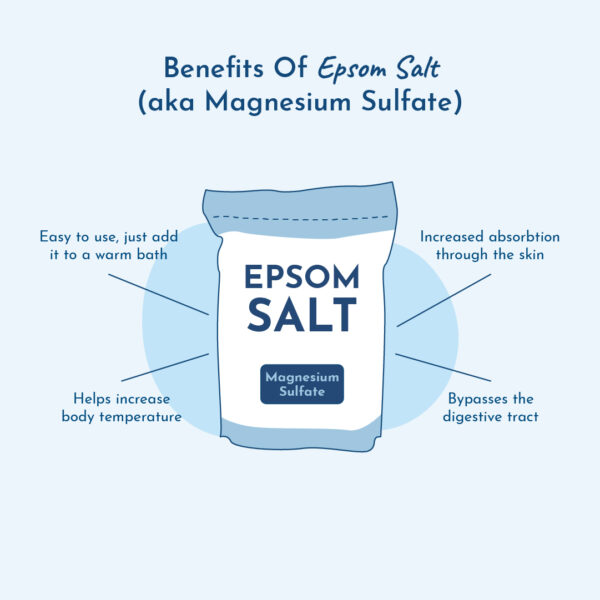
Warm baths support relaxation and circulation.
Adding Epsom salt can provide additional magnesium exposure while helping you unwind at the end of the day.
Simple.
Low stress.
Supportive.
So What’s the Big Takeaway?
Magnesium supplements aren’t the enemy.
But they’re not the whole answer either.
If you only increase intake without addressing why you’re losing it…
You’ll keep struggling.
Always fix the leak first.
Then the bucket works.
When you support the Thyroid Hormone Pathway — thyroid hormone signaling, hormone balance, stress regulation, electrolyte balance — magnesium finally has a stable environment to work inside.
And that’s when things begin to feel different, like:
- More steady energy
- Fewer crashes
- Better sleep
- Calmer nerves
It’s not your fault you weren’t told this.
Most advice isolates nutrients.
But magnesium for low thyroid only works fully when it’s part of a coordinated, system-level strategy.
That’s why we focus on systems.
So before you add another supplement to the cabinet… zoom out.
Support the pathway.
Then let magnesium work the way it was designed to.
That’s how you stop bailing water.
And finally keep the boat afloat.
KEY IDEA
Most people with low thyroid function are told to take more magnesium — and while magnesium matters, that advice misses the bigger picture. Here’s the problem… if your body isn’t holding onto magnesium well, simply taking more won’t solve it. You’ll keep “bailing water” without fixing the leak. Low thyroid output, ongoing stress signaling, shifting hormone balance, and poor electrolyte intake can all influence how minerals are regulated and utilized. If those upstream systems aren’t supported, magnesium may never fully do its job. The smarter approach? Support the Thyroid Hormone Pathway first — then use magnesium as part of a coordinated, system-based strategy instead of a standalone fix.