
Did you know that a large percentage of people diagnosed with autoimmune thyroid conditions have low Vitamin D levels?
That’s right… Vitamin D insufficiency and thyroid symptoms are frequently observed together.
This is why so many people start searching for answers about vitamin d for autoimmune thyroid concerns in the first place.
Don’t have a diagnosis?
Many people struggling with fatigue, brain fog, and stubborn weight changes also discover their Vitamin D levels aren’t optimal.
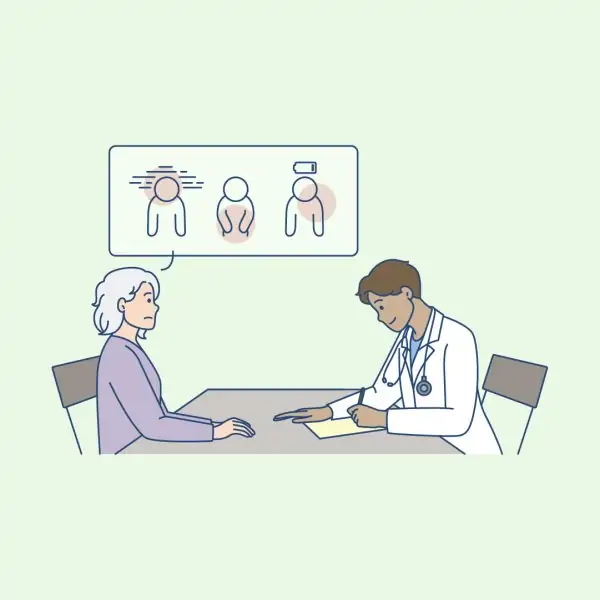
In other words, if you’re dealing with ongoing low-energy thyroid-type symptoms, there’s a good chance your Vitamin D status deserves a closer look.
But before you run to the store and stock up on high-dose Vitamin D…
You need to read this first.
Because there’s more to this than just Vitamin D — and in some cases, taking it the wrong way can throw off the balance your body depends on.
Here’s the problem…
Most thyroid advice treats nutrients like isolated light switches. Flip one on, and everything works.
But your body doesn’t work like that.
It works more like a network — what we call the Thyroid Hormone Pathway — where nutrients interact and regulate one another.
Miss that… and you can unintentionally work against your own progress.
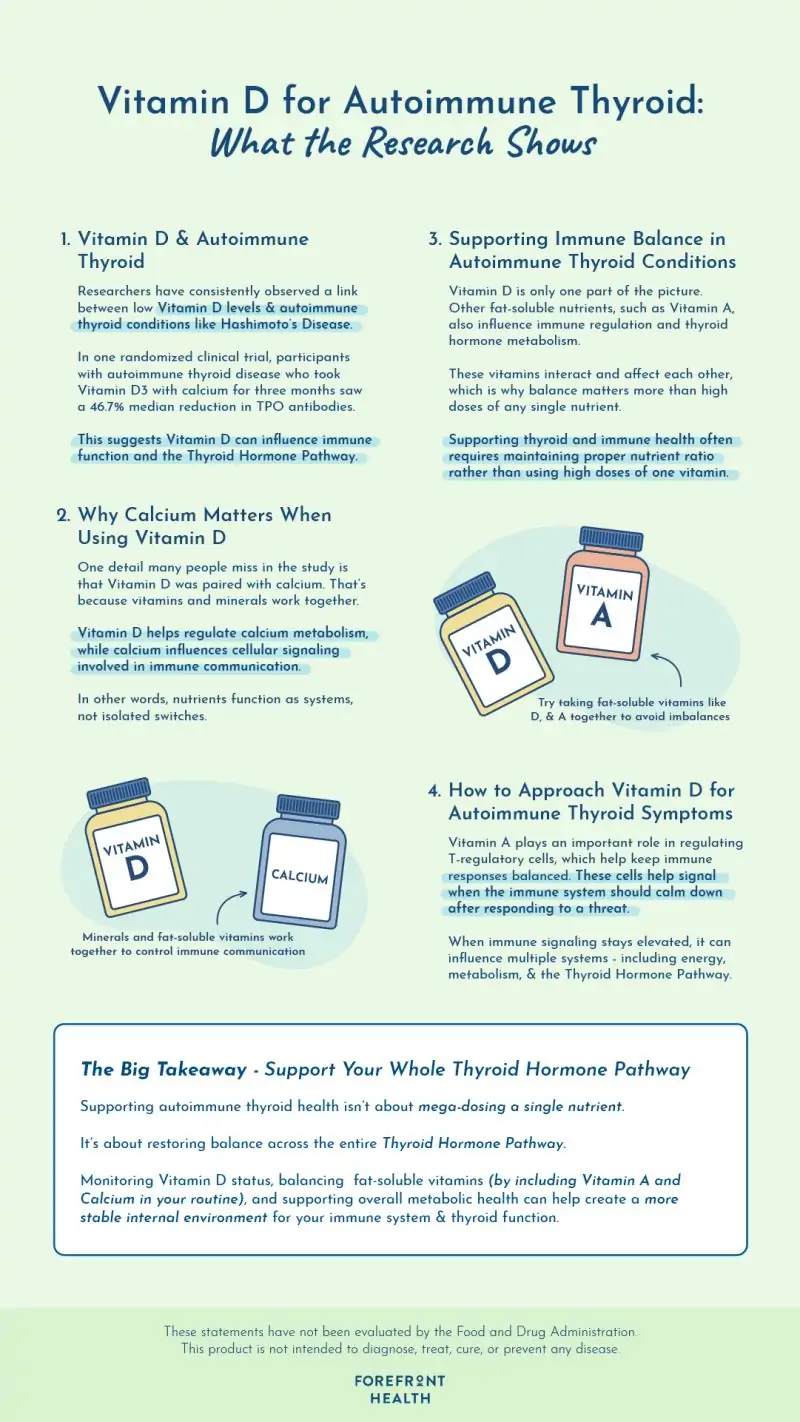
Vitamin D for Autoimmune Thyroid: What the Research Shows
For years, researchers have observed a strong association between low Vitamin D levels and autoimmune thyroid conditions.
The growing interest in vitamin d for autoimmune thyroid health largely stems from this repeated pattern seen in clinical settings.
So the natural question became:
What came first — the deficiency or the immune imbalance?
Does low Vitamin D contribute to immune dysfunction?
Or does immune stress deplete Vitamin D stores?
A randomized controlled trial published in the Indian Journal of Endocrinology and Metabolism examined this question. Participants with autoimmune thyroid disease were given Vitamin D3 along with calcium for three months.
The result?
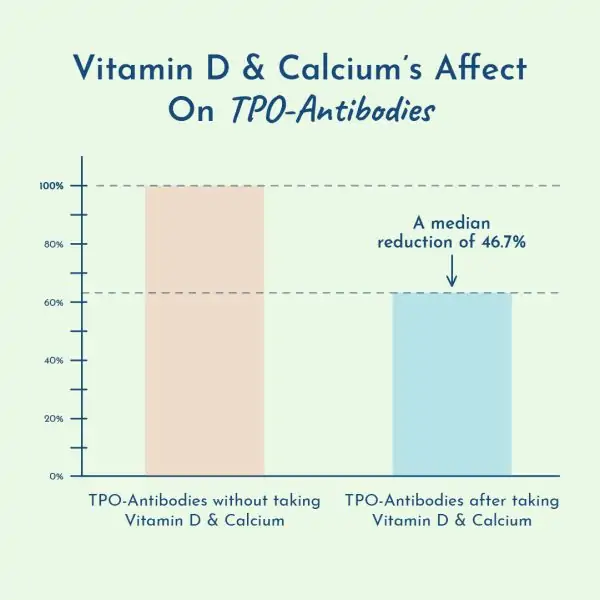
A median 46.7 percent reduction in TPO antibody levels.
That’s not a small shift.
Now — let’s be clear.
This does not mean Vitamin D treats Hashimoto’s.
What it does suggest is something important — nutrient status influences how the immune system functions.
That’s not a replacement for medical care. It’s a reminder that your body’s internal environment matters more than most people realize.
And if you’re someone dealing with fatigue, brain fog, cold hands and feet, hair thinning, or stubborn weight gain — that matters.
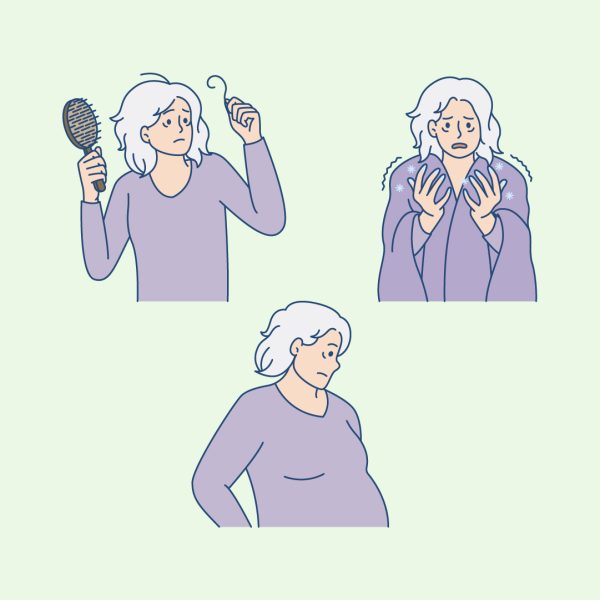
Because immune stress doesn’t stay isolated. It affects the entire Thyroid Hormone Pathway.
And that’s exactly why correcting nutrient status — including vitamin d for autoimmune thyroid support — requires a systems-based approach.
When that pathway is supported properly, everything downstream works more smoothly.
Why Calcium Matters When Using Vitamin D for Autoimmune Thyroid Support
Here’s something most people overlook…
The study didn’t use Vitamin D alone.
It paired Vitamin D with calcium carbonate.
Why?
Because minerals and fat-soluble vitamins work together.
Vitamin D helps regulate calcium metabolism. Calcium influences signaling inside your cells. That signaling affects immune communication.
It’s a system.
Not a single lever.
This is where mainstream advice often falls apart — it isolates nutrients instead of restoring balance.
(Note: If you’re looking for a simple, food-based source of calcium carbonate, our Eggshell Calcium Supplement provides a convenient way to add this form of calcium to your routine.)
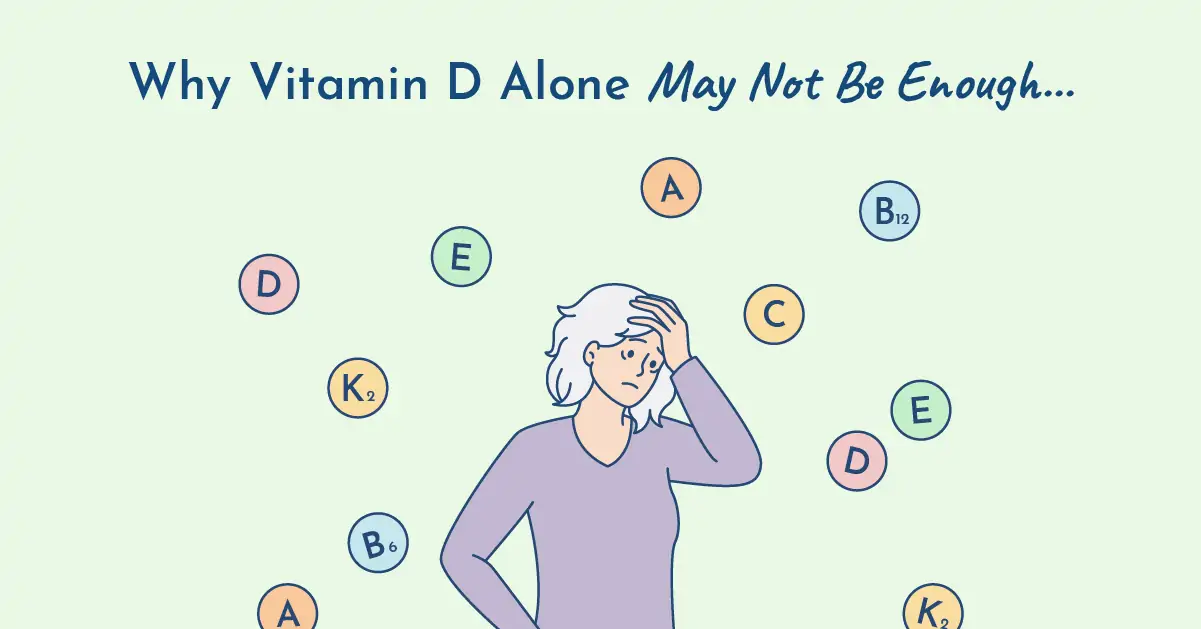
Why Vitamin D Alone May Not Be Enough for Autoimmune Thyroid Balance
Now we need to talk about the part almost nobody explains.
Vitamin D is fat-soluble. So is Vitamin A.
And fat-soluble vitamins behave differently than water-soluble ones. They accumulate. They interact. They compete.
Too much of one can create imbalance in another.
Here’s the crazy thing…
Many people are told to take high-dose Vitamin D without ever evaluating Vitamin A status.
Yet Vitamin A plays a direct role in thyroid hormone metabolism and immune regulation too.
Vitamin A helps regulate T regulatory cells — the immune cells responsible for calming overactive immune responses.
In plain English?
It helps your immune system know when to stop.
And if immune balance has been a concern for you, that distinction matters.
We’ve also seen research showing Vitamin A contributes to normal TSH regulation and supports healthy T3 levels — the active thyroid hormone your cells actually use.
That’s not fringe science.
It’s physiology.
But again — balance is everything.
(Note: That’s why our Vitamin ADK Thyroid Formula was formulated to include these nutrients together in a balanced blend.)
Supporting Immune Balance in Autoimmune Thyroid Conditions
In autoimmune thyroid conditions, immune signaling can become dysregulated — especially certain T helper cells that drive inflammation.
Vitamin A supports the production of regulatory T cells, which help maintain immune equilibrium.
Think of it like this:
T helper cells are the firefighters.
T regulatory cells are the fire chief telling them when the fire is out.
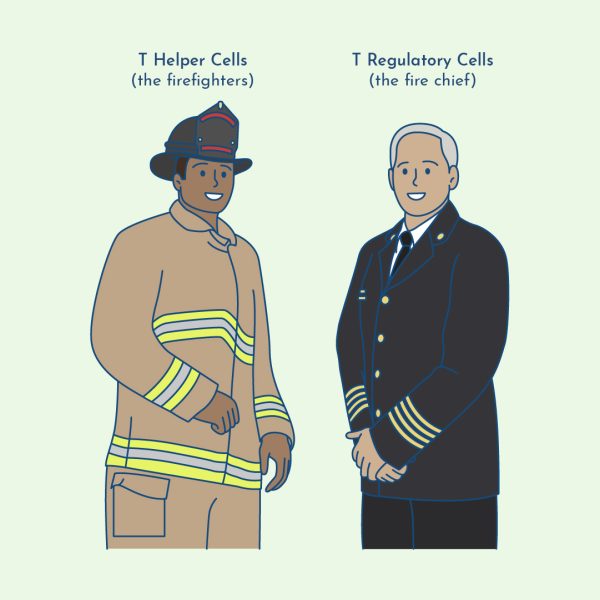
Without enough regulation, the immune system keeps spraying long after the threat is gone.
That lingering immune stress can affect energy, mood, digestion, and even sleep.
And if you’ve been told your labs are “normal” but you still don’t feel like yourself…
It’s not your fault.
Modern medicine rarely explains how these nutrient interactions shape the bigger picture.
How to Approach Vitamin D for Autoimmune Thyroid Symptoms
First — don’t megadose blindly.
More is not better.
Better is better.
(Note: Vitamin D status is best measured using the 25(OH)D blood test. Many experts suggest an optimal range between 40–60 ng/mL (100 to 150 nmol/l).)
Second — think balance.
Fat-soluble vitamins function in ratios. Supporting immune and thyroid health means respecting that biology.
That’s the real conversation behind vitamin d for autoimmune thyroid symptoms — not megadosing, but balance.
This is one reason we formulated our Vitamin ADK Thyroid Formula using balanced fat-soluble ratios rather than isolated high-dose Vitamin D.
Not because it’s trendy.
But because physiology demands it.
If you’re going to support the Thyroid Hormone Pathway, you have to support the entire pathway — not just one stop along the road.
KEY IDEA
Vitamin D deficiency is commonly observed in people struggling with thyroid symptoms — but simply taking more Vitamin D is not the solution. Nutrients like Vitamin D and Vitamin A work together inside what we call the Thyroid Hormone Pathway. When they’re out of balance, immune signaling and metabolic rhythm can feel off. The real shift is moving away from megadosing single nutrients and toward restoring proper balance within the system. When you support the entire pathway — not just one isolated piece — energy becomes steadier, immune activity becomes more regulated, and progress finally starts to feel sustainable.
1. Chaudhary, Sandeep, et al. “Vitamin D supplementation reduces thyroid peroxidase antibody levels in patients with autoimmune thyroid disease: An open-labeled randomized controlled trial” Indian Journal of Endocrinology and Metabolism, May-Jun 2016, https://pubmed.ncbi.nlm.nih.gov/27186560/
2. Botelho, Ilka Mara Borges, et al. “Vitamin D in Hashimoto’s Thyroiditis and Its Relationship with Thyroid Function and Inflammatory Status.” Endocrine Journal, U.S. National Library of Medicine, 29 Oct. 2018, www.ncbi.nlm.nih.gov/pubmed/30058600
3. Cannell, John. “Hashimoto’s Thyroiditis: Does D Deficiency Play a Role?” Vitamin D Council, 10 May 2018, www.vitamindcouncil.org/hashimotos-thyroiditis-does-d-deficiency-play-a-role/