

This is Part 1 of a 3-part series on exercising for thyroid health:
- Part 1 – [You Are Here] – How We Helped One Client Lose 17 lbs. By Supporting Her Thyroid with Exercise
- Part 2 – 3 Thyroid Exercise Mistakes That Could Be Working Against You
- Part 3 – Why “Eat Less and Exercise More” Can Backfire for Your Thyroid Health and Weight Loss
When it comes to low thyroid function and exercise, you’re kind of damned if you do, and damned if you don’t.
On one hand, you have those who don’t exercise, who are missing out on some serious thyroid-supportive benefits.
On the other hand, you have those who are exercising, who are doing it all wrong, and it’s putting even more strain on their thyroid.
It doesn’t take much.
Even one bit of bad advice can ruin any chance of improving your thyroid health when it comes to exercise.
That’s because exercise for low thyroid isn’t simply about working harder. It’s about choosing the right type of exercise, recovering well, and learning how your body responds.
I happen to know this because that’s exactly what happened with a client of mine.
For the sake of privacy, we’ll call her Mary.
When Mary and I first started working together, she was happy with the early progress she was making.
But then something happened…
Mary began to complain that many of her symptoms that had been improving were back with a vengeance.
Almost all of the progress we had made over those two months disappeared over a two-week timeframe.
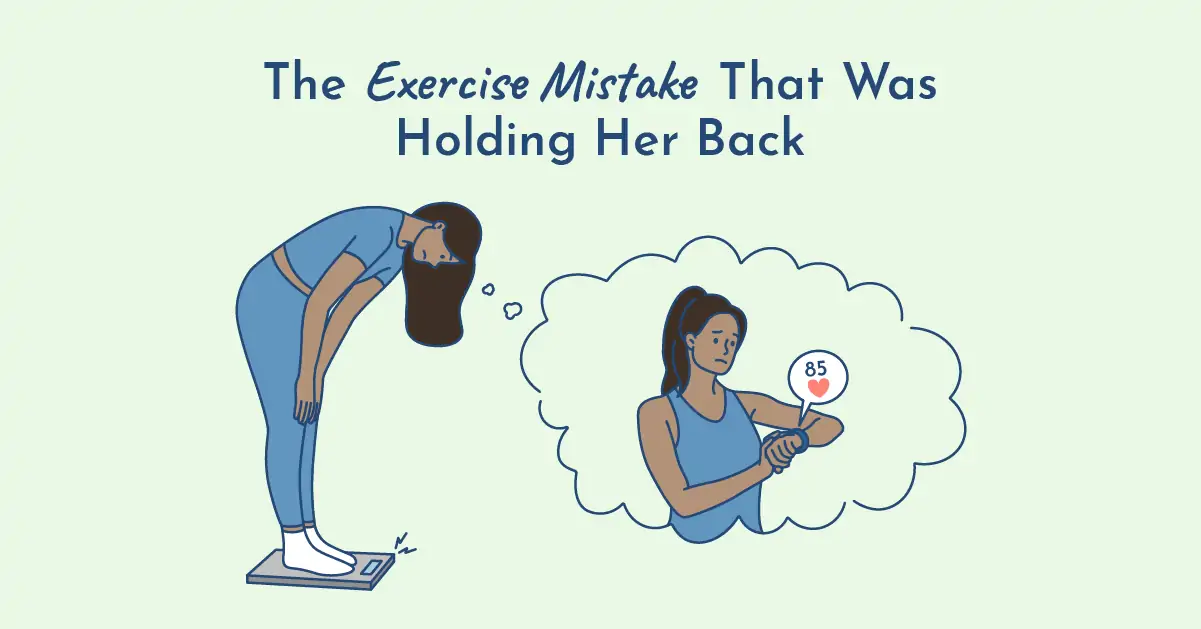
As it turned out, since Mary was feeling better and had more energy, she decided to join a gym and start exercising again, thinking it would help her lose weight faster.
Boy, was she wrong… and now she was paying the price.
We came to find out that almost everything we were doing to support her thyroid was being negated by her poor exercise choices.
One of the biggest misconceptions about exercise for low thyroid is that all workouts place the same demands on the body. They don’t.
Now, I don’t believe in discouraging anyone from exercising.
But when it comes to low thyroid function and exercise, I do believe in teaching thyroid sufferers how to use exercise safely and effectively to best support thyroid function.
In fact, due to the needs of my clients and my exercise-science background, I developed my own thyroid exercise system to do just that.
So, I explained the dangers of her current exercise routine and set her up with an exercise program designed specifically for thyroid sufferers.
After that, we monitored her for another three months and while everyone responds differently, here’s what Mary experienced…
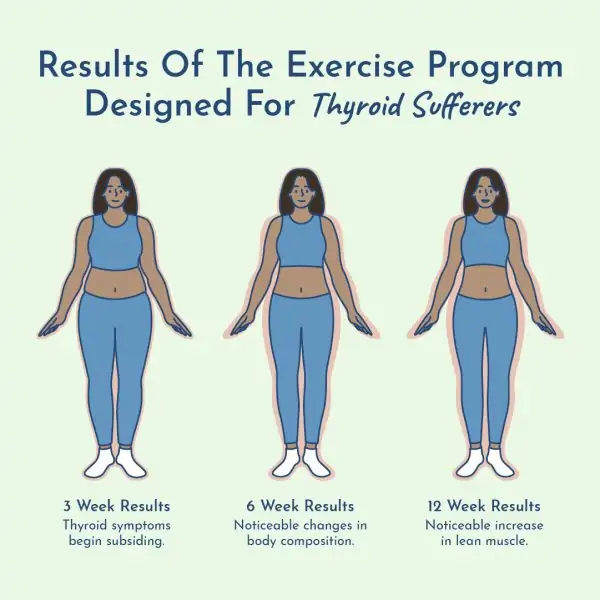
- 3 Week Results: The returning thyroid symptoms were subsiding while the welcomed initial improvements returned.
- 6 Week Results: There were noticeable changes in body composition. Other noticeable changes included improved blood sugar handling, increased energy, more consistent energy, decreased edema, increased average daily body temperature, and improved exercise endurance.
- 12 Week Results: Continued improvement in energy, symptoms, and general well-being. Noticeable increase in lean muscle combined with reduced fat and water-weight (distributed evenly across body), accounting for a 17 lb. (7.7 kg) weight-loss total. Improved average daily body temperature held steady, just slightly below normal (98.6 ºF / 37 ºC).
Here are 3 ways we transformed this client’s thyroid-suppressive exercise routine into one that supported her thyroid function to help achieve these results.
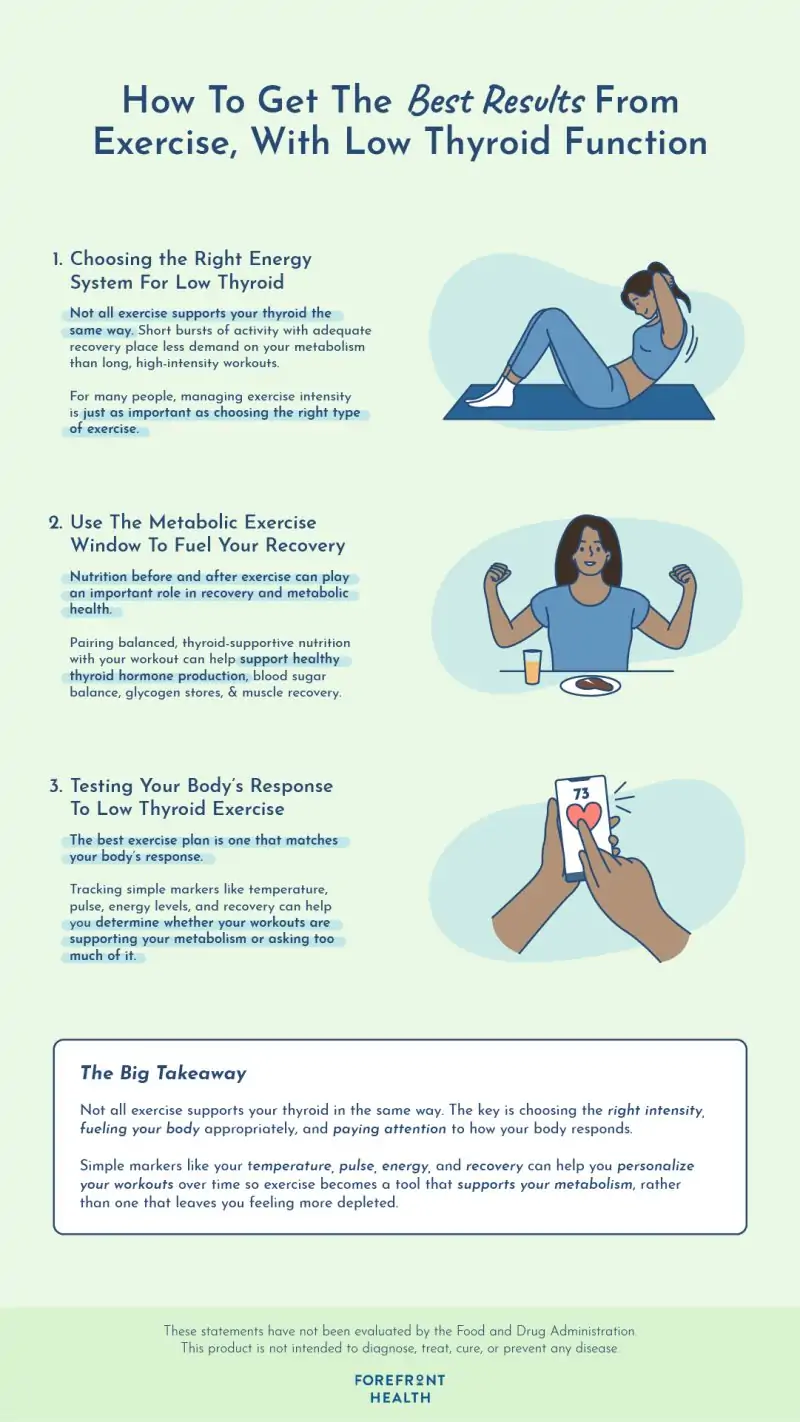
1. Exercise for Low Thyroid Starts With Choosing the Right Energy System
Everyone understands the idea that food can be “healthy” or “unhealthy”.
Yet, few understand that the same goes for exercise.
Exercise can be quite “unhealthy” for you if thyroid function isn’t optimal (or even when it is).
So, it’s essential that you exercise in a way that’s “healthy” for your thyroid.
One way to do this, which I did with this client, is to exercise within what I like to call the “Thyroid-Supportive Energy System”.
Your body depends on many energy systems to meet the high energy-demands of exercise.
Some are safer and thyroid-supportive, while others are dangerous and thyroid-suppressive.
You can see a graph of these energy systems below based on the length of time your body is required to produce constant high energy-demands without rest.
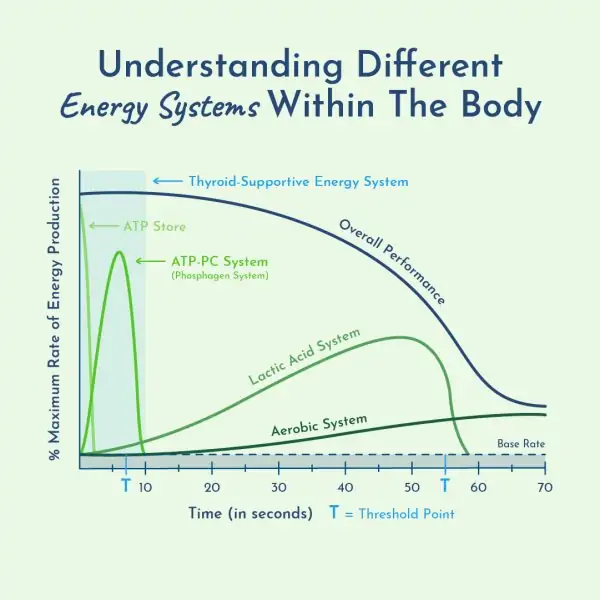
Ideally, you need to exercise within the ATP/PC Energy System (or as we call it, “Thyroid-Supportive Energy System”).
This means not putting your body under high energy-demand for longer than 8 to 10 seconds at a time without taking a break to allow your ATP energy reserves to replenish.
For many people with low thyroid function, managing workout intensity can be just as important as choosing the right exercises.
If you continue to place high-energy demands on your body for longer than this, then your stored energy reserves become depleted.
And you push yourself into the more demanding, and thyroid-suppressive, lactic acid and aerobic energy systems.
I talk more about how to avoid these thyroid-straining exercise energy systems in this post on “3 Thyroid Exercise Mistakes That Could Be Working Against You”.
That covers the first step of the process of how we fixed this client’s exercise routine.
Yet, don’t underestimate the importance of these next two steps, which are just as vital…
2. Use Your Metabolic Exercise Window to Get More From Exercise for Low Thyroid
Imagine that there’s a brief magical window of time every day.
And if you eat certain thyroid-friendly foods during this window, their thyroid-supportive effects are amplified 3X, 5X, or even 10X.
Who wouldn’t want to take advantage of that?
That’s sort of what your Metabolic Exercise Window is like.
When you exercise, research shows that your cells become sensitive to certain thyroid-friendly foods, allowing them to have a much greater impact on your thyroid health.
This helps support many aspects of thyroid function including:
- Supporting healthy thyroid hormone production
- Supporting liver and muscle glycogen
- Supporting healthy blood-sugar regulation
- Increasing healthy muscle production
- And more…
Yet, get this…
These effects don’t just last “during” this special window of time… these thyroid-supportive effects continue long after your workout is over.
Getting back to our client, I designed a special drink and simple exercise-nutrition plan for her to use prior to her workouts, during her workouts, and then immediately after her workouts to take advantage of her Metabolic Exercise Window.
This window only lasts up to about 45 minutes after your workout.
Pairing nutrition with exercise for low thyroid may help support recovery after physical activity.

So, it’s extremely important to get adequate nutrition that is quickly and easily absorbed before the window closes.
This Metabolic Exercise Window is something that very few thyroid sufferers use to their advantage.
Instead, most are given the horrible advice to avoid food anytime near when they exercise.
I talk more about the necessity of exercise-nutrition in this post on “Why “Eat Less and Exercise More” Can Backfire for Your Thyroid Health and Weight Loss”, which is a trap that so many thyroid sufferers fall into.
This Metabolic Exercise Window isn’t only important for supporting your thyroid function.
It’s essential to make your exercise safe and productive, rather than harmful and counterproductive.
And it can make all the difference with what I’m going to show you next.
3. The Most Overlooked Part of Exercise for Low Thyroid: Testing Your Response
Another common mistake I find among clients and thyroid sufferers is “assuming” that all exercise is safe and effective.
Maybe you’ve heard the saying “When you ‘ass-u-me’, you make an ‘ass’ out of ‘u’ and ‘me’…” (clever, right?)
Well, I don’t know about you, but I was taught never to “assume” anything.
We’ve already established above that not all exercise is “healthy”.
Yet, wouldn’t it be nice if you could slap a monitor on your wrist and have it alert you if your workout becomes dangerous?
Unfortunately, technology isn’t that advanced yet.
However, you can still effectively test yourself to ensure that your workouts are safe and effective.
Sure, there are symptomatic responses of a harmful workout that you can look for (and I do recommend you do), including:
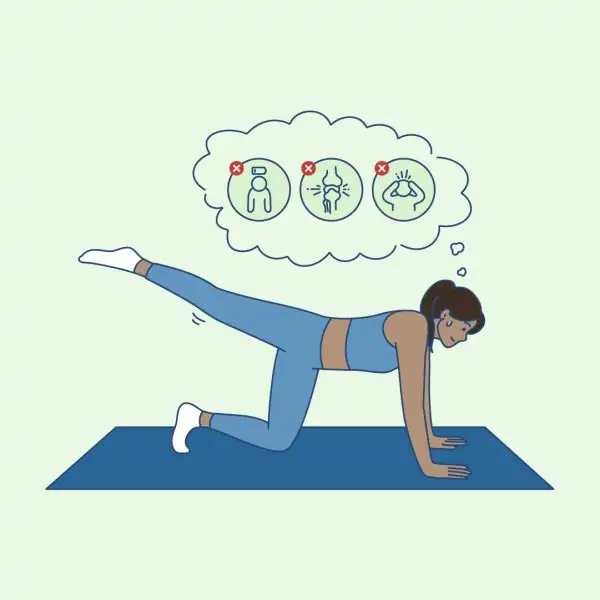
- Feeling more tired or exhausted after your workout
- Difficulty catching your breath
- Severe muscle fatigue
- Lightheadedness
- Etc.
Yet, I’m referring to testing measurable physiological responses, like your body temperature and pulse.
This is exactly what we did with our client.
We had her measure her body temperature and pulse before and after her workouts to test how her body responded to each workout.
Tracking your body’s response can help personalize exercise for low thyroid instead of relying solely on generalized fitness advice.
Doing this, we could tell if she was pushing herself too hard.
Or, if she was ready to progress to the next phase of her exercise program.
This allowed us to adjust her workouts (and nutrition) to meet her specific needs.
This specific feedback made all the difference for this client because she could determine exactly how much exercise, and how long, her body (and thyroid) could comfortably recover from.
If you’re interested in learning more about the specifics of this thyroid-exercise testing method, I talk about it in more detail in this post about “3 Thyroid Exercise Mistakes That Could Be Working Against You”.
Many of the roadblocks we faced stemmed from the assumption that all exercise is safe and effective for thyroid sufferers.
That’s just not the case when it comes to low thyroid function and exercise.
After discussing this with so many clients, I can say that most who are exercising without proper guidance are only leaving themselves feeling worse than when they started.
Yet, by making these three simple changes to our clients’ exercise routines, we’ve been able to eliminate these roadblocks and use exercise to our advantage in helping to support healthy thyroid function.

KEY IDEA:
Mary lost 17 pounds and supported her thyroid function by switching from harmful gym exercises to a thyroid-supportive workout program. The key changes included: exercising only in 8-10 second bursts within the “Thyroid-Supportive Energy System”, utilizing the 45-minute “Metabolic Exercise Window”, and testing body temperature and pulse before and after each workout to ensure exercises helped rather than hindered her metabolism. Within 12 weeks, Mary experienced consistent energy, improved body composition, better blood sugar control, and steady body temperature improvements, demonstrating that proper exercise can support thyroid function when used properly.