
This is Part 3 of a 3-part series on exercising for thyroid health:
- Part 1 – How We Helped One Client Lose 17 lbs. By Supporting Her Thyroid with Exercise
- Part 2 – 3 Thyroid Exercise Mistakes That Could Be Working Against You
- Part 3 – [You Are Here] – Why “Eat Less and Exercise More” Can Backfire for Your Thyroid Health and Weight Loss
Even doctors are guilty of this…
The people we’re supposed to trust above all others with respect to our health often give the absolute worst advice.
That’s certainly the case when it comes to weight loss.
I’m sure you’ve heard it before… “Eat less and exercise more”.
Can you do me a favor?
Take everything you’ve ever heard or learned about exercise and weight loss… and flush it down the toilet.

If you can do that, then you’re 90% of the way to the finish line.
The rest is easy.
For many people, this advice can make sustainable weight loss more difficult.
You see, most people today are obsessed with the immediate results.
They don’t want to lose weight today… they want to lose it yesterday.
And most don’t give a single thought about how this might impact them in the long-term.
So, let me ask you a question…
Would you rather… A: Lose 10 lbs. (2.2 kg) this week only to gain 20 lbs. (9 kg) more over the next 6 months?
Or…
B: Lose 1 lb. this week and lose another 10 lbs. (4.5 kg) over the next 6 months?
Well, unless you’re getting married next week and can’t quite fit into your wedding dress, I hope you chose the obvious answer, Choice B.
If you can honestly say that you prefer Choice A (long-term weight gain), then by all means, continue following that doctorly advice of eating less and exercising more.
But if you’re interested in long-term sustainable weight loss, then you may actually benefit from taking the opposite approach… eating more and exercising less.
I’ll show you why in a minute.
But first, let’s take a closer look at how “exercising more” and “eating less” can make long-term weight management more difficult.
Think about this for a second.
Generally speaking, weight gain is a common symptom of low thyroid function. (I work with plenty of clients with the opposite problem, but just stick with me here.)
So, it should make sense that anything that interferes with healthy thyroid function may make weight management more challenging, right?
Well, there’s plenty of research showing that both eating less and exercising more do just that.
Let’s jump in and take a closer look.
How “Exercising More” Leads to Long-Term Weight Gain
Exercising more can put more stress on your thyroid in three different ways.
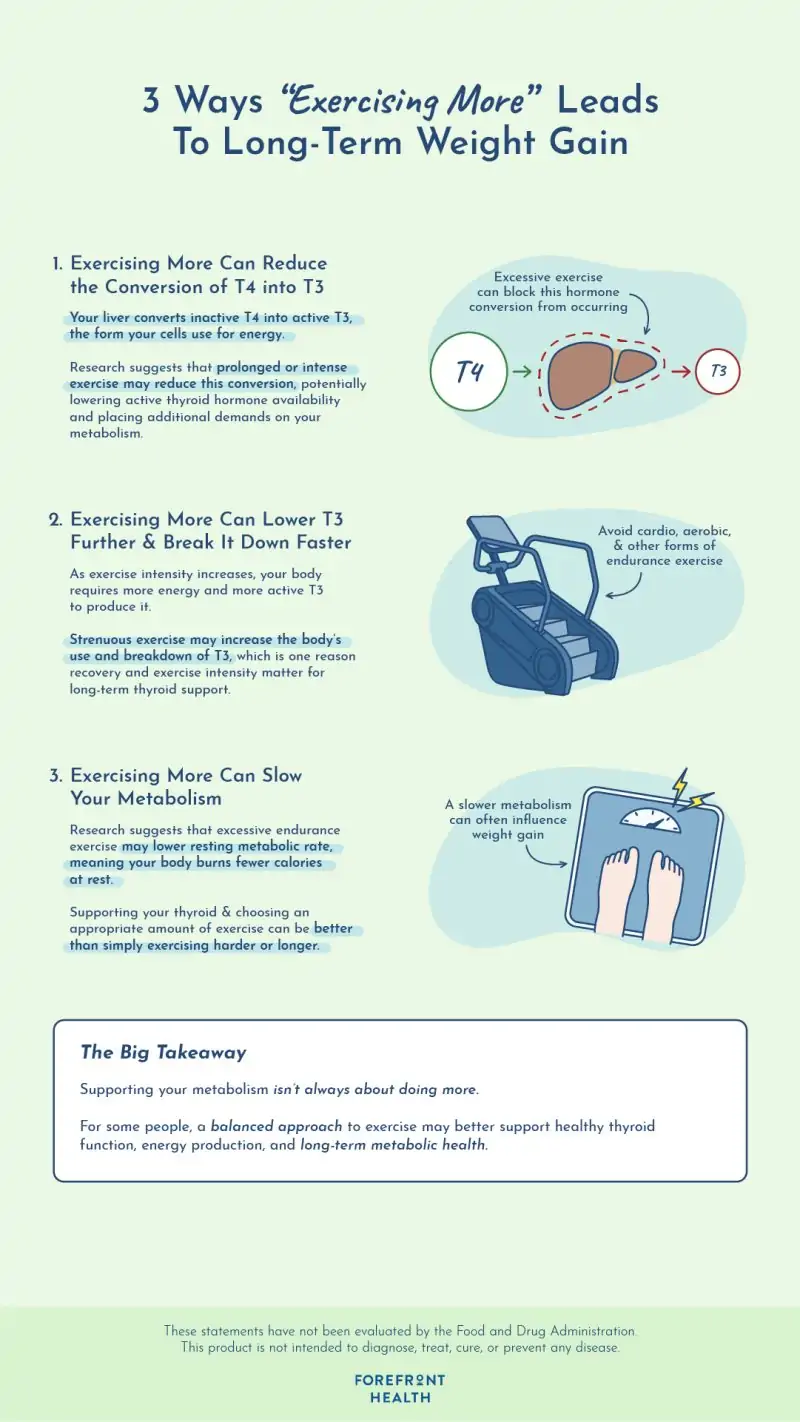
1. Exercising More May Reduce the Conversion of T4 into T3
Your liver plays a vital role in your thyroid health.
It’s responsible for converting the inactive T4 thyroid hormone that your thyroid gland produces into the active T3 thyroid hormone that you need for proper thyroid function.
Yet, over-exercising may reduce T4-to-T3 conversion, resulting in lower active thyroid hormone levels.
The effect of acute exercise session on thyroid hormone economy in rats
https://www.ncbi.nlm.nih.gov/pubmed/18539729
“T3/T4 ratio was significantly decreased 60 and 120 min after the exercise, indicating impaired T4-to-T3 conversion.”
This doesn’t just occur during exercise though.
These negative effects continue beyond the workout itself.
If over-exercising reduces the conversion of thyroid hormone, it may further challenge normal thyroid function and promote long-term weight gain.
But there’s another way that over-exercising lowers your T3 even more.
2. Exercising More May Lower T3 Further by Breaking It Down Faster
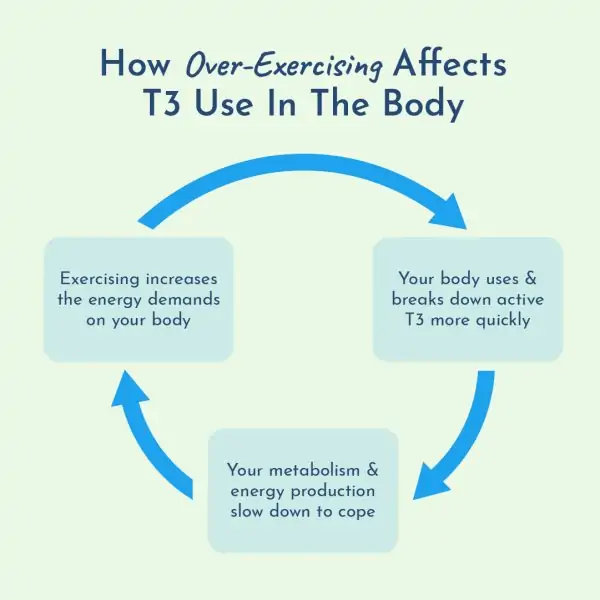
Exercising increases the energy demands on your body.
The harder you push yourself, the more energy your body must generate.
To generate that energy, your body must use up more active T3 thyroid hormone.
In other words, strenuous exercise increases the body’s demand for thyroid hormone to support energy production, which may also increase its breakdown within the body.
The effect of exhaustion exercise on thyroid hormones and testosterone levels of elite athletes receiving oral zinc.
http://www.ncbi.nlm.nih.gov/pubmed/16648789
“CONCLUSION: Findings of our study demonstrate that exhaustion exercise led to a significant inhibition of both thyroid hormones and testosterone concentrations…”
Of course, there are ways to minimize these thyroid-suppressive effects, such as exercising in ways that focus on utilizing your Thyroid-Supportive Energy System, as covered in the post on “How We Helped One Client Lose 17 lbs. By Supporting Her Thyroid with Exercise”.
But if driving your T3 levels into the ground isn’t bad enough for you, over-exercising also has the same effect on your metabolism.
3. Exercising More May Slow Your Metabolism
When it comes to weight loss, your metabolism matters.
Your metabolism determines the rate at which your body burns calories.
From a simplistic point of view, most people understand that a slower metabolism is associated with weight gain, while a faster metabolism is associated with weight loss.
Well, I hate to be the bearer of even more bad news, but over-exercising is also shown to lower what’s called your Resting Metabolic Rate:
Endurance training with constant energy intake in identical twins: changes over time in energy expenditure and related hormones.
http://www.ncbi.nlm.nih.gov/pubmed/9160814
“Resting metabolic rate (RMR) was significantly decreased by 8% after training despite the preservation of fat-free mass (FFM). Accordingly, plasma norepinephrine (NE) concentrations, NE appearance rate, and plasma levels of triiodothyronine (T3), free T3, and total thyroxine (T4) were lower after training.”
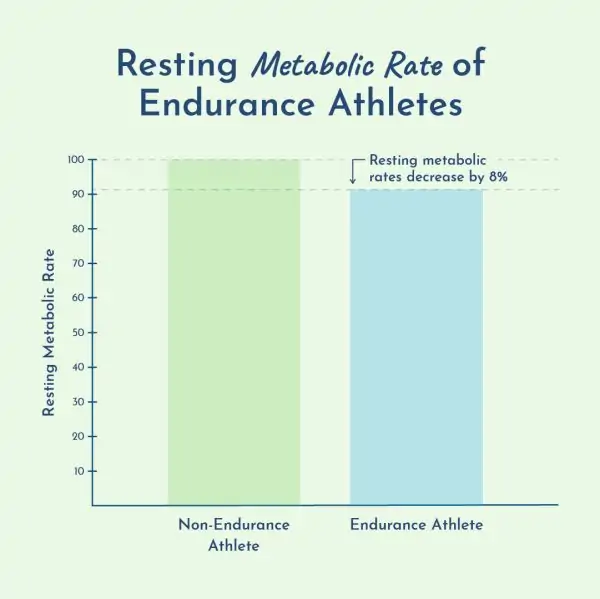
A slower Resting Metabolic Rate means that you’ll be burning less calories all day every day… even when you sleep.
Again, this may make long-term weight management more challenging.
As you can see, “exercising more” only places additional demands on your thyroid and metabolism.
And anything that disrupts your thyroid function or metabolism can lead to long-term weight gain.
Now, when it comes to “eating less”, the effects are pretty much the same as over-exercising.
How “Eating Less” Leads to Long-Term Weight Gain
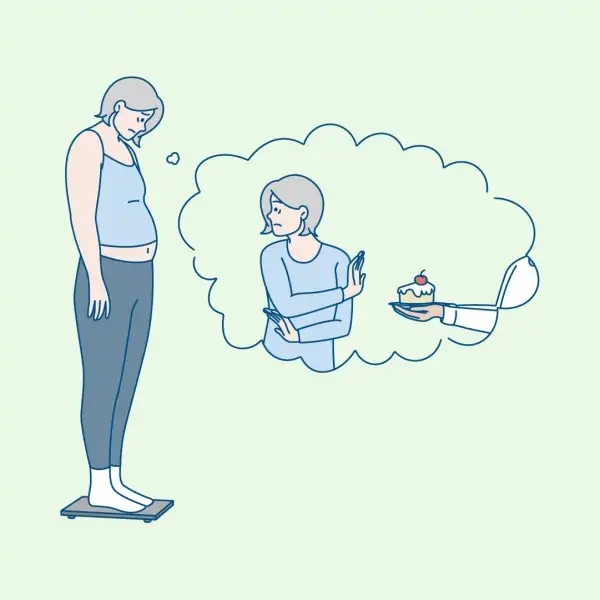
The negative effects of “eating less” have almost everything to do with your liver.
You see, when your thyroid function declines, it becomes more difficult for your liver to store sugar (in the form of glycogen).
This sugar/glycogen is what your body depends on to regulate your blood sugar between meals.
This is why low thyroid function and blood sugar struggles go hand in hand.
When your liver can’t store glycogen, it makes it extremely difficult to keep your blood sugar stable when not eating.
Instead, your blood sugar continues to rise when you eat and then fall when you don’t.
It’s this drop in blood sugar that signals your body to over-produce stress hormones.
Why?
Because the primary purpose of these stress hormones is to break down your own muscle protein and convert that protein into sugar to bring your blood sugar back up to normal.
Yet, while these stress hormones are working to bring your blood sugar back up, they’re also slowing your thyroid.
If you remember from the previous post “3 Thyroid Exercise Mistakes That Could Be Working Against You”, skipping meals or exercising on an empty stomach only drives stress hormones higher, which further slows your thyroid.
This is what makes “eating less” so controversial.
Eating less and going longer between meals makes you even more dependent on stress hormones to keep your blood sugar from dropping dangerously low.
And, as we’ve already established, additional stress on your thyroid commonly promotes long-term weight gain.
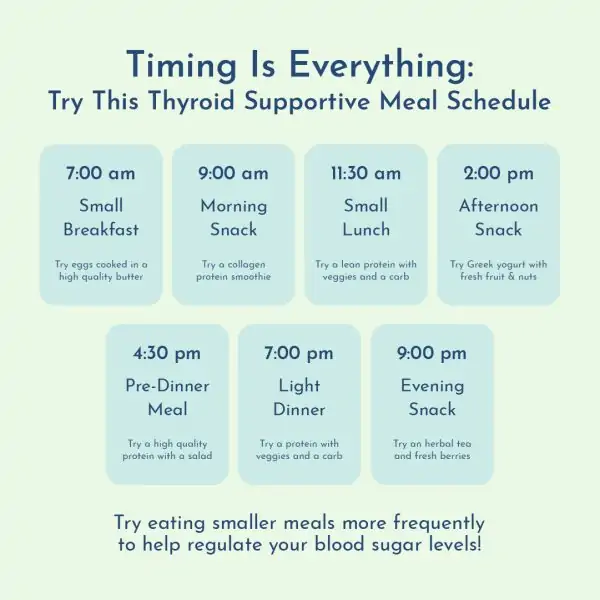
This is why many with low thyroid function shouldn’t focus on eating less, but rather eating more frequently to help prevent these blood sugar fluctuations and the negative effects that come with them.
So, there you have it, plain and simple.
Eating less and exercising more places even more stress on your thyroid in multiple ways.
And remember, anything that places additional stress on your thyroid tends to set you up for long-term weight gain.
For many people, the key to long-term weight loss is the opposite.
You may actually benefit from eating more frequently and exercising within parameters that lower stress and support healthy thyroid function and metabolism.
When done properly, this has many beneficial effects, including:
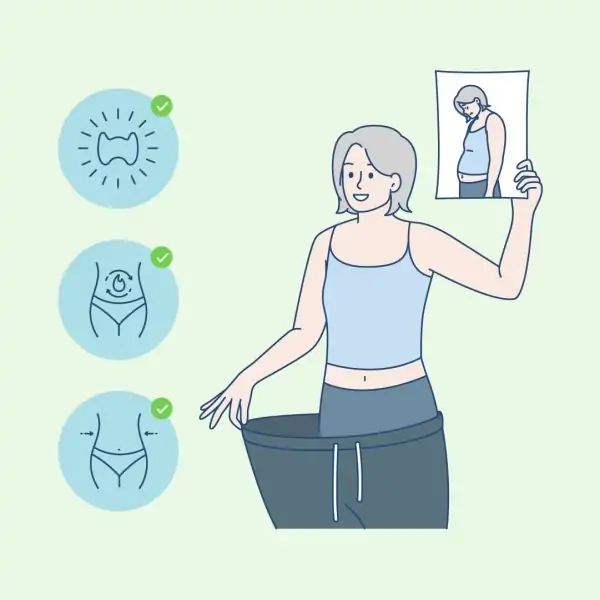
- Supporting healthy thyroid function.
- Supporting a healthy metabolism to help burn more calories all day long.
- Promoting slow, steady, and sustainable long-term weight loss.
The choice is yours…
You can throw it all away trying to lose a few pounds today only to gain it back in the coming weeks or months.
Or, you can invest in a better approach that pays off in long-term weight loss.
Don’t fall into the eat less and exercise more trap.
KEY IDEA:
The common advice to “eat less and exercise more” for weight loss actually backfires for people with thyroid dysfunction and leads to long-term weight gain instead. When you exercise too much, it blocks your liver from converting inactive thyroid hormone (T4) into active thyroid hormone (T3), burns through your existing T3 faster, and slows down your metabolism so you burn fewer calories all day long. Similarly, eating less forces your body to rely on stress hormones to maintain blood sugar levels and these same stress hormones suppress your thyroid function. Since thyroid problems cause weight gain, anything that makes your thyroid worse will ultimately make you gain more weight over time. Instead of the typical approach, people with low thyroid function should eat more frequently and exercise in ways that support rather than damage their thyroid to achieve sustainable, long-term weight loss.