
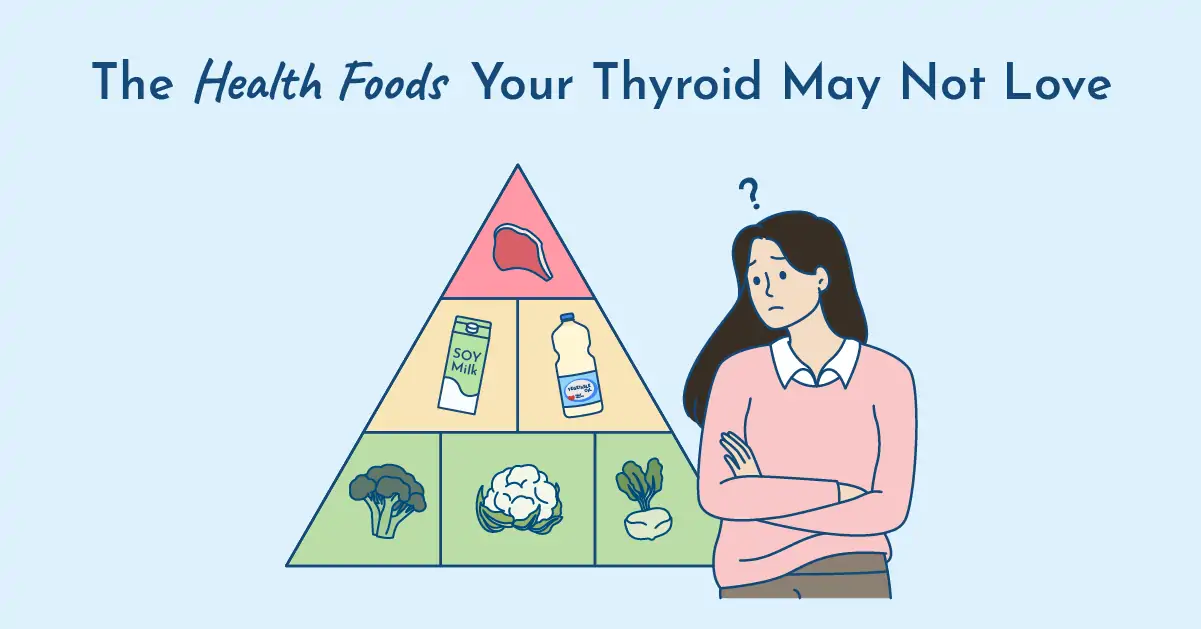
Do you really know which foods to avoid when it comes to supporting healthy thyroid function?
Well, few people get this right.
Why?
Because most people – and even many experts – look at food in completely the wrong way.
It’s easy to get caught up in the details and miss the bigger and more important picture.
This is why so many people continue to recommend foods they believe are supportive of thyroid health while overlooking research that raises important questions about how some of those same foods may influence thyroid function.
You see… the foods you eat can play an important role in supporting healthy thyroid function.
And they can influence different parts of your Thyroid Hormone Pathway…
…from your thyroid gland all the way down to your thyroid hormone cell receptors and even the mitochondria inside your cells.
We talk more about the Thyroid Hormone Pathway – and why supporting each step matters – in our post, “The 5 Hidden Steps to Optimizing Your Thyroid Health (That Most People Miss)“.
Today, however, we’re going to focus on seven foods that research suggests may negatively influence your thyroid gland.
Understanding which foods to avoid for thyroid health is only one part of the picture, but it’s an important place to start.
While each food is different, many of the compounds they contain have been studied for their potential effects on thyroid function.
Some compounds found in foods have been shown in research to influence hormone production.
Others have been shown to influence hormone release.
Here’s the important point to remember…
Even foods with certain nutritional benefits deserve a closer look if they also contain compounds that may work against your thyroid.
Otherwise, it can become like trying to fix a small leak while flooding the rest of the house.
It doesn’t make much sense to solve one problem only to create another in the process.
And that’s especially true for this first food.
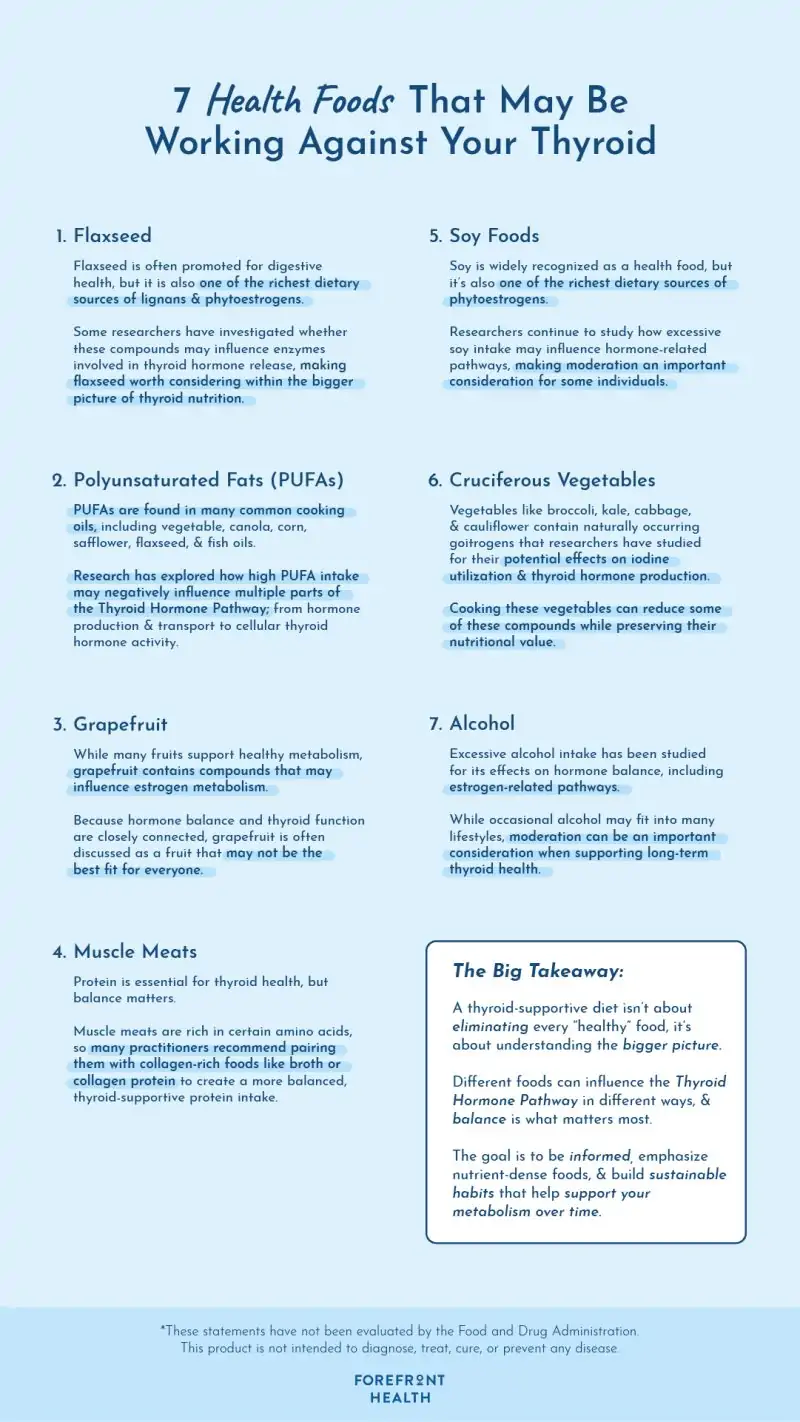
1. Flaxseed: A “Healthy” Food That May Work Against Your Thyroid
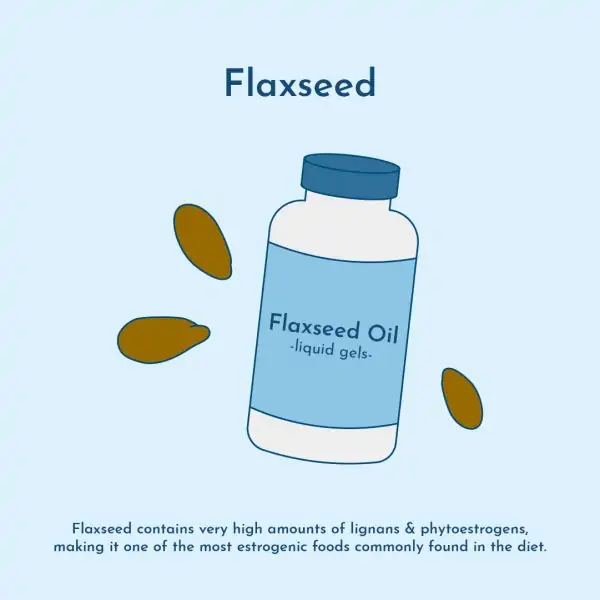
Flaxseed is one of the most commonly recommended dietary supplements today.
It’s frequently used to support digestive regularity – something many people with thyroid concerns struggle with – and it’s often promoted for a variety of other health benefits as well.
But here’s what many people don’t realize…
Flaxseed also contains very high amounts of lignans and phytoestrogens, making it one of the most estrogenic foods commonly found in the diet.
Here’s why that’s worth paying attention to…
Some researchers believe these naturally occurring plant compounds may negatively influence thyroid function by affecting the enzymes involved in thyroid hormone release.
In other words…
While flaxseed may offer certain digestive benefits for some people, it’s also worth considering how it fits into your overall thyroid-supportive dietary pattern.
That’s why we encourage looking at the complete picture rather than focusing on just one potential benefit.
When evaluating foods to avoid for thyroid health, it’s important to weigh both the potential benefits and the potential tradeoffs.
And if you think flaxseed’s omega fatty acids make it an obvious choice…
…you’re probably going to be surprised by this next food too.
2. Polyunsaturated Fats (PUFAs): What They Mean for Thyroid Health
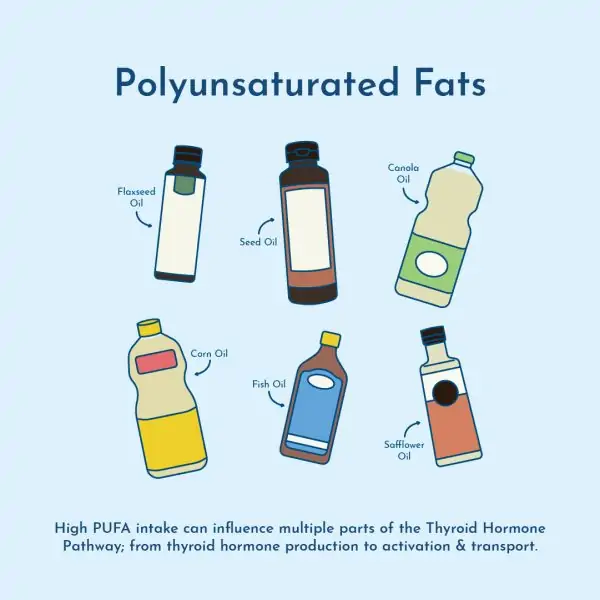
Polyunsaturated fats (PUFAs) naturally occur in many commonly used oils, including:
- Flaxseed oil
- Canola oil
- Fish oil
- Safflower oil
- Corn oil
- Vegetable oil
- Many seed oils
- And more…
Many are surprised to learn that some of the most commonly used cooking oils are frequently discussed among foods to avoid for thyroid support.
Most people have been taught that these oils are unquestionably healthy.
But here’s the crazy thing…
Evidence suggests that consuming high amounts of polyunsaturated fats may negatively influence several aspects of thyroid physiology.
Researchers have investigated how high PUFA intake may influence multiple parts of the Thyroid Hormone Pathway – from thyroid hormone production to activation, transport, and how your cells ultimately respond to thyroid hormone.
As thyroid researcher Dr. Raymond Peat explained:
“Studies have found that polyunsaturated fats inhibit the proteolytic enzymes involved in the digestion of food, in the removal of clots, in the formation of thyroid hormone, and many other essential physiological processes.”
In other words…
The goal is to recognize that the amount and types of fats you consume deserve just as much attention as the rest of your diet – especially if you’re trying to support healthy thyroid function.
Because sometimes the foods we’ve been told are helping…
…deserve a second look.
3. Grapefruit: Not Always the Best Choice for Thyroid Health
We often recommend certain fruits for their thyroid-supportive nutrients.
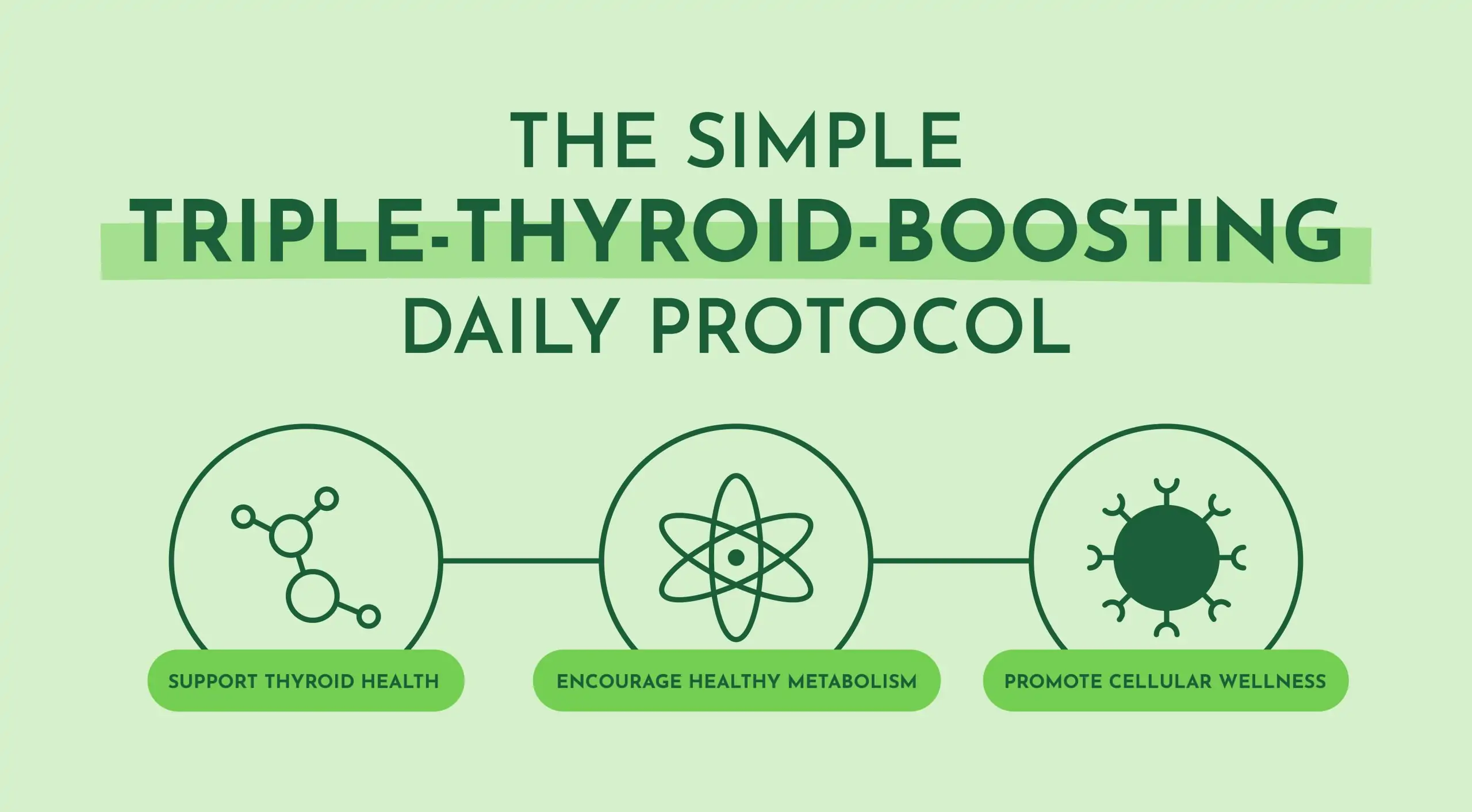
In fact, in our 3 Food Triple-Thyroid-Boosting Daily Protocol, we highlight one fruit that has become a staple recommendation because of the role it can play in supporting healthy thyroid function.

You can learn more about that daily protocol here.
But here’s the important thing to remember…
Not all fruits affect the body in exactly the same way.
And grapefruit is a good example.
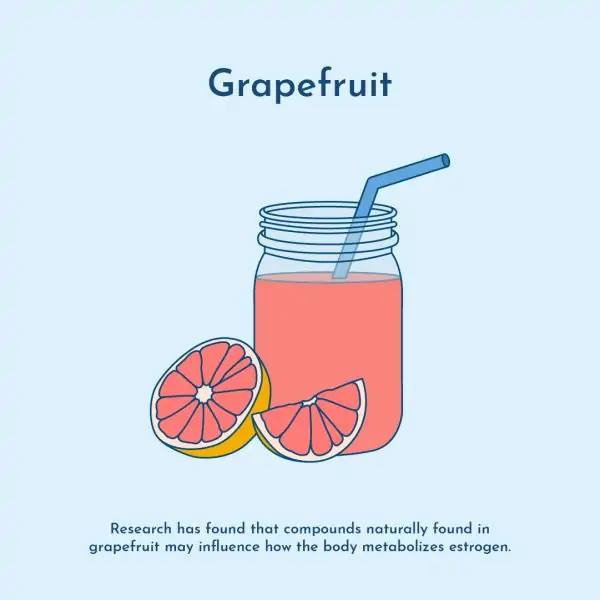
Research has found that compounds naturally found in grapefruit may influence how the body metabolizes estrogen.
Because hormone balance and thyroid function are closely connected, some researchers believe this may be one reason grapefruit isn’t always the most thyroid-supportive choice.
In other words…
Just because a food is widely considered healthy doesn’t automatically mean it’s the best fit for every situation.
Looking at the complete picture is what matters most.
That’s why many people looking for foods to avoid for thyroid health begin by evaluating the fruits they eat every day.
4. Over-Eating Muscle Meats: Why Protein Balance Matters for Your Thyroid
While adequate protein is essential for healthy thyroid function, the type and balance of protein you eat can make a meaningful difference.
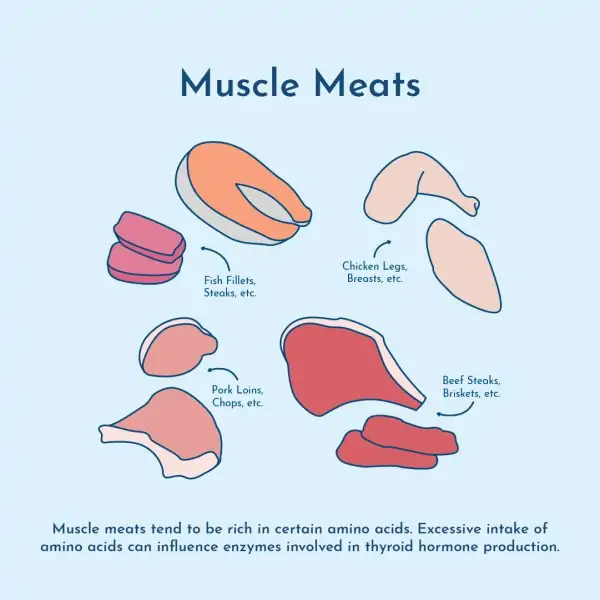
Muscle meats, for example, tend to be rich in certain amino acids, including cysteine.
Researchers have investigated whether excessive intake of some amino acids may influence enzymes involved in thyroid hormone production.
Now, that doesn’t mean muscle meats should be avoided.
In fact…
Getting too little protein is likely to create far bigger problems than eating too much muscle meat.
The goal is balance.
That’s why we often recommend pairing muscle meats with more collagen-rich protein sources – such as homemade broth or collagen protein – which naturally contain much lower amounts of these amino acids.

Looking at protein this way helps support a more balanced, thyroid-supportive dietary pattern rather than relying too heavily on any single protein source.
You can learn more about the collagen protein we use with our clients here.
5. Soy: What People With Thyroid Concerns Should Know
Soy has long been promoted as a healthy food.
But over the years, researchers have also raised important questions about how excessive soy intake may affect thyroid function.
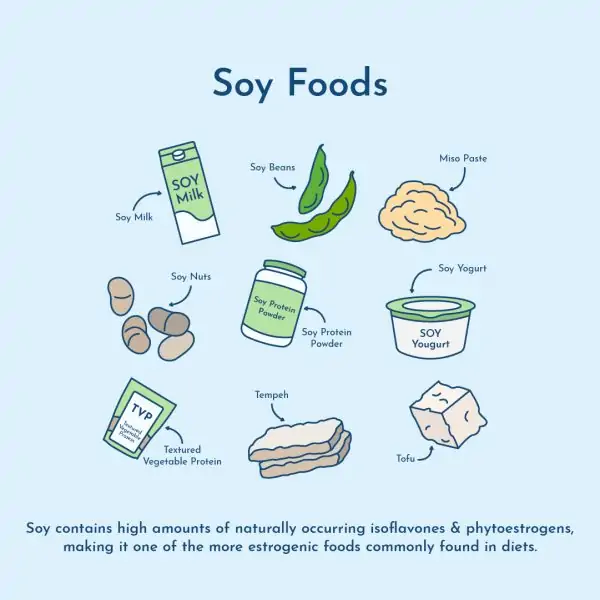
One reason is that soy contains high amounts of naturally occurring isoflavones and phytoestrogens, making it one of the more estrogenic foods commonly found in diets.
Some studies suggest excessive soy intake may affect thyroid function, particularly when consumed in large amounts.
Here’s why this matters…
Researchers continue to study how phytoestrogens and other naturally occurring compounds in soy may influence hormone-related pathways, which is one reason some people choose to moderate their soy intake as part of a thyroid-supportive diet.
In other words…
You might be surprised that soy is one of the most frequently discussed foods to avoid for thyroid support.
But just because a food has earned a “health food” reputation doesn’t necessarily mean it’s the best choice for everyone.
Context always matters.
6. Cruciferous Vegetables: Understanding Goitrogens and Thyroid Health
Cruciferous vegetables are often promoted as some of the healthiest foods you can eat.
And they certainly provide many beneficial nutrients.
But here’s something that rarely gets discussed…
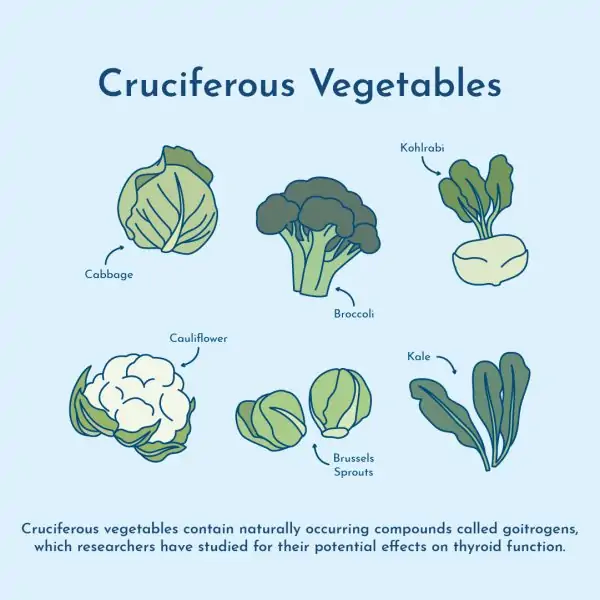
They also contain naturally occurring compounds called goitrogens, which researchers have studied for their potential effects on thyroid function.
Some of the most common cruciferous vegetables include:
- Broccoli
- Cabbage
- Kale
- Cauliflower
- Brussels sprouts
- Kohlrabi
Here’s where the story gets interesting…
Researchers have proposed two primary ways these naturally occurring compounds may influence healthy thyroid function.
- Some compounds, including isothiocyanates and thiocyanates, may compete with iodine uptake, making it more difficult for the thyroid gland to utilize the iodine it needs.
- Other compounds, including oxazolidines and thioureas, have been investigated for their potential influence on enzymes involved in thyroid hormone production.
It’s also worth noting that cooking these vegetables can reduce some of these naturally occurring compounds.
However, depending on the amount consumed and the way they’re prepared, some compounds may still remain.
7. Alcohol: Another Food That Deserves a Closer Look

Alcohol is another food that deserves a closer look when it comes to thyroid health.
While it’s consumed in many different forms and is often discussed for its potential health benefits, excessive alcohol intake may also influence hormone balance and overall thyroid health.
This includes:
- Beer
- Wine
- Liquor
Researchers have investigated several ways excessive alcohol consumption may influence hormone-related pathways, including:
- Naturally occurring phytoestrogens found in certain alcoholic beverages.
- Increased aromatization, the process of converting testosterone into estrogen.
- Changes in hormones such as progesterone and prolactin.
In other words…
While occasional alcohol consumption may fit into many people’s lifestyles, it’s worth considering how much you’re drinking if you’re working to support healthy thyroid function.
Conclusion
So, there you have it…
Those are seven commonly consumed “healthy” foods that research has investigated for their potential effects on thyroid function.
That doesn’t mean every one of these foods needs to be completely eliminated.
Nor does it mean everyone will respond to them in exactly the same way.
The bigger takeaway is this…
Supporting healthy thyroid function isn’t just about knowing which foods to avoid for thyroid health.
It’s about understanding the bigger picture and building a diet that supports your thyroid over time.
That means paying attention to foods that may work against your goals…

While placing even greater emphasis on foods that provide the nutrients your thyroid and the rest of your Thyroid Hormone Pathway need to function at their best.
That’s exactly why we created the 3 Food Triple-Thyroid-Boosting Daily Protocol.
Inside, we walk you through three simple foods we regularly recommend to help support healthy thyroid function as part of a balanced diet.
It’s a straightforward approach we’ve shared with thousands of people looking to better support their thyroid health.
If you’d like to learn more, you can get all the details about the 3 Food Triple-Thyroid-Boosting Daily Protocol here.
Because sometimes the biggest improvements don’t come from making your diet more complicated…
They come from understanding which foods deserve a closer look – and which ones deserve a bigger place on your plate.

KEY IDEA
Many people carefully choose foods they believe are healthy for their thyroid without realizing that some of those same foods may deserve a closer look. In this article, you’ll discover seven surprisingly common foods that research has investigated for their potential effects on thyroid function, along with the science behind why they matter. More importantly, you’ll learn why supporting healthy thyroid function isn’t simply about avoiding certain foods – it’s about understanding the bigger picture and building a balanced, thyroid-supportive diet that helps your body function at its best.