
You’re innocent until proven guilty, right?
Or, are you guilty until proven innocent?
Imagine this…
You’ve been convicted of a murder you didn’t commit.
You spend decades behind bars while your name is thrown through the mud and everyone around the world despises you.
Then new evidence comes along that calls your conviction into question…
Only for you to be convicted of the same crime yet again and thrown back in jail.
Now, imagine this happens to you four times in a row.
While this may sound like a made-for-TV crime series, there’s a very real health story that follows a surprisingly similar pattern.
The accused party here is…
Cholesterol.
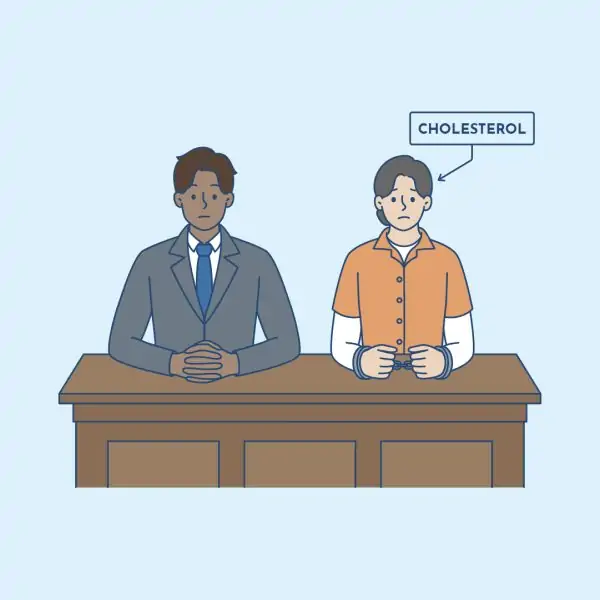
For decades, cholesterol has been treated like the villain.
But its reputation as inherently “bad” oversimplifies a much more complicated story.
And this should matter to you.
Why?
Because cholesterol is essential to your thyroid health.
In fact, higher cholesterol may sometimes reflect changes in thyroid function, including an underactive thyroid, rather than being the problem itself.
I’ll explain exactly what I mean in a minute.
First, let’s talk about one of the biggest assumptions surrounding cholesterol…
That cholesterol itself is the primary cause of heart disease.
Some researchers have challenged whether that’s really the whole story.
Think about it…
If every time you see an out-of-control fire you also see firefighters, does that mean the firefighters must have caused the fire?
Of course not!
Their presence tells you there’s a problem.
But association alone doesn’t establish causation.
And that’s important because the relationship between cholesterol, your thyroid, and heart health is far more complicated than most people realize.
In fact, some researchers have argued that reduced thyroid function may be an overlooked contributor to heart disease.
And once you understand the connection between thyroid function and cholesterol…
A lot of what you’ve been told about “bad cholesterol” starts to look very different.
The Overlooked Connection Between Hypothyroidism and High Cholesterol
The connection between hypothyroidism and high cholesterol isn’t some new idea — and neither is the connection between thyroid function and heart health.
It’s been studied for generations.
And some researchers have argued that reduced thyroid function may be an overlooked contributor to heart disease.
Take the HUNT Study, for example.
Researchers studied the relationship between TSH — thyroid-stimulating hormone — and cholesterol levels.
The study found a relationship between thyroid function and cholesterol, showing that your ‘bad’ LDL cholesterol rises in direct correlation with changes in thyroid function.
That’s important because an elevated cholesterol number doesn’t necessarily tell you why that number is elevated.
In some cases, high cholesterol can be one clue that reduced thyroid function deserves a closer look.
And that’s where the conventional “high cholesterol = bad” story can become too simplistic.
Starting in the 1950s, so-called “heart healthy” polyunsaturated fats, or PUFAs, were recommended in part because of their ability to lower cholesterol.
But some researchers have questioned whether “heart healthy” PUFAs actually protect against heart disease — or whether they may contribute to it.
And there’s another piece that’s especially important if you’re struggling with thyroid symptoms…
Some research suggests that PUFAs can interfere with how the body uses thyroid hormone by influencing the Thyroid Hormone Pathway.
That’s the series of steps required to produce, transport, activate, and ultimately use thyroid hormone.
And if your thyroid labs look one way while you still don’t feel like yourself…
This pathway matters.
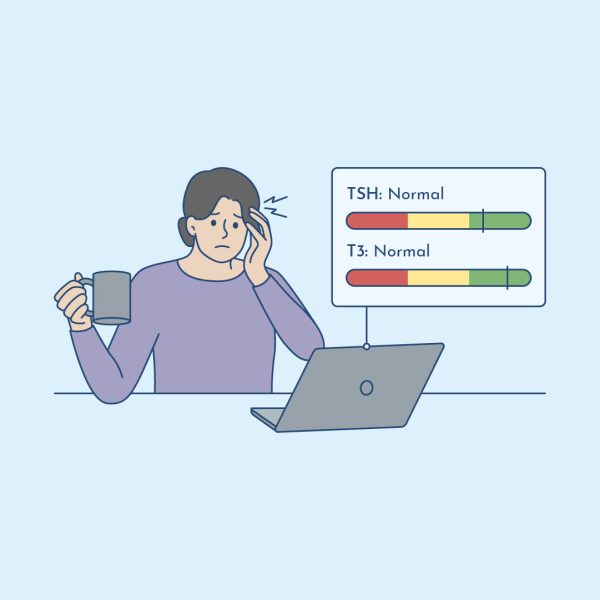
(Note: Want to better understand your Thyroid Hormone Pathway and the different places thyroid function can break down? Take a look at our article, “The 5 Hidden Steps to Optimizing Your Thyroid Health (That Most People Miss)“)
Then in the 1970s, low-cholesterol diets became the next major focus.
In his historical research, endocrinologist and thyroid researcher Dr. Broda Barnes reported higher rates of cardiovascular disease among people following low-cholesterol diets, leading Barnes to question whether lowering dietary cholesterol necessarily protected heart health.
As Barnes wrote:
“…the low cholesterol diet had not only failed to protect the arteries, but the damage was increased four fold.”
I’ll tell you more about Barnes in a minute because his work becomes very important to this story.
Then starting in the 1980s, cholesterol-lowering statin drugs became increasingly prominent.
And again, the story isn’t as simple as “lower cholesterol and everything gets better.”
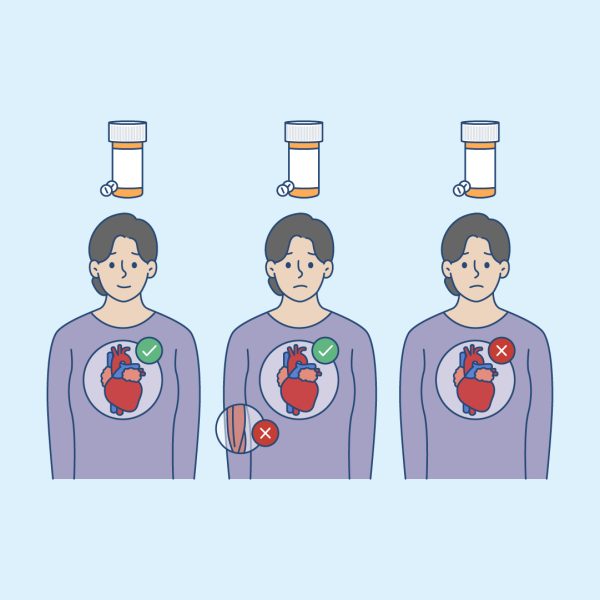
One large analysis found no evidence that statins helped people without existing heart disease live longer.
Like all medications, statins also have potential side effects, and researchers have studied possible effects on blood sugar, muscle health, and sexual health.
Then came another idea…
We’ve finally got it right this time, they say.
It’s all about “good cholesterol” versus “bad cholesterol,” right?
Not so fast.
Researchers developed drugs designed to simultaneously raise “good” HDL cholesterol and lower “bad” LDL cholesterol.
Sounds perfect on paper.
Yet one clinical trial found that a drug designed to raise HDL and lower LDL had no effect on heart attacks and other major cardiovascular events.
As Professor Stephen Nicholls, lead author on the Evacetrapib clinical trials, explained:
“We have a paradox: here we’ve got an agent that more than doubles the levels of good cholesterol and lowers bad cholesterol and yet has no effect on clinical events.”
So if changing those cholesterol numbers were the entire answer…
Why didn’t the expected outcome follow?
Your cholesterol numbers alone may not tell the whole story.
And lowering cholesterol doesn’t necessarily address why it was elevated in the first place — including the important relationship between cholesterol and thyroid function.
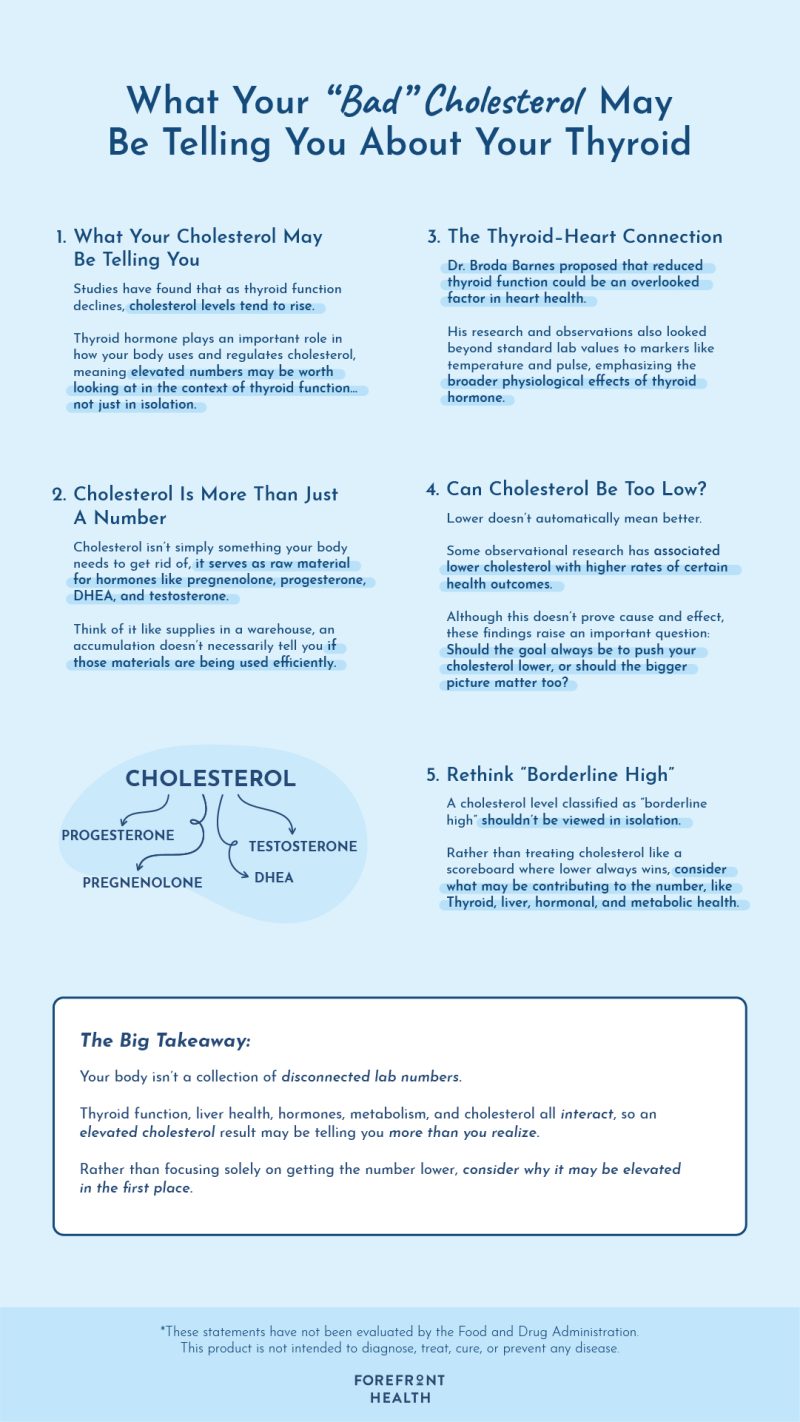
What Your “Bad” Cholesterol May Be Telling You About Your Thyroid
Studies have found that as thyroid function declines, cholesterol levels tend to rise.
This connection was recognized long before today’s thyroid tests were widely available, when elevated cholesterol was one of the clues doctors considered when evaluating thyroid function.
Why?
To understand why hypothyroidism and high cholesterol often appear together, you first have to understand what thyroid hormone does with cholesterol.
Thyroid hormone plays an important role in how your body uses and regulates cholesterol, which can influence both total cholesterol and LDL cholesterol levels.
And cholesterol isn’t just some useless substance floating around your bloodstream.
Your body needs it.
Cholesterol serves as a building block for important hormones, while thyroid function can influence your body’s ability to produce those hormones.
These include…
- Pregnenolone
- Progesterone
- DHEA
- Testosterone
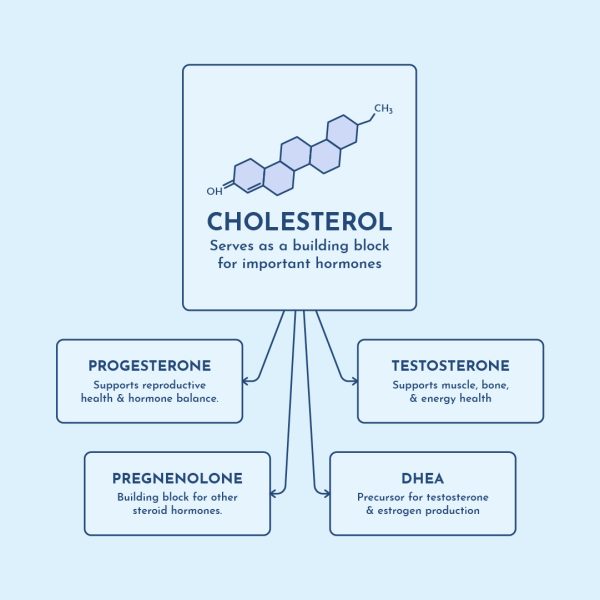
Think of cholesterol as raw material.
Having raw material sitting in a warehouse doesn’t necessarily mean you have too much.
Sometimes it means the factory isn’t using it efficiently.
That’s one way to think about the thyroid-cholesterol connection.
Studies have also found that treatment with active thyroid hormone, or T3, can influence cholesterol levels, further illustrating just how closely thyroid function and cholesterol are connected.
So instead of asking only…
“How do I get this cholesterol number lower?”
It can also be worth asking…
“Why is it elevated in the first place?”
Because lowering cholesterol without considering why it’s elevated may overlook cholesterol’s important role in hormone production and overall health.
Take progesterone, for example.
Research has explored how progesterone may influence the release of thyroid hormone from the thyroid gland.
And changes in progesterone levels may influence thyroid function.
Lower steroid hormone levels have also been associated with an increased risk of heart disease.
So cholesterol isn’t operating in isolation.
Neither is your thyroid.
And this brings us back to Dr. Broda Barnes.
What Does Hypothyroidism Have to Do With Heart Disease?
Dr. Broda Barnes spent decades researching thyroid function and heart disease.
Based on his research, Barnes argued that reduced thyroid function may be an overlooked contributor to heart disease.
In one group of thyroid-treated patients, established heart attack rates at the time led Barnes to expect 72 heart attacks.
But that’s not what he reported…
Only 4 occurred.
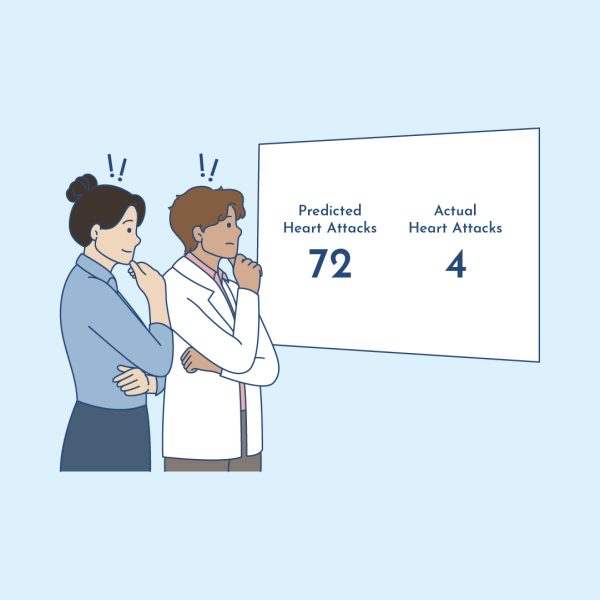
Barnes reported substantially fewer heart attacks than expected among his thyroid-treated patients, findings that became a cornerstone of his research on thyroid function and heart disease.
Barnes also considered more than just standard thyroid lab tests when evaluating thyroid function.
He used simple measurements that could be monitored at home, including body temperature and pulse.
Why does that matter?
Because thyroid hormone affects what your body actually does — your temperature, pulse, energy production, and how your body responds throughout the day.
That’s why our Ultimate Thyroid Testing Protocol builds on these concepts by exploring additional ways to evaluate thyroid function alongside standard lab testing.
And when you look at Barnes’ findings through that lens…
You have to ask an interesting question.
What if we’ve underestimated the thyroid-heart connection all along?
If Barnes’ findings are correct, thyroid function could be one of the most overlooked factors influencing heart health.
But there’s another side of the cholesterol story that gets even less attention…
Can Your Cholesterol Be Too Low?
Have you ever been told that your cholesterol could be too low?
Probably not.
We’re conditioned to think lower is always better.
Your cholesterol drops?
Great.
It drops again?
Even better.
But is that really how biology works?
Some observational studies have found that people with lower cholesterol had higher rates of death from cancer and infectious diseases.

That doesn’t mean low cholesterol necessarily caused those outcomes.
But it does raise an important question…
Is continually pushing cholesterol lower always the best goal?
We’ve seen this question come up with clients, too.
Years ago, we reviewed the lab work of a client whose cholesterol was already relatively low.
Yet his doctor had prescribed a cholesterol-lowering medication to push it even lower because, as the doctor put it…
It could be better.
And that’s where the “lower is always better” approach deserves a closer look.
If someone’s cholesterol is already relatively low, should the goal automatically be to drive it lower still?
Or should we first step back and look at the bigger picture?
Because your body doesn’t care about improving one number on a lab report.
It cares about keeping the entire system working.
And looking only at heart disease may overlook the broader relationship between cholesterol levels and other health risks.
So before becoming obsessed with getting your cholesterol lower and lower…
Here’s something else you need to know.
Is Borderline High Cholesterol Really Unhealthy?
Cholesterol levels classified as “borderline high” shouldn’t automatically be considered dangerous.
Conventional cholesterol classifications generally break total cholesterol into ranges such as…
- 200 mg/dL or lower = “Desirable”
- 200 to 239 mg/dL = “Borderline High”
- 240 mg/dL or above = “High”
But here’s the question almost nobody asks…
What happens when you look beyond heart disease alone?
Some observational studies have reported lower overall death rates among people with higher cholesterol levels.
This doesn’t mean you should try to raise your cholesterol.
And it doesn’t mean a high cholesterol number should simply be ignored.
It means something much more useful…
These findings challenge the assumption that progressively lower cholesterol automatically means better overall health.
Instead of treating cholesterol like a scoreboard where lower always wins…
Look at what your cholesterol may be telling you.
If reduced thyroid function is contributing to elevated cholesterol, focusing only on lowering cholesterol may overlook an important part of the picture.
Understanding why it’s high may be just as important as the number itself.
And that brings us right back to your thyroid.
If you’re dealing with stubborn fatigue, cold hands and feet, poor sleep, low energy, brain fog, or that frustrating feeling that you’re doing everything “right” but still don’t feel like yourself…
Your body isn’t just a collection of disconnected lab numbers.
Your thyroid, liver, hormones, and cholesterol all interact.
Nutrition can support thyroid, liver, and metabolic health — all of which can influence how your body manages cholesterol.
And it’s often the little, overlooked things that prevent us from seeing the results we want with our health.
That’s why we cover how nutrition can influence your thyroid health in detail in our 3 Food Triple-Thyroid-Boosting Daily Protocol.
Inside, you’ll learn about three foods and nutritional strategies designed to support thyroid and metabolic health.
Because the goal isn’t simply to chase a cholesterol number…
It’s to understand what your body is trying to tell you.
So tell me…
What’s your cholesterol?
Is it “borderline high”?
Or has yours been pushed lower and lower over the years?
KEY IDEA:
High cholesterol isn’t always the problem it’s made out to be. In fact, it may be telling you something important about your thyroid. Discover the overlooked connection between hypothyroidism and high cholesterol, why thyroid hormone plays an important role in how your body uses cholesterol, and why “lower” doesn’t automatically mean healthier. We’ll also explore surprising research on LDL, low cholesterol, heart health, and the work of thyroid researcher Dr. Broda Barnes. Most importantly, you’ll learn why understanding what’s driving your cholesterol levels may reveal a much bigger picture about your thyroid and overall health.