
What if there’s more to the story than what you’ve been told?
Well, it wouldn’t be the first time.
In the 1800s, doctors recommended cough syrup containing heroin.
Is that a chronic cough… or are you just addicted to your cough syrup?
In the 1940s, mental disorders like depression and anxiety were treated with frontal lobotomies.
You don’t really need that part of your brain, do you?
It’s easy to assume mistakes like these are a thing of the past…
To be clear, modern medicine has made incredible advances — but like any system, it’s not perfect.
Because there’s a pattern we see more often than most people realize, especially among those dealing with both thyroid issues and hot flashes…
It shows up as night sweats, sudden waves of heat, and those unpredictable temperature surges that seem to come out of nowhere…
…and they’re told the solution is simple:
“Just take estrogen.”
But at what cost…?
And does it really address the real underlying issue?
The Connection Between Thyroid and Hot Flashes Most People Miss
Most people are told that hot flashes happen because estrogen levels drop.
Seems logical, right?
Low estrogen → hot flashes → replace estrogen.
Problem solved.
But here’s what most people are never told…
It’s not just about estrogen levels — it’s about hormone balance.

This is especially important when looking at the relationship between thyroid and hot flashes, which is often overlooked.
At menopause, several shifts happen at the same time:
- Thyroid function often slows down
- Progesterone levels decline significantly
- Estrogen can remain elevated relative to progesterone (what we call “estrogen dominance”)
So even though estrogen may be lower than it once was…
The balance between estrogen and progesterone is often more disrupted than ever.
And that imbalance doesn’t just affect hormones…
It affects your entire system — especially your thyroid.
How Estrogen Can Influence Thyroid Function
Here’s where things start to connect.
Your thyroid doesn’t work in isolation.
It’s part of what we call the Thyroid Hormone Pathway — a multi-step process your body relies on to produce energy.
Your body has to:
- Produce thyroid hormone
- Transport it
- Convert it into its active form
- Deliver it into your cells
Only then can you actually feel the benefits — like steady energy, mental clarity, and stable body temperature.
Now here’s the issue…
Some research suggests that estrogen may interfere with enzymes that help the thyroid gland properly release its hormones.
In other words…
Even if your thyroid is producing hormone…
…it may not be getting released, converted, or used efficiently.
And when that happens?
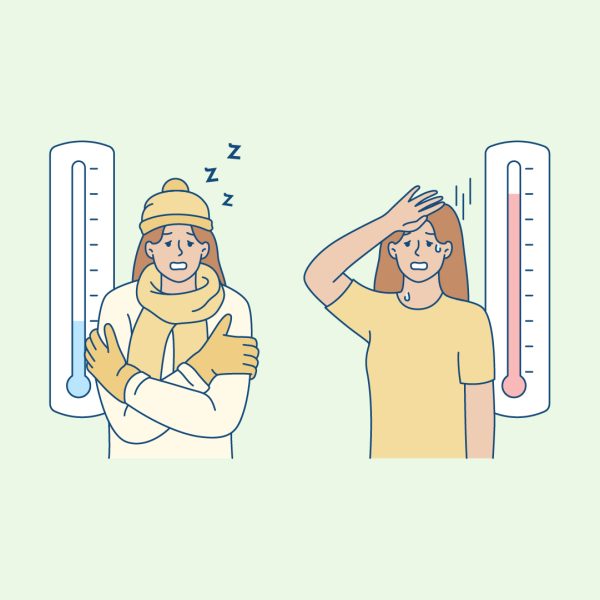
That’s when symptoms start to show up:
- Fatigue
- Brain fog
- Weight changes
- Cold sensitivity
- And yes… hot flashes
So now the question becomes:
Are hot flashes really just about estrogen levels… or are they a signal of something deeper going on?
Why Estrogen Can Reduce Hot Flashes — But Not Solve the Problem
Here’s where things get confusing for a lot of people.
If estrogen isn’t addressing the root cause…
Why does it seem to work?
The answer is actually pretty simple.
Estrogen can influence how your body regulates temperature — specifically how heat builds up and how it’s released.
So when you take estrogen:
Your body may generate less heat
The “release” of heat (the flash) may slow down
Which means…
The hot flash feels less intense.
But here’s the key point:
It’s not fixing what’s causing the heat buildup in the first place.
It’s just making the symptom less noticeable.
Which is why many people searching for answers about thyroid and hot flashes feel stuck — the root cause is never addressed.
And that’s a very different outcome.
The 3 Hidden Triggers Behind Hot Flashes
So if it’s not just about estrogen…
What is driving hot flashes?
Here’s what we consistently see — both in research and in working with individuals struggling with these symptoms:
Hot flashes are often linked to specific physiological triggers.
Many of these triggers are also commonly seen in people dealing with thyroid hormone imbalances.
And when you support these areas…
You can often reduce how frequently and intensely hot flashes occur.
Let’s walk through them.
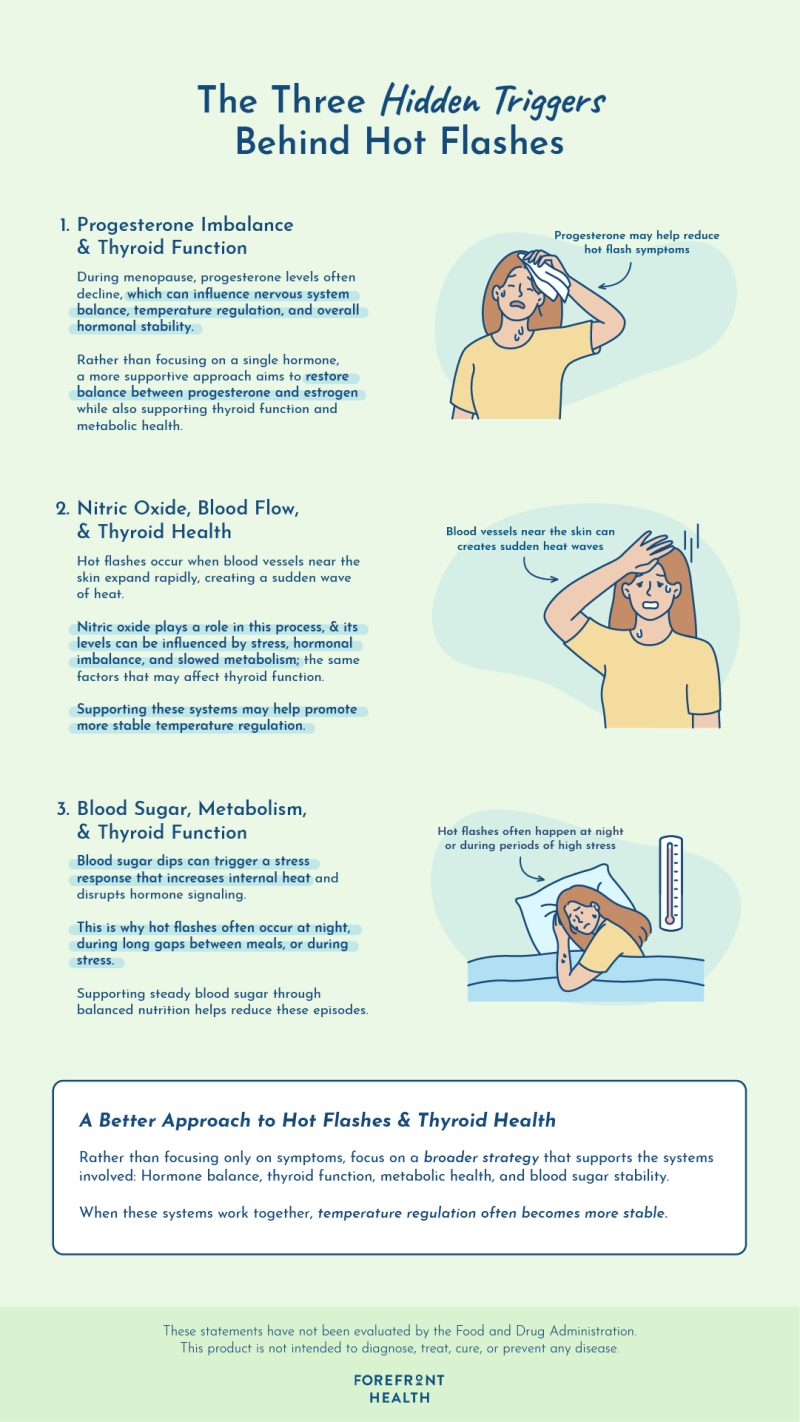
Hot Flash Trigger #1 — Progesterone Imbalance and Thyroid Function
First — progesterone.
As we mentioned earlier, progesterone levels tend to drop significantly during menopause.
And this matters more than most people realize.
Because progesterone plays an important role in:
- Nervous system balance
- Temperature regulation
- Hormonal stability
Some research suggests that progesterone may help reduce hot flash symptoms, with some studies exploring it as an alternative approach to estrogen-based therapies.
But here’s how we look at it…
It’s not about replacing one hormone with another.
It’s about restoring balance.
Rather than focusing on estrogen alone, some approaches aim to support a healthier balance between estrogen and progesterone — while also supporting thyroid function and overall metabolic health.
That’s a completely different strategy.

Hot Flash Trigger #2 — Nitric Oxide, Blood Flow, and Thyroid Health
Next — nitric oxide.
This is a compound involved in blood vessel dilation — essentially how your body regulates blood flow.
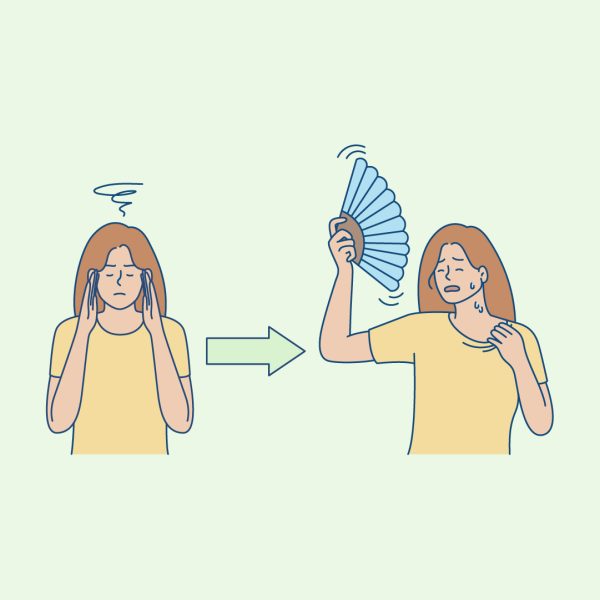
During a hot flash, blood vessels near the skin expand rapidly…
…and that’s what creates that sudden wave of heat.
Research suggests nitric oxide plays a role in this process.
And interestingly…
Nitric oxide levels can be influenced by:
- Stress
- Hormonal imbalance
- Slowed metabolism
In other words…
The same underlying issues affecting your thyroid may also be contributing here.
So instead of trying to “block” the symptom…
The goal becomes:
Support the systems that regulate it.
Hot Flash Trigger #3 — Blood Sugar, Metabolism, and Thyroid Function
Finally — blood sugar.
This is one of the most overlooked triggers.
Especially in those experiencing low thyroid function, where blood sugar regulation is often impaired.
When your blood sugar drops too low…
Your body activates a stress response to compensate.
And that stress response can:
- Increase internal heat
- Disrupt hormone signaling
- Trigger a hot flash
This is why hot flashes often happen:
- At night
- During long gaps between meals
- During periods of high stress
Stabilizing blood sugar through consistent, balanced nutrition can go a long way toward reducing these episodes.
A Better Approach to Hot Flashes and Thyroid Health
Let’s zoom out for a second.
Most approaches focus on suppressing symptoms.
But as you’ve seen… your body doesn’t work that way.
It works as a system.
And when you understand how thyroid and hot flashes are connected, the path forward becomes much clearer.
So instead of chasing symptoms…
The better approach is to support the underlying systems that regulate them:
- Hormone balance (especially progesterone)
- Thyroid function
- Metabolic health
- Blood sugar stability
When those systems are supported…
Everything starts to work together again.

The Bottom Line on Thyroid and Hot Flashes
Hot flashes are not just a random symptom.
They’re a signal.
A signal that something deeper in your system — often involving hormone balance, thyroid function, and metabolism — isn’t working the way it should.
And here’s the good news…
That doesn’t mean you’re broken.
It just means you haven’t been shown how all the pieces fit together yet.
Once you understand the system…
You can finally start supporting your body in a way that actually makes sense.
And that’s when things finally begin to change.

KEY IDEA
Hot flashes aren’t an estrogen issue — and they may be closely tied to your thyroid. Most approaches focus on suppressing symptoms, but that often overlooks what’s really driving them beneath the surface. In this article, you’ll discover how imbalances in hormones, thyroid function, and metabolism can contribute to hot flashes — and why simply relying on estrogen may not address the root cause. We break down the 3 hidden triggers most people miss — including progesterone imbalance, nitric oxide, and blood sugar instability — and show you how supporting these systems can help your body regulate temperature more effectively and restore a greater sense of balance.