

Do you suffer from chronic joint pain?
I know many of our clients do.
In fact, when we last surveyed our readers, we were astounded that 48.5% reported struggling with joint and/or muscle discomfort.
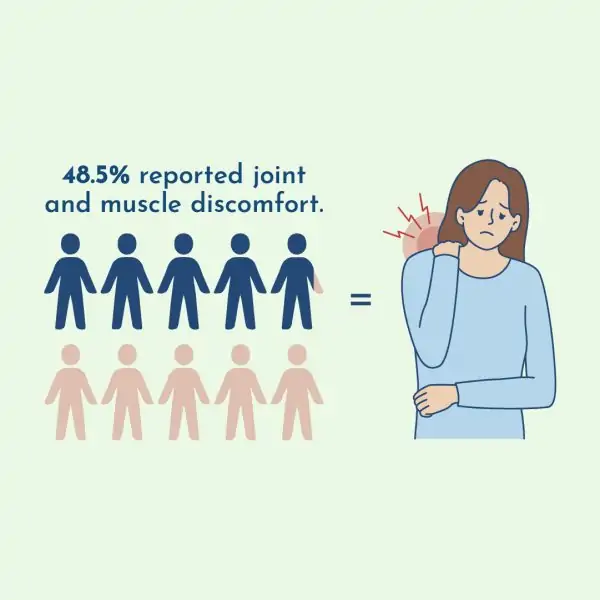
This overlap between thyroid muscle and joint pain is something we see far more often than most people realize.
In fact, many people struggling with thyroid joint pain are often surprised to learn how closely thyroid health and joint comfort may be connected.
Yet, supporting healthy joints often requires a two-step approach.
The first step is to provide short-term relief and support comfort levels while also supporting your thyroid health.
I’ll show you five thyroid-supportive joint comfort remedies we use with clients in just a second.
Yet, here’s where most popular approaches go wrong…
They often focus primarily on temporary symptom relief without addressing broader lifestyle and metabolic factors that may also influence how your body feels day to day.
And in some cases, they may not fully support healthy thyroid-related processes in the process.
For example…
Some approaches may place additional stress on the body’s natural energy-production systems.
Others may create more strain on the liver, which plays a central role in healthy thyroid hormone conversion and metabolism.
And certain hormonal imbalances may also influence the body’s stress response, energy levels, and overall resilience.
Now, if you’re already struggling with low energy, poor recovery, stiffness, or feeling unlike yourself…
Then it only makes sense to avoid approaches that leave you feeling like you’re trading one problem for another.
Because trading one problem (pain) for another problem (feeling even more exhausted and rundown) rarely works.
It only leaves people feeling more frustrated, depleted, and stuck.

This is especially true for people dealing with low thyroid joint pain alongside low energy, cold hands and feet, and poor resilience to stress.
Now here’s the second step to approaching thyroid joint pain naturally…
You also have to support the broader systems involved in how your body manages stress, energy, recovery, and overall resilience.
And this is where things get interesting.
Because for some people, chronic joint discomfort may coincide with poor energy production, an overwhelmed stress response, and problems within what we call the “Thyroid Hormone Pathway.”
In other words…
Your body may not simply need more support for your joints.
It may also need better support for how your body produces, activates, transports, and uses thyroid hormone at the cellular level.
Supporting healthy thyroid-related processes is one area many people may overlook.
Most people never make it to step two.
In fact, most people never even hear this explained to them.
They just want relief from the pain.
They just want to live a normal life.

And honestly…
We don’t blame them.
So, here are five thyroid-supportive strategies we use with clients that may help support joint comfort while also supporting healthy energy production, recovery, and thyroid health at the same time.
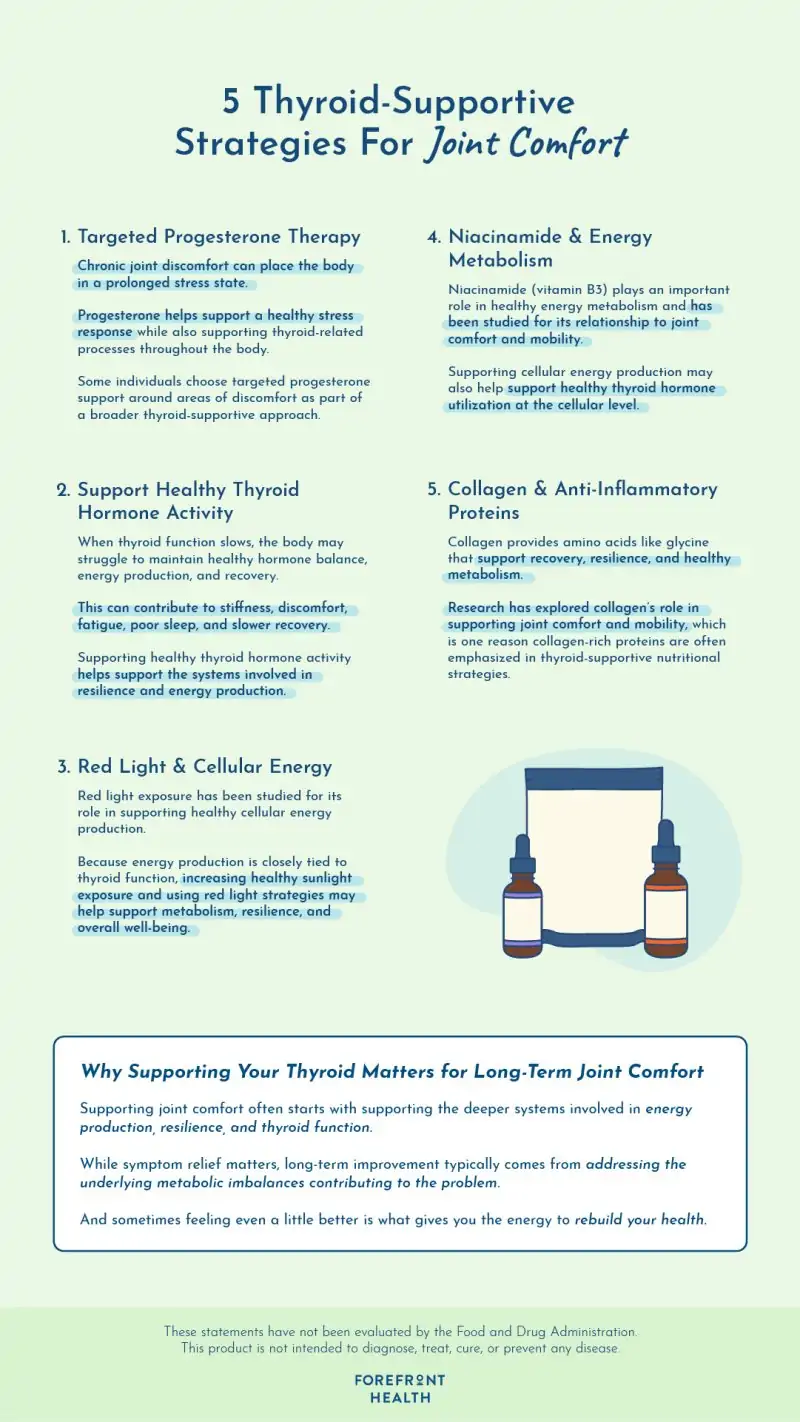
1. Targeted Progesterone Therapy for Thyroid Joint Pain Support
With chronic joint discomfort, it can feel like your stress response is stuck in overdrive.
Your body is constantly trying to adapt, compensate, and keep up…
But eventually the system starts wearing down.
One of the body’s most protective hormones during times of stress is progesterone.
Progesterone helps support a healthy stress response while also supporting thyroid-related processes throughout the body.
Normally, our goal is to support progesterone levels systemically so it can circulate throughout the body.
However, in some cases, targeted support can also be useful.
This is why some people choose to apply progesterone oil directly around areas of discomfort.
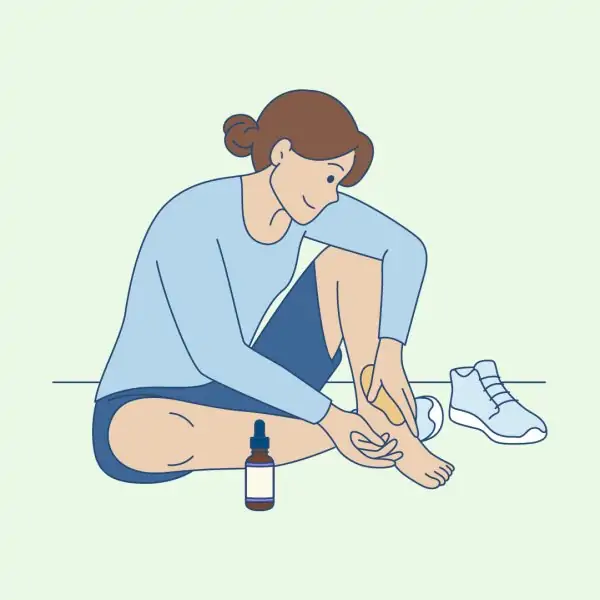
The goal is to provide localized support while also helping the body maintain a calmer, more balanced stress response.
We often have clients combine the progesterone oil with a little coconut oil or olive oil to help it spread and absorb more easily.
And here’s the crazy thing…
When people begin supporting the stress response properly, they often notice improvements far beyond just joint comfort.
Energy…
Sleep…
Body temperature…
Even resilience to stress itself.
Because everything is connected through the Thyroid Hormone Pathway.

2. Support Healthy Thyroid Hormone Activity for Better Joint Comfort
Another major factor that often gets overlooked is the decline in the body’s protective hormones.
These are the hormones that help buffer the body against chronic stress.
And thyroid hormone sits right in the center of this process.
This is one reason the relationship between thyroid hormone and joint pain has become such an important topic for people struggling with chronic stiffness and discomfort.
Here’s the problem…
When thyroid function slows down, the body’s ability to maintain healthy hormone balance can also begin to slow down.
That’s why so many people with low thyroid function don’t just struggle with fatigue.
They also struggle with stiffness, slower recovery, poor sleep, cold hands and feet, and persistent discomfort.
The crazy thing is…
Most people are told their joints are the problem.
But what’s really going on beneath the surface is often an energy problem.
Cells that aren’t producing energy efficiently tend to become more stressed and less resilient over time.
This is why supporting healthy thyroid function becomes so important.
There are many ways we help clients support thyroid hormone activity naturally, including simple nutritional strategies and our thyroid-supportive daily protocols.
Yet, in some cases, people also explore additional thyroid-supportive supplementation as part of a broader wellness approach.
And when thyroid support improves…
Many people report feeling more comfortable, resilient, and energized overall.
Not because we’re “masking” symptoms…
But because we’re helping support the systems that influence how the body produces and uses energy in the first place.
3. Red Light Exposure and the Thyroid Joint Pain Connection
One part of your body that produces and responds to important hormone-related signals is your skin.
And this is something most people never think about.
As researcher Dr. Raymond Peat once explained:
“Light on the skin directly increases the skin’s production of steroids… orange and red light seem to be important frequencies.”
What he’s referring to is light therapy.
Now, here’s why this matters…
Red light exposure helps support healthy hormone levels and healthy cellular energy production.
And cellular energy production is absolutely essential to healthy thyroid function.
Think of your cells like tiny batteries.
When energy production slows down, your body often shifts into a more stressed, survival-oriented state.
This can affect everything from your metabolism to your mood to your joints.
Unfortunately, modern life works against us here.
Most people spend the majority of their day indoors…
Under artificial lighting…
Barely getting enough natural sunlight exposure.
And during winter months, it becomes even worse.

This is why we often encourage clients to increase healthy sunlight exposure whenever possible and explore simple red light strategies as part of a broader thyroid-supportive lifestyle.
Especially during darker months when energy, mood, and resilience tend to drop the most.

4. Niacinamide Support for Thyroid Joint Pain and Energy Production
Niacinamide — also known as vitamin B3 — has been studied for joint health and healthy energy metabolism for decades.
Yet most people have never heard much about it.
Why?
Because the conversation today tends to revolve almost entirely around symptom suppression instead of supporting the systems underneath the problem.
Niacinamide is especially interesting because it plays an important role in healthy oxidative metabolism.
That’s just a scientific way of saying…
It helps your cells produce usable energy more efficiently.
And remember…
Healthy thyroid function is deeply tied to healthy energy production.
And because thyroid health and inflammation are so closely tied to metabolism and recovery, supporting healthy energy production becomes incredibly important over time.
Some research and historical case reports have explored niacinamide’s role in supporting:
- Joint comfort
- Mobility
- Flexibility
- Healthy inflammatory balance
We also use niacinamide because it may help support healthy thyroid hormone utilization.
In other words, it may help your body use thyroid hormone more efficiently at the cellular level.
For some individuals, larger divided doses throughout the day are commonly used as part of a broader nutritional strategy.
But as always, consistency matters more than intensity.
5. Collagen and Anti-Inflammatory Proteins for Thyroid Joint Pain
Here’s something almost nobody talks about…
The type of protein you eat matters tremendously for thyroid health.
Some protein sources can place additional stress on the body…
While others provide more of the amino acids your body needs to support recovery, resilience, and healthy metabolism.
One of our favorite examples is collagen.
Collagen is especially rich in an amino acid called glycine, which is known for its calming and protective effects.
And interestingly enough, research has also explored collagen’s role in supporting joint comfort.
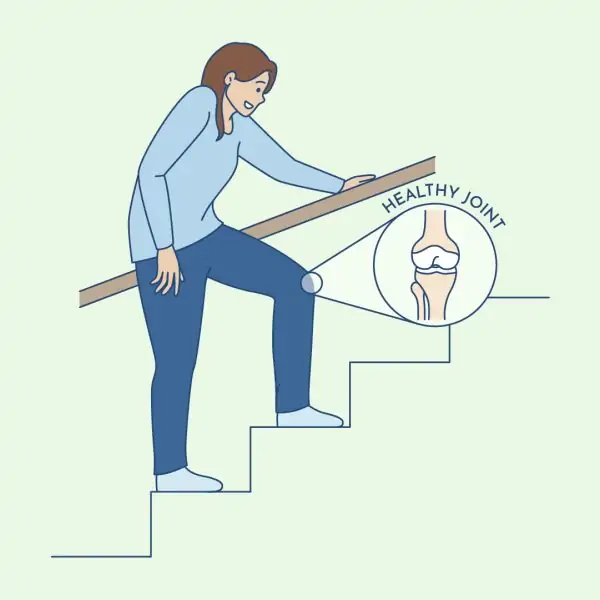
One randomized placebo-controlled study on collagen hydrolysate found improvements in measures of joint comfort and mobility over time.
That’s one reason we recommend collagen protein regularly with clients.
In many cases, simple nutritional strategies can become an important part of a broader thyroid support for joint pain approach.
The crazy thing is…
Most people today are eating plenty of muscle meats but very little collagen-rich protein.
Historically, people consumed the entire animal — skin, connective tissue, broth, collagen-rich cuts…
Today, most people don’t.
And over time, that imbalance may place additional stress on the body.
For individuals dealing with more significant joint discomfort, we often emphasize getting adequate collagen protein consistently throughout the day — especially in the morning and evening.
Because once again…
Supporting the Thyroid Hormone Pathway is really about supporting the body’s ability to produce steady, reliable energy.
Why Supporting Your Thyroid Matters for Long-Term Joint Comfort
So there you have it…
You now have five thyroid-supportive strategies that may help support healthier joints, better resilience, and improved overall comfort.
And while symptom relief matters…
Don’t forget there’s still a step two.
Long-term improvement often requires supporting the deeper metabolic and thyroid-related imbalances contributing to the problem in the first place.
But getting relief in the beginning matters too.
Because when you feel even a little better…
You finally have the energy to focus on rebuilding your health…
… and getting back to the more important things in life.

KEY IDEA
Joint pain isn’t always just a joint problem. In many cases, it may be connected to deeper issues involving thyroid health, energy production, and the body’s stress response. The problem is that most approaches focus only on temporary relief while ignoring the systems underneath the discomfort. In this post, you’ll discover 5 thyroid-supportive remedies that may help support healthier joints, better recovery, and improved overall comfort — including progesterone support, red light exposure, niacinamide, collagen protein, and strategies that support the Thyroid Hormone Pathway. Because when your body produces and uses energy more efficiently, everything from resilience to recovery to joint comfort may begin to improve.