
Are you looking for a simple way to effortlessly support your thyroid?
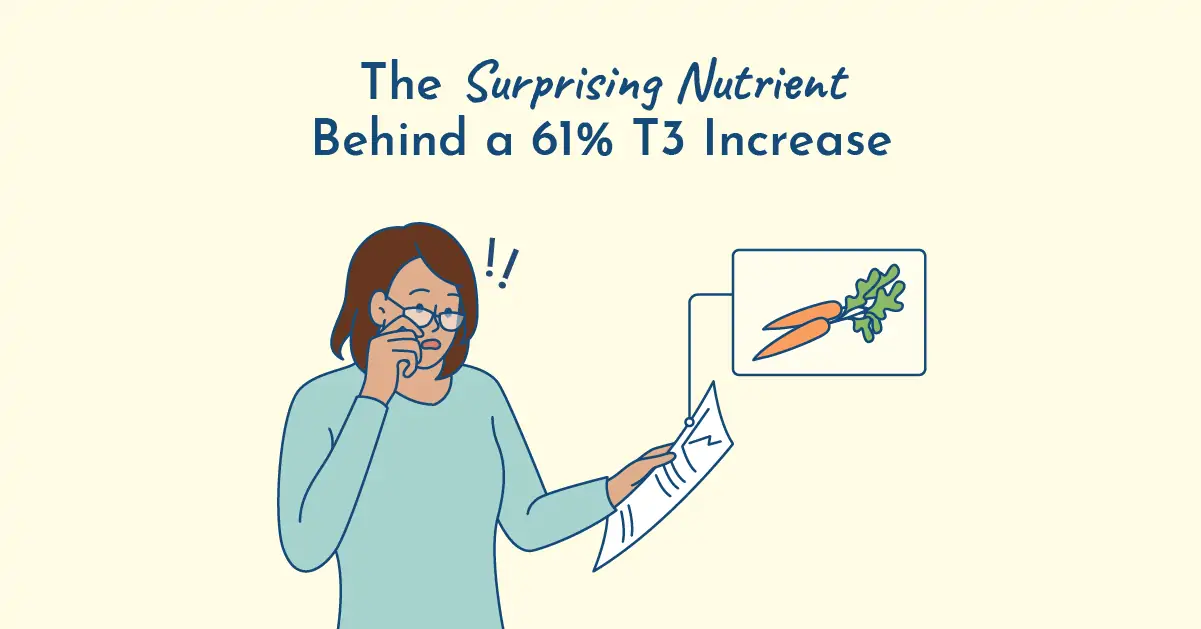
What if one vitamin was shown to support T3 levels by as much as 61% (according to one study), yet requires nearly zero effort on your part?
And here’s the interesting part…
This provides nutritional thyroid support independent of medication use.
In fact, if you’re taking thyroid medication, then adequate nutritional support may be even more important.
I’ll explain why in a minute.
If you can spare 30 seconds a day, then this is for you.
Trust me; it doesn’t get any easier than this.
It all boils down to one single vitamin.

But let me give you one BIG WARNING…
This vitamin comes in different forms.
And for those with reduced thyroid function, too much of the wrong form can become problematic.
We’ll get to that in just a second.
But first, you need to know which vitamin I’m talking about and why it’s so important.
Vitamin A and Thyroid Health: What’s the Connection?
You may not know this, but there’s an important connection between vitamin A and thyroid hormone (T3).
And for those with inadequate vitamin A status or vitamin A deficiency, getting enough may be particularly important for thyroid health.
Here’s why…
Thyroid hormone doesn’t work alone.
In fact, vitamin A and T3 thyroid hormone work together synergistically in processes important to thyroid and hormone health.
Vitamin A also works alongside thyroid hormone in supporting the production of steroid hormones from cholesterol.
In other words…
Simply having thyroid hormone available isn’t the whole story.
Adequate vitamin A provides important nutritional support for how your body uses thyroid hormone.

This becomes particularly important if you’re already using thyroid medication.
Why?
Because medication provides thyroid hormone.
But your body still depends on adequate nutritional support to use it.
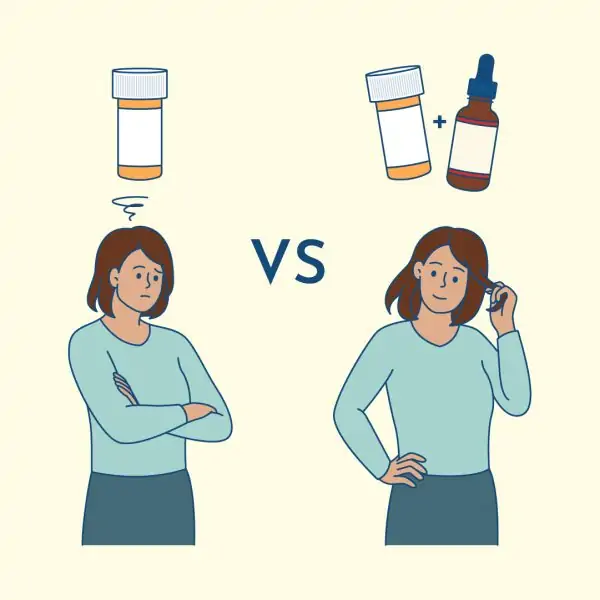
That’s an important distinction.
And it’s one that’s often overlooked.
Want to see just how significant the relationship between vitamin A and thyroid health can be?
Take a look at this 2012 study published in the Journal of the American College of Nutrition.
Researchers examined the effects of vitamin A supplementation on thyroid-related markers in premenopausal women.
The effect of vitamin A supplementation on thyroid function in premenopausal women.
The study found that vitamin A supplementation significantly influenced thyroid-related markers, including TSH and T3.
And after the four-month trial, the changes were quite significant…
- 30% to 33% reduction in TSH.
- 38% to 61% increase in T3 thyroid hormone.
- 16% to 23% decrease in T4 thyroid hormone.
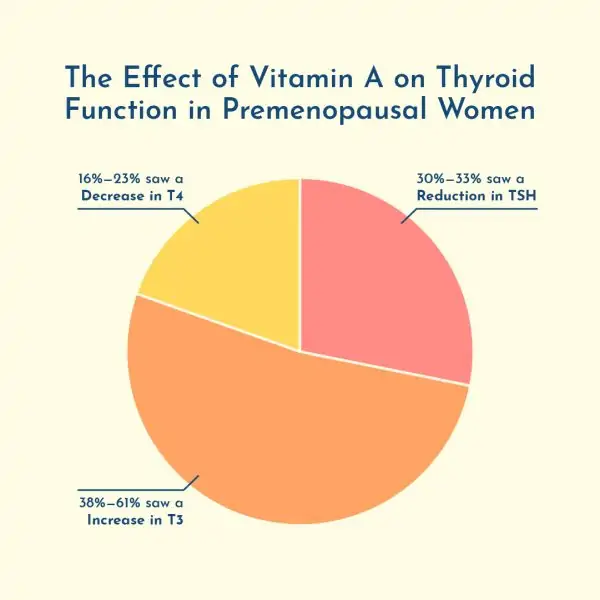
It’s not a promise that taking vitamin A will increase your T3 by 61%.
It’s what researchers observed at the upper end of the T3 changes reported in the vitamin A-treated groups in this particular study.
Yet, understanding these results is important as well.
Because the numbers tell only part of the story.
The rise in T3 alongside the fall in T4 is interesting because your body relies on T4-to-T3 conversion to produce more of the active T3 thyroid hormone.
And much of that conversion occurs in the liver.
Think of T4 as raw material.
Your body still has to process that raw material into T3 before it can be used in that form.
That’s one reason liver health plays such an important role in thyroid hormone metabolism and overall thyroid health.
But there’s another detail from this study that’s especially important…
The form of vitamin A used in the research wasn’t the beta-carotene that you’ll find in many multivitamins and health-food-store supplements.
And that’s where things get interesting.
Good vs. Bad Vitamin A for Thyroid Health
When most people think of vitamin A, they think of carrots.
And they’re not wrong.
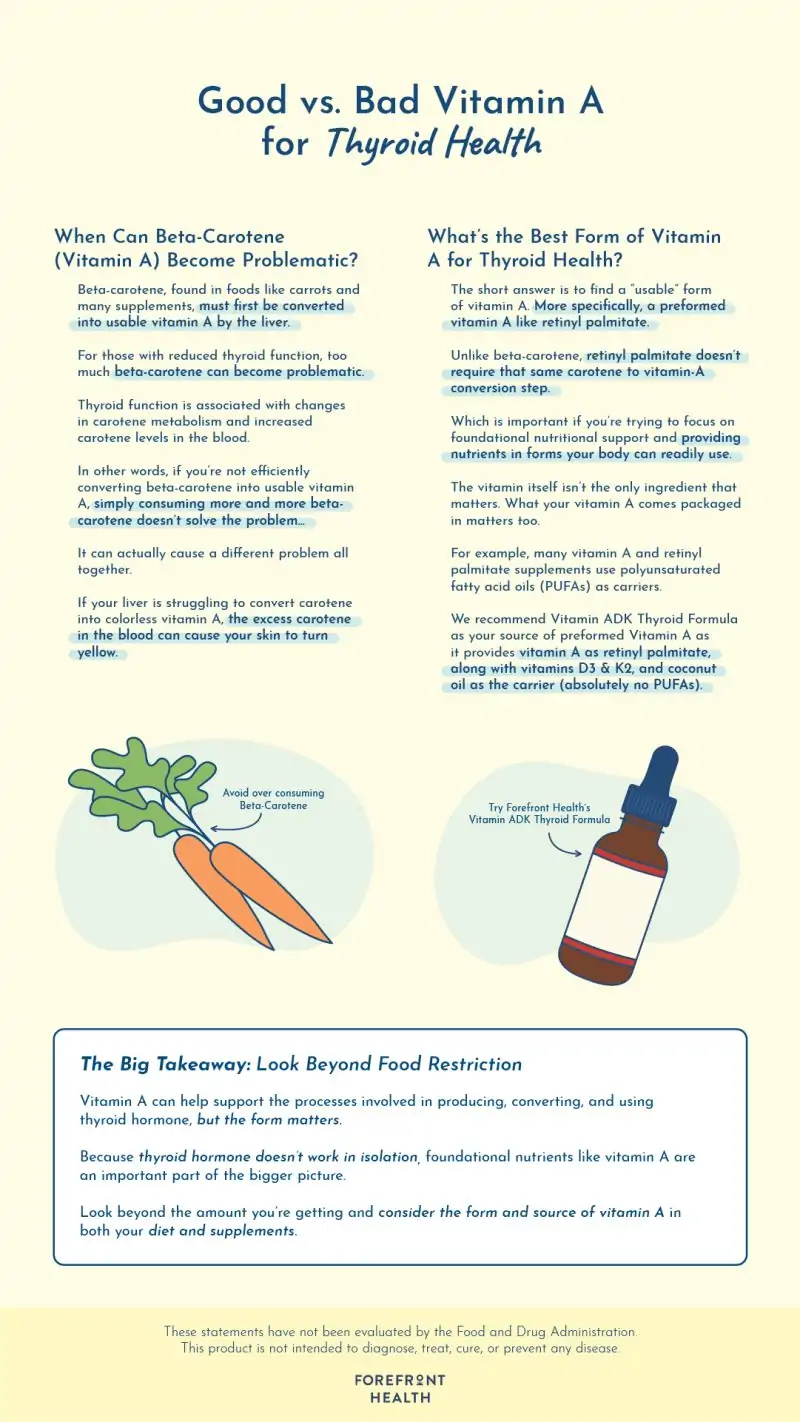
Carrots contain lots of beta-carotene, which your body can use as a precursor to vitamin A.
Because beta-carotene is inexpensive, you’ll also find it used as a vitamin A source in many multivitamins and supplements.
So, what’s the problem?
Beta-carotene isn’t the same thing as preformed vitamin A.
Your body first has to convert beta-carotene into usable vitamin A.
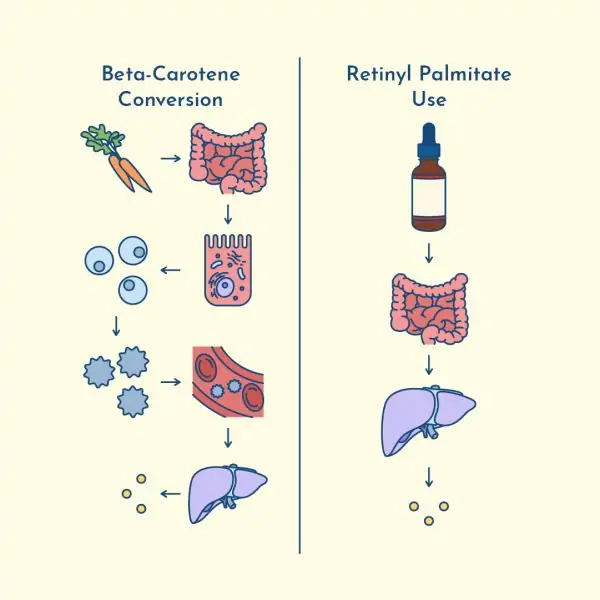
And your liver plays an important role in that process.
Here’s where the relationship between beta-carotene and thyroid function becomes important…
Reduced thyroid function has long been associated with changes in carotene metabolism and increased carotene levels in the blood.
In other words, if you’re not efficiently converting beta-carotene into usable vitamin A, simply consuming more and more beta-carotene doesn’t necessarily solve the problem.
For those with reduced thyroid function, too much beta-carotene can become problematic.
This isn’t something most people are ever taught.
Dr. Broda Barnes discussed this relationship decades ago when describing the yellowish skin pigmentation historically seen in people with very low thyroid activity.
He attributed the yellow coloring to excess carotene in the blood and discussed the liver’s role in converting carotene into colorless vitamin A.
And I learned this lesson myself the hard way many years ago.
I was experimenting with my diet and juicing carrots every day.
After a while, my skin began developing a noticeable yellow-orange tint.
I had developed carotenemia, an accumulation of carotene that can discolor the skin.
My wife joked that I had an uncanny resemblance to an Oompa Loompa from Charlie and the Chocolate Factory.

Funny now?
Yes.
At the time?
Not so much.
But it taught me an important lesson.
More isn’t always better.
And “healthy” doesn’t automatically mean appropriate in unlimited amounts.
With that being said, carrots don’t need to be avoided entirely.
We use carrots for specific purposes beyond nutrition.
The issue is relying too heavily on beta-carotene-rich foods or consuming large quantities of carrot juice as your source of vitamin A.
So, What’s the Best Form of Vitamin A for Thyroid Health?
The short answer is a “usable” form of vitamin A.
More specifically, we’re talking about preformed vitamin A.
In the study above, researchers used retinyl palmitate, a preformed source of vitamin A.
Unlike beta-carotene, retinyl palmitate doesn’t require that same carotene-to-vitamin-A conversion step.
Why does that matter?
Because when we’re trying to provide foundational nutritional support, we want to provide nutrients in forms the body can readily use.
Simple enough.
Looking for a Source of Preformed Vitamin A?
Our Vitamin ADK Thyroid Formula provides vitamin A as retinyl palmitate, the same form used in the study above, along with vitamins D3 and K2 for foundational nutritional support.
Learn More About Vitamin ADK Thyroid Formula
(Note: High vitamin A intake requires additional caution during pregnancy or when trying to become pregnant. Discuss vitamin A supplementation with your doctor or qualified healthcare provider in these circumstances.)
But there’s something else you need to consider…
The vitamin itself isn’t the only ingredient that matters.
What your vitamin A comes packaged in matters too.
For example, many vitamin A and retinyl palmitate supplements use polyunsaturated fatty acid, or PUFA, oils as carriers.
We prefer to avoid PUFA oils as carriers because of concerns about how excessive PUFA intake may affect thyroid health.
Instead, we formulate our Vitamin ADK Thyroid Formula using coconut oil as the carrier.
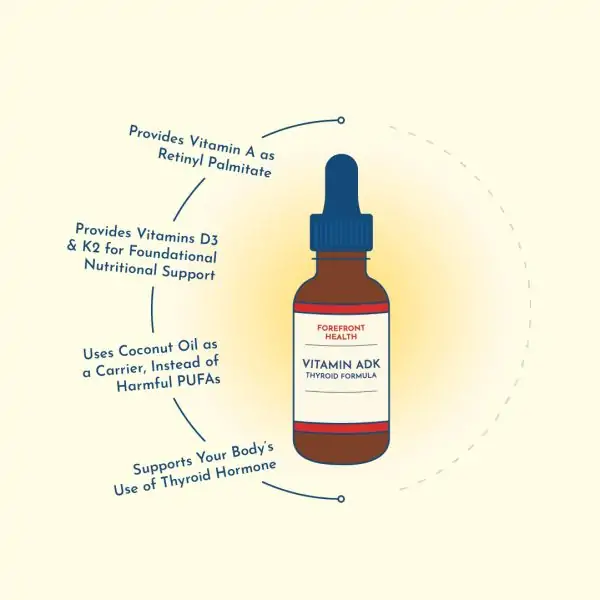
Why try to provide one nutrient you’re looking for while unnecessarily adding something you’re trying to minimize?
It doesn’t make sense to try to solve one problem only to create a bigger problem for yourself in the process.
And this brings us to the bigger picture…
Certain supplements can provide foundational nutritional support for healthy thyroid function.
But supplements are exactly what the name implies.
They’re designed to “supplement” an already healthy diet.
So, don’t ignore your diet.
Don’t assume one vitamin is going to do all the work for you.
And don’t look at that 61% number and assume everyone will experience the same response.
That’s not the point.
The real lesson is that thyroid hormone doesn’t work in isolation.
Your body depends on nutrients to support the processes involved in producing, converting, and using thyroid hormone.
Vitamin A is one of those nutrients.
And the form of vitamin A matters.
So, if you’re already doing many of the things you’ve been told to do for your thyroid…
Yet you still feel like something is missing…
It may be worth looking beyond thyroid hormone alone and considering the foundational nutritional support involved in healthy thyroid function.
That’s the bigger picture.
And if you’re looking for one simple place to start, take a closer look at the form of vitamin A you’re getting from both your diet and your supplements.
Because sometimes it’s not about doing more.
Sometimes it’s about giving your body more of what it needs to do what it’s already designed to do.

KEY IDEA:
One overlooked vitamin may play a surprisingly important role in thyroid health. In one study, vitamin A supplementation was associated with up to a 61% increase in T3 levels, along with changes in TSH and T4. But there’s a catch: not all forms of vitamin A are used the same way. Discover why reduced thyroid function can make beta-carotene more difficult to convert into usable vitamin A, why researchers used preformed vitamin A as retinyl palmitate, and how getting the right form can provide important nutritional support for how your body uses thyroid hormone.