
Who would think that health foods could be causing so much confusion?
It’s the unfortunate truth… and we’ve been watching it get worse year after year.
In fact, we would even go as far as to say this…
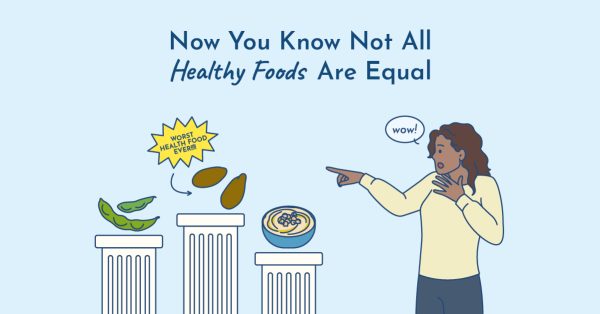
You’d be better off questioning many of the health food claims you see in magazines, on TV, and spread all over the internet.
There’s only one thing that might be worse…
That’s some of the nutritional advice people struggling with thyroid symptoms are still hearing from well-meaning healthcare providers.
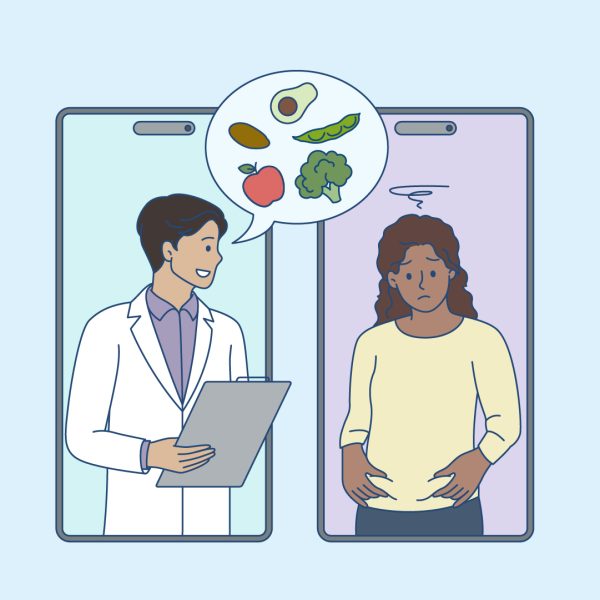
It’s frustrating to say the least.
Yet it’s also easy to see how so much of this information continues to spread.
Take phytoestrogens for example.
Phytoestrogens are naturally occurring compounds found in certain plants and foods.
Their structure is similar to estrogen, which is why researchers have spent decades studying how they interact with hormone-related pathways in the body.
Now, keep in mind…
Most foods contain only tiny amounts of phytoestrogens.
In small amounts, they aren’t necessarily a major concern.
What catches our attention are the foods that contain hundreds – and sometimes thousands – of times more phytoestrogens than many everyday foods.
Some research has raised questions about how high phytoestrogen intake may influence thyroid function.
That’s one reason phytoestrogens occasionally come up in discussions about thyroid diet foods to avoid and broader thyroid-friendly dietary strategies.
And for those already struggling with fatigue, brain fog, stubborn weight gain, poor sleep, cold hands and feet, or other thyroid-related symptoms…
That’s a discussion worth paying attention to.
Before we jump into the four foods themselves, it’s important to understand why this topic remains so controversial.
What the Research Says About Phytoestrogens and Thyroid Health
Much of the research on phytoestrogens is mixed.
Some studies report benefits.
Others raise concerns.
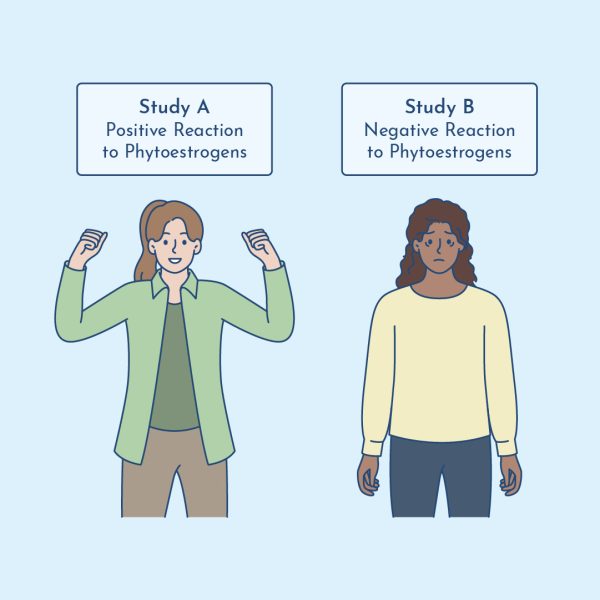
That’s why it’s important to look beneath the headlines and understand what’s actually being measured.
One challenge researchers have pointed out involves how phytoestrogens are processed and eliminated by the body.
Endocrine researcher Dr. Raymond Peat frequently discussed the importance of estrogen metabolism and detoxification when evaluating hormone-related research.
In other words…
The amount of phytoestrogens measured leaving the body may not always tell the whole story about what’s happening inside the body.
This helps explain why some findings appear contradictory.
The crazy thing is…
When researchers specifically examine thyroid-related outcomes, some studies have reported associations between higher phytoestrogen intake and changes in thyroid-related measurements.
For example, one study involving people with subclinical hypothyroidism reported changes in thyroid markers among participants consuming higher amounts of soy phytoestrogens.
Another study found that some participants reported hypothyroid-like symptoms during a period of regular soy consumption, which improved after soy was removed from the diet.
Now, does this mean everyone needs to avoid phytoestrogens?
Of course not.
But it does raise an important question…
If you’re already struggling with thyroid symptoms, could some commonly promoted “health foods” be working against your goals?
Let’s take a look.
4 Thyroid Diet Foods to Avoid If You’re Concerned About Phytoestrogen Exposure
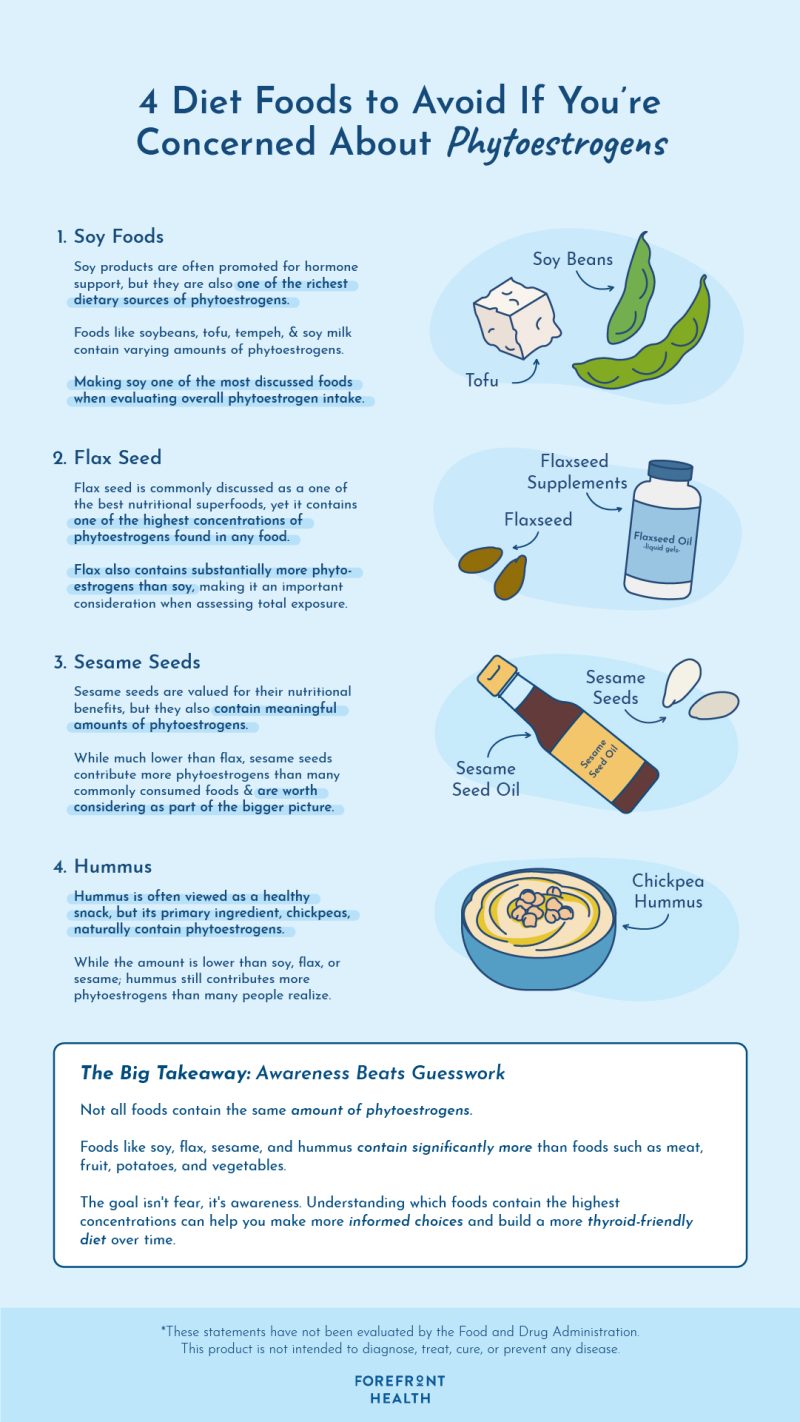
1. Soy Foods
Soy products are frequently promoted for hormone support, particularly during peri-menopause and menopause.
And that’s one reason they’ve become so popular.
The problem is that soy also happens to be one of the richest dietary sources of phytoestrogens.
As a result, soy often appears on lists discussing foods to avoid with thyroid problems.
Researchers have studied soy extensively because of its unique ability to interact with hormone-related pathways.
Some researchers have voiced concerns that high soy intake may influence hormone-related pathways in ways that aren’t fully appreciated.
Not all soy products contain the same amount, but many soy foods rank among the highest sources of phytoestrogens in the modern diet.
For example:
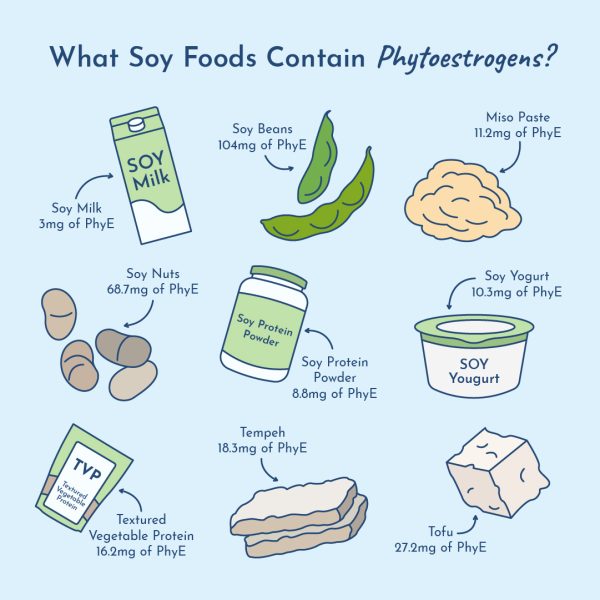
- Soybeans: approximately 104 mg per 100 grams
- Soy nuts: approximately 68.7 mg
- Tofu: approximately 27.2 mg
- Tempeh: approximately 18.3 mg
- Soy yogurt: approximately 10.3 mg
- Soy milk: approximately 3 mg
2. Flax Seed
We continue to be amazed by how often flax seed is recommended as a “superfood.”
It’s commonly promoted as a source of plant-based omega-3 fats and heart-supportive nutrition.
But here’s what many people don’t realize…
Flax seed contains one of the highest concentrations of phytoestrogens found in food.
What surprises many people is that flax actually contains substantially more phytoestrogens than soy.
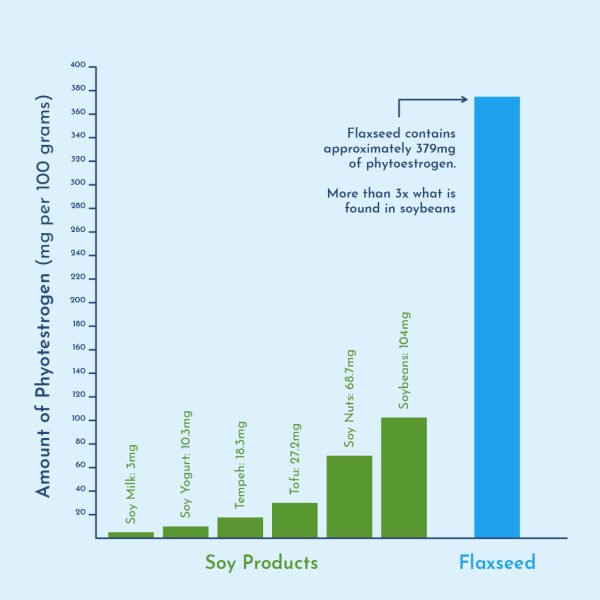
At approximately 379 mg per 100 grams, flax is one of the most concentrated dietary sources of phytoestrogens commonly consumed today.
This is one reason flax frequently appears in discussions surrounding hormone balance, thyroid nutrition, and dietary sources of phytoestrogens.
Again, this doesn’t mean flax is automatically harmful.
But if you’re evaluating total phytoestrogen exposure, flax deserves a place in the conversation.
3. Sesame Seeds
Sesame seeds are another food often praised for their nutritional value.
They’re commonly associated with bone health, metabolic health, and overall wellness.
What many people don’t realize is that sesame seeds also contain meaningful amounts of phytoestrogens.
While nowhere near the levels found in flax seed, sesame seeds contain approximately 8 mg of phytoestrogens per 100 grams – far more than many foods people eat every day.
For someone intentionally trying to reduce phytoestrogen exposure, that’s useful information to know.
Understanding which foods contain the highest concentrations can make it easier to build a more thyroid-friendly eating pattern.
4. Hummus
Sometimes referred to as a “superfood dip,” hummus has developed a very healthy reputation.
And to be fair…
It does provide certain vitamins, minerals, and nutrients.
Yet hummus also contains phytoestrogens because its primary ingredient, chickpeas, naturally contains these compounds.
Compared to soy and flax, the amount is much lower.
Hummus contains roughly 1 mg of phytoestrogens per 100 grams.
That may sound small until you compare it with foods that contain only trace amounts.
Still, when compared to many other foods, hummus contains substantially more phytoestrogens than people realize.
How These Foods Compare to Other Foods in a Thyroid-Friendly Diet
Now it’s important to keep these numbers in context.
At first glance, sesame seeds and hummus may not seem particularly noteworthy when compared to soy and flax.
But that’s only because soy and flax contain such extraordinarily large amounts.
When compared to foods naturally low in phytoestrogens, the difference becomes much more dramatic.
For example:
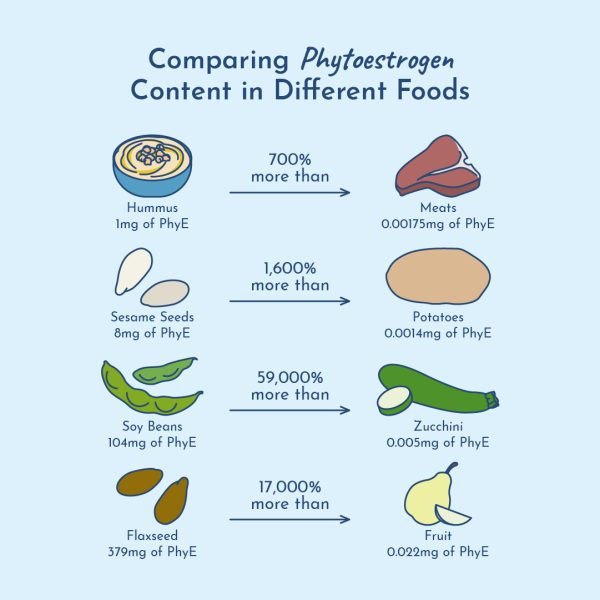
- Meat contains approximately 0.00175 mg on average.
- Potatoes contain approximately 0.0014 mg.
- Zucchini contains approximately 0.005 mg.
- Fruit contains approximately 0.022 mg on average.
In other words…
Many of the foods people eat every day contain only trace amounts of phytoestrogens.
That means:
- Hummus contains more than 700 times the phytoestrogens found in potatoes.
- Sesame seeds contain more than 1,600 times the phytoestrogens found in zucchini.
- Soybeans contain tens of thousands of times more phytoestrogens than meat.
- Flax seed contains thousands of times more phytoestrogens than most fruits.
The point isn’t to fear these foods.
The point is awareness.
Most people simply have no idea how dramatically phytoestrogen content can vary from one food to the next.
That’s why understanding thyroid diet foods to avoid isn’t always as straightforward as avoiding processed foods or obvious junk food.
And when you’re trying to make informed decisions about your diet, that’s useful information to have.
Building a More Thyroid-Friendly Diet Starts With Awareness
When you’re struggling with thyroid symptoms, it’s easy to focus exclusively on thyroid hormone levels.
But as we often discuss, thyroid health rarely exists in isolation.
Hormone balance, liver function, nutrition, stress, sleep, and countless other factors can all influence how you feel from day to day.
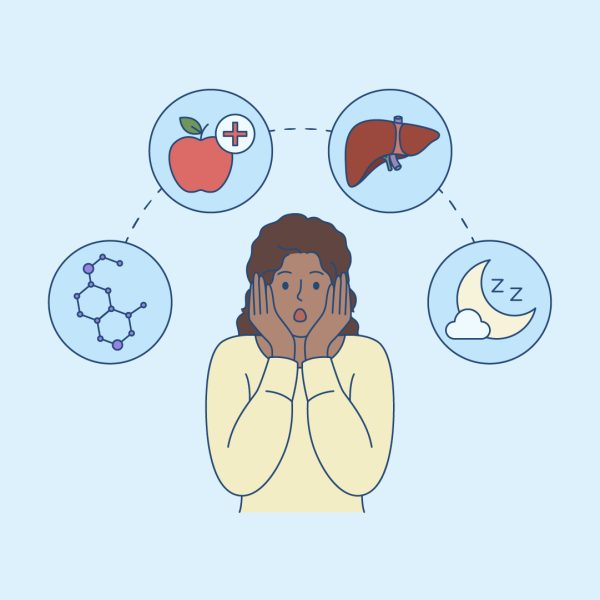
That’s why we encourage people to look beyond headlines and popular health trends.
Some foods that are widely promoted as healthy may deserve a closer look depending on your individual goals and circumstances.
The good news?
You don’t need a complicated protocol to get started.
Simply becoming aware of which foods contain the highest concentrations of phytoestrogens can help you make more informed dietary choices.
And when you’re trying to feel normal again…
Those small, informed decisions often add up over time.
KEY IDEA:
Many foods promoted as healthy may contain surprisingly high levels of phytoestrogens – naturally occurring compounds that can interact with hormone-related pathways in the body. In this article, you’ll discover four popular “health foods” that contain some of the highest concentrations of phytoestrogens, why researchers have taken an interest in them, and how they compare to everyday foods like meat, fruit, and vegetables. You’ll also learn why the research surrounding phytoestrogens remains controversial and why understanding their presence in your diet may be an important part of making more informed, thyroid-supportive dietary choices.